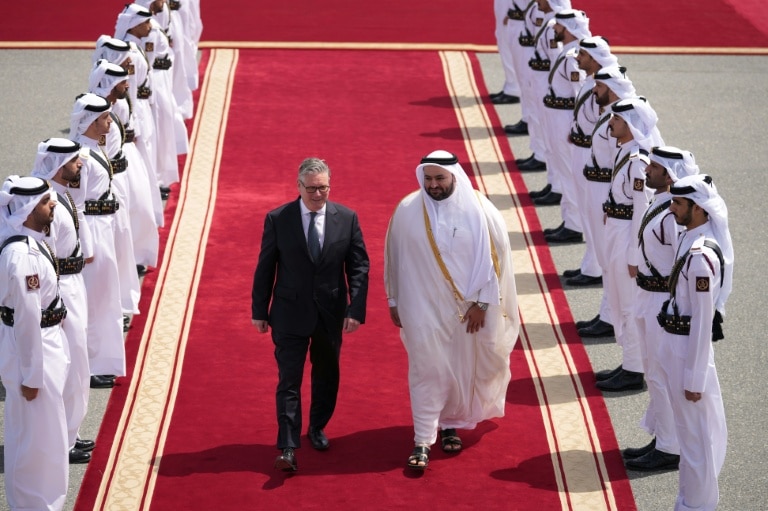
As British Prime Minister Keir Starmer wrapped up a three-day diplomatic tour across the Gulf region on Friday, he delivered a clear defense of the North Atlantic Treaty Organization, emphasizing that the decades-old security alliance serves core national interests of the United States alongside European powers. His remarks come in direct response to renewed public criticism and withdrawal threats from U.S. President Donald Trump, who lashed out at the alliance this week after NATO allies declined to join the U.S.-led Israel campaign against Iran.
“It is in America’s interests. It is in European interests,” Starmer told reporters from UK broadcasters ahead of his departure from Doha, Qatar — the final stop of his regional itinerary that also included stops in Saudi Arabia, the United Arab Emirates and Bahrain. The 76-year-old defensive alliance, he argued, has delivered generations of improved security for all member states that would not exist without its framework. Starmer also reiterated his long-held position that European NATO members must step up to shoulder a greater share of the alliance’s financial costs, a point that has been a core demand from multiple U.S. administrations in recent years.
Ahead of his departure from Qatar, Starmer confirmed he held a detailed phone call with Trump on Thursday evening, where he outlined on-the-ground perspectives from Gulf leaders focused heavily on the crisis surrounding the Strait of Hormuz, one of the world’s most critical energy and trade chokepoints. The strategic waterway has been mostly closed to commercial traffic in recent days, putting global energy supplies at major risk. A temporary US-Iran ceasefire announced earlier this week was supposed to reopen the strait, but the deal has been thrown into jeopardy following Israeli strikes on Lebanon and widespread accusations from both sides that the truce terms are not being honored.
Starmer noted that the bulk of his conversation with Trump centered on developing a coordinated practical plan to restore free navigation through the strait, and outlined the United Kingdom’s leading role in the emerging response. “We spent most of the time on the call talking about the practical plan that’s going to be needed to get navigation through the strait and the role that the UK is playing,” Starmer said. He confirmed London is currently assembling a coalition of more than 30 countries to develop both diplomatic and military frameworks to reopen the waterway to commercial vessel traffic.
The tour also revealed Starmer’s growing frustration with the economic fallout of ongoing regional conflicts, with the British leader drawing sharp criticism of both Trump and Russian President Vladimir Putin for the volatility driving global energy costs. “I’m fed up with the fact that families across the country see their bills go up and down on energy, businesses’ bills go up and down on energy, because of the actions of Putin or Trump,” he said in an earlier interview during the tour, connecting geopolitical conflict directly to household economic strain in the UK.
In additional diplomatic activity before wrapping up his trip, Starmer held a separate phone call with Pakistani Prime Minister Shehbaz Sharif, ahead of upcoming ceasefire negotiations scheduled to take place in Pakistan. A Downing Street readout of the call confirmed that Starmer thanked Sharif for his “critical role” in negotiating the existing temporary two-week truce that is currently holding in the region, as international actors work toward a longer-term de-escalation.