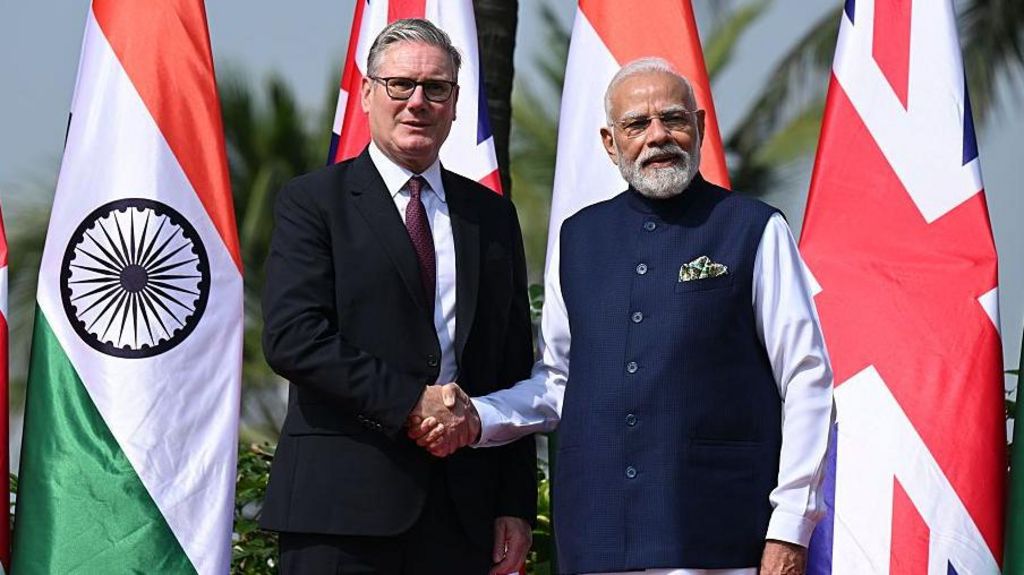
Sir Keir Starmer, the UK Prime Minister, embarked on his inaugural visit to India, leading a substantial trade delegation comprising over 100 CEOs, entrepreneurs, university vice-chancellors, and cultural leaders. The visit, described as ‘historic’ by Indian Prime Minister Narendra Modi, took place in Mumbai, India’s financial hub. The two leaders convened to explore avenues for enhancing business and trade relations, following the landmark UK-India trade agreement signed in July. Starmer is scheduled to deliver a keynote address at a fintech conference during his stay. The visit has been marked by a warm reception, with thousands of photos of Starmer and Modi adorning the streets of Mumbai. On his first day, Starmer met with Nandan Nilekani, the founder of India’s digital ID system, amidst the UK government’s controversial plan to introduce a compulsory digital ID for workers. Despite opposition, with over 2.8 million people signing a petition against the proposal, the government remains resolute, arguing it will curb illegal migrant labor. Additionally, Starmer announced that Yash Raj Films will produce three Bollywood films in the UK starting 2026, ending an eight-year hiatus. The UK-India trade deal, yet to be implemented, has already spurred £1 billion in investment and created nearly 7,000 jobs in the UK. The agreement will reduce India’s average tariff on UK products from 15% to 3%, while the UK will lower taxes on Indian goods such as clothing, footwear, and seafood. India, in turn, will reduce duties on Scotch whisky, cosmetics, and luxury cars. The deal is projected to boost the UK’s GDP by £4.8 billion annually and increase bilateral trade by £25.5 billion by 2040. Last year, UK-India trade totaled £42.6 billion and was already on an upward trajectory. Before his visit, Starmer emphasized that the UK would not relax visa rules for India but highlighted significant opportunities to enhance trade and cultural ties. The visit occurs against the backdrop of strained India-US relations due to President Donald Trump’s imposition of 50% tariffs on India, including a 25% penalty for purchasing Russian oil. India and the US have been negotiating a trade deal for months without a major breakthrough.