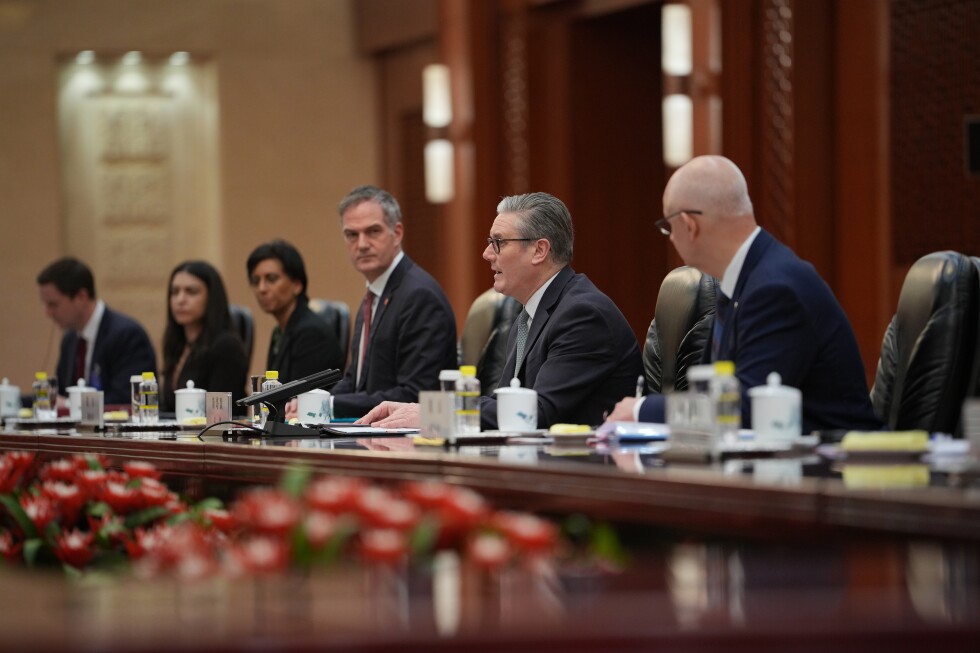
In a significant diplomatic overture, British Prime Minister Keir Starmer advocated for strengthened bilateral ties with China during his Thursday meeting with President Xi Jinping in Beijing. The newly elected leader, making the first UK prime ministerial visit in eight years, emphasized the necessity of collaboration on pressing global issues including climate change and international stability.
Speaking at the Great Hall of the People, Starmer articulated his vision for ‘a long-term, consistent and comprehensive strategic partnership’ between the two nations. This high-stakes diplomatic engagement marks a deliberate effort to mend relations following several years of heightened tensions stemming from concerns over Chinese espionage activities in Britain, Beijing’s support for Russia in the Ukraine conflict, and human rights issues in Hong Kong.
The Prime Minister’s delegation, comprising over 50 prominent business executives and cultural organization leaders, underscores Britain’s dual objectives of pursuing economic opportunities while navigating complex geopolitical considerations. The visit occurs against the backdrop of sluggish domestic economic performance, making expanded trade and investment relationships increasingly imperative.
Starmer’s Beijing engagement places him among a growing cohort of Western leaders seeking direct dialogue with China, following recent visits by counterparts from South Korea, Canada, and Finland, with Germany’s chancellor expected next month. This diplomatic pattern suggests a recalibration of international approaches to engaging with China amid evolving global trade dynamics and political uncertainties.