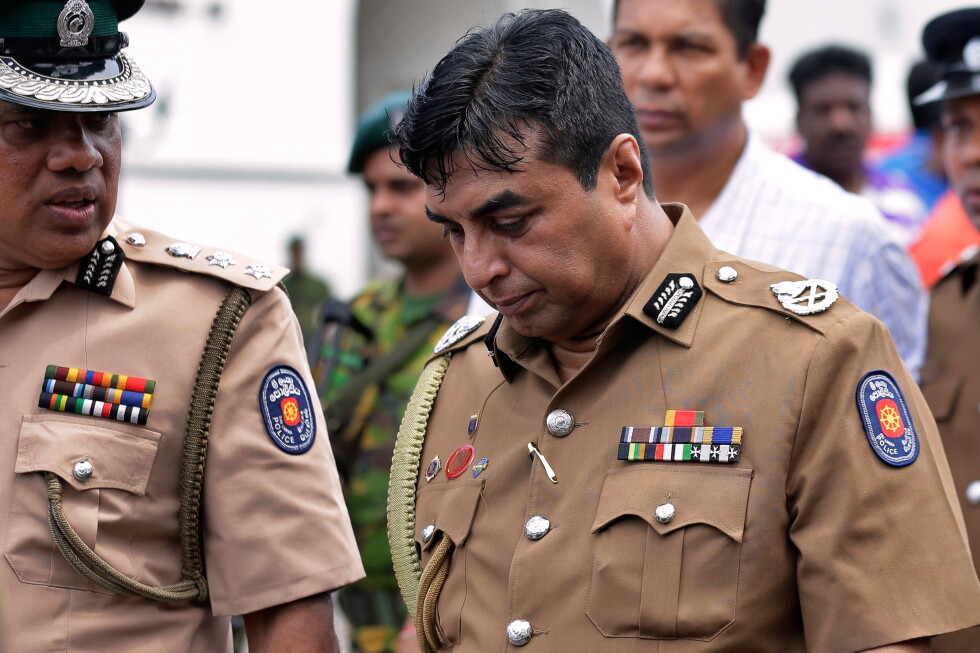
Nearly five years after one of the deadliest terrorist attacks in South Asian history, a Sri Lankan High Court has delivered a landmark verdict against the island nation’s former top law enforcement official over his role in the 2019 Easter Sunday bombings that killed over 260 people. On Friday, the three-judge bench found former Inspector General of Police Pujith Jayasundara guilty of gross criminal negligence, ruling that his failure to act on repeated advance intelligence warnings enabled the Islamic State-inspired coordinated attacks that shook the country.
Under Sri Lankan law, the death sentence Jayasundara received carries a de facto life imprisonment term, as the country has upheld an informal moratorium on executions for nearly half a century, a policy that current President Anura Kumara Dissanayake has publicly committed to maintaining. Legal representatives for the former police chief confirmed he will exercise his right to appeal the ruling, a process that will play out in higher courts over the coming months.
The 2019 attacks unfolded as a series of near-simultaneous blasts targeting three high-profile tourist hotels and three Christian churches—two Catholic and one Protestant—across Sri Lanka. Among the 269 people killed, 42 were foreign tourists, compounding the international fallout from the assault. A post-attack parliamentary investigation confirmed that both national police and intelligence agencies received multiple specific warnings about the planned bombings months in advance, but senior officials took no steps to shore up security or prevent the assault.
On the same day of Jayasundara’s verdict, the court prepared to issue a separate ruling for Hemasiri Fernando, the former Defense Ministry secretary, who faces the same criminal negligence charge connected to the attacks. Authorities have linked two domestic Sri Lankan Islamic militant groups to the planning and execution of the bombings, and all individuals believed to have directly participated in the attacks are dead. Additional trials are currently ongoing for dozens of other suspects accused of providing logistical support, funding, and coordination for the assault.
The verdict comes as persistent questions remain about the full scope of the conspiracy behind the attacks. Sri Lanka’s Catholic Church, which lost hundreds of worshippers in the church bombings, has repeatedly pushed back against official findings, arguing that the identified low-level perpetrators are not the true masterminds and that a far larger, still-uncovered conspiracy led to the 2019 attacks.
Sri Lanka’s ex-police chief sentenced to death for negligence in bombings that killed more than 260