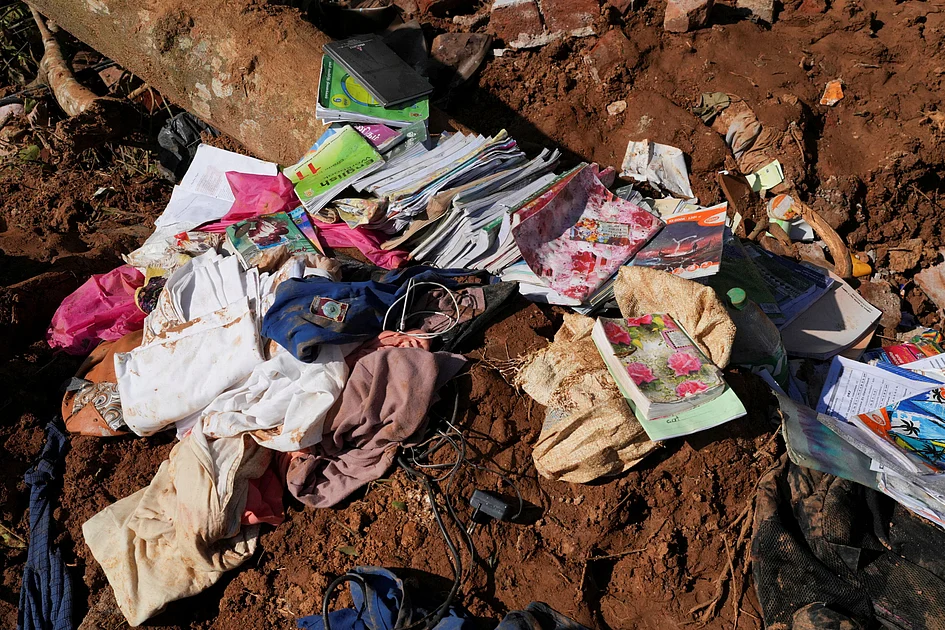
A comprehensive assessment by the World Bank has revealed that Cyclone Ditwah inflicted approximately $4.1 billion in direct physical damage across Sri Lanka last month. The catastrophic weather event resulted in the tragic loss of over 640 lives and adversely affected more than 10% of the nation’s population through devastating floods and landslides.
The damage estimate, equivalent to roughly 4% of Sri Lanka’s Gross Domestic Product (GDP), was detailed in the World Bank’s Global Rapid Post-Disaster Damage Estimation (GRADE) report released Monday. Critical infrastructure sustained the most significant portion of the devastation, with roads, bridges, railways, and water supply networks accounting for an estimated $1.735 billion in damages.
Housing emerged as the second-most impacted sector with $985 million in destruction, representing 24% of the total damage. Educational institutions, healthcare facilities, and commercial enterprises located near major waterways suffered extensive damage valued at $562 million.
The World Bank emphasized that these figures represent direct physical damage only and exclude broader economic losses related to income disruption, production declines, or comprehensive reconstruction expenses.
The disaster struck as Sri Lanka was demonstrating signs of recovery from its severe 2022 economic crisis, which depleted foreign exchange reserves necessary for essential imports. Following a $2.9 billion International Monetary Fund (IMF) bailout approved in early 2023, the country had achieved economic stabilization prior to the cyclone.
In response to the catastrophe, international financial institutions have mobilized support. The IMF has approved $206 million in emergency financing, while the World Bank has repurposed $120 million from an existing project to aid disaster recovery efforts.