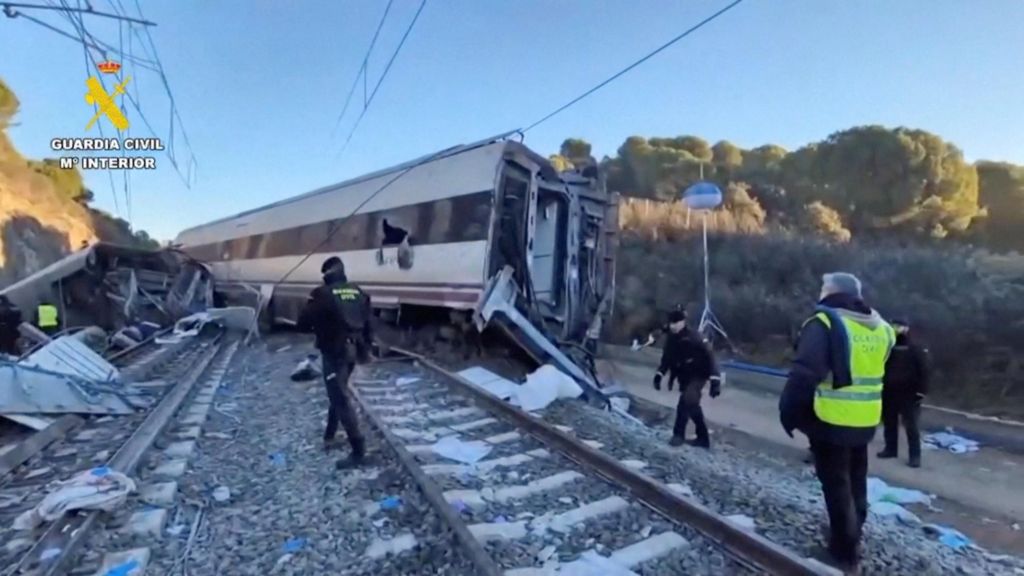
Spain has been plunged into a state of profound grief following the nation’s most devastating rail catastrophe in over a decade. A catastrophic collision between two high-speed trains in the southern region of Adamuz on Sunday evening has resulted in a confirmed death toll of at least 40 individuals, with over 120 passengers sustaining injuries.
The tragedy unfolded at approximately 19:45 local time when a northbound train from Málaga to Madrid derailed on a straight section of track near Córdoba. The force of the derailment propelled carriages across the central reservation into the path of an oncoming southbound service traveling from Madrid to Huelva. The impact was so violent that it pushed multiple carriages into a steep embankment, creating a scene of twisted wreckage that has severely hampered rescue operations.
Spanish Prime Minister Pedro Sánchez, who visited the disaster site with senior officials, announced three days of national mourning and vowed to conduct a transparent investigation into the causes of the tragedy. ‘This is a day of sorrow for all of Spain,’ Sánchez stated solemnly to reporters. ‘We are committed to uncovering the truth with absolute transparency and will publicly share our findings.’
Transport Minister Óscar Puente characterized the incident as ‘extremely strange,’ noting that the official investigation could require at least one month to complete. Preliminary reports from sources briefed on initial findings suggest investigators have identified a faulty rail joint that may have created a dangerous gap between track sections, though it remains uncertain whether this defect caused the derailment or resulted from it.
Rescue teams continue to work meticulously at the crash site, where the complex entanglement of train wreckage has made extracting trapped victims exceptionally challenging. The Italian-manufactured Freccia 1000 trains involved in the collision are capable of reaching speeds up to 400 km/h (250 mph), though the actual speed at the time of impact remains under investigation.
Emergency services have treated 122 injured passengers, with 41 still hospitalized—including 12 in intensive care units. The Spanish Red Cross has deployed crisis support teams to provide counseling for distraught families, many of whom are experiencing severe anxiety amid the chaotic identification process.
Spain’s extensive high-speed rail network, the second largest globally after China’s, has suspended all services between Madrid and southern cities including Málaga, Córdoba, Sevilla, and Huelva until Friday as the investigation continues.