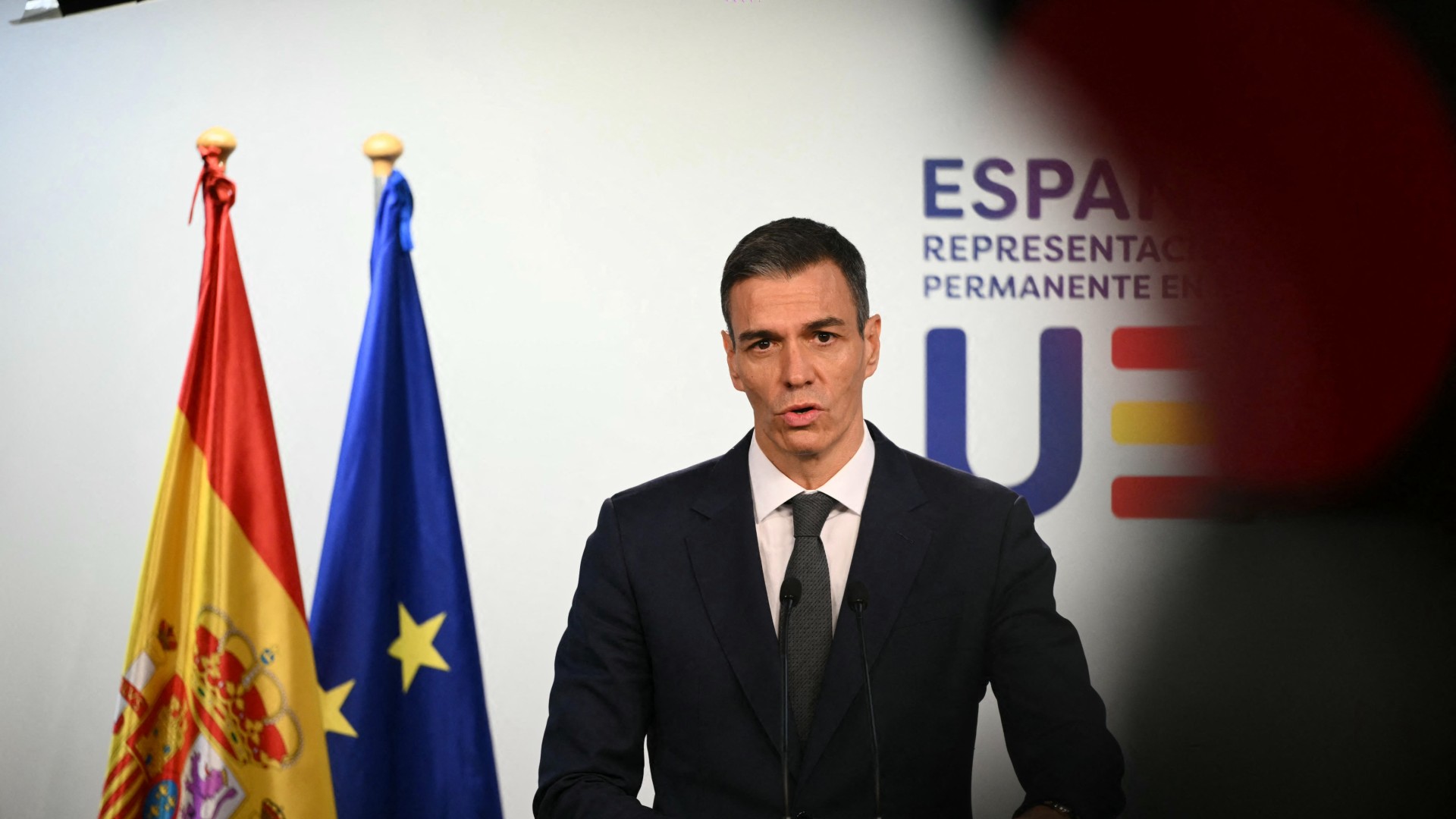
In a significant diplomatic development, Spanish Prime Minister Pedro Sánchez has formally declined an invitation for his country to participate in former U.S. President Donald Trump’s proposed ‘Board of Peace’ initiative. The decision, announced during a speech at EU headquarters in Brussels, reflects growing international concern about the board’s structure and objectives.
Prime Minister Sánchez emphasized that Palestinian representation remains fundamental to any legitimate peace process, stating unequivocally that ‘The future of Palestine as a whole should be settled by Palestinians.’ This position aligns Spain with several key U.S. allies including the United Kingdom and France, all of which have expressed reservations about joining the controversial board in its current form.
The initiative faced additional turbulence as Trump unexpectedly rescinded Canada’s invitation through a Truth Social post directed at Prime Minister Mark Carney. The public disinvitation came shortly after Carney delivered critical remarks about U.S. policy and hegemony at the World Economic Forum in Davos, though the Trump administration provided no explicit justification for the reversal.
Conceived as an international organization aiming to ‘promote stability, restore dependable and lawful governance, and secure enduring peace in conflict-affected regions,’ the Board of Peace has drawn scrutiny for its vague mandate and potential to undermine existing international institutions. Critics argue the board’s composition—which includes Trump’s son-in-law Jared Kushner, former UK Prime Minister Tony Blair, and U.S. Secretary of State Marco Rubio—lacks appropriate Palestinian representation despite its stated focus on Gaza reconstruction.
Notably, while the board proposes appointing a 15-member Palestinian technocratic committee to oversee Gaza’s transition, no Palestinians currently sit on its executive board. This omission has raised questions about the initiative’s commitment to genuine Palestinian self-determination.
Despite European hesitancy, several Middle Eastern nations including Saudi Arabia, the United Arab Emirates, Qatar, Egypt, Turkey, and Jordan have reportedly agreed to participate alongside Israel. The development unfolds against the tragic backdrop of more than 71,500 Palestinian casualties in Gaza since October 2023, highlighting the urgent need for credible peace mechanisms that command broad international legitimacy.