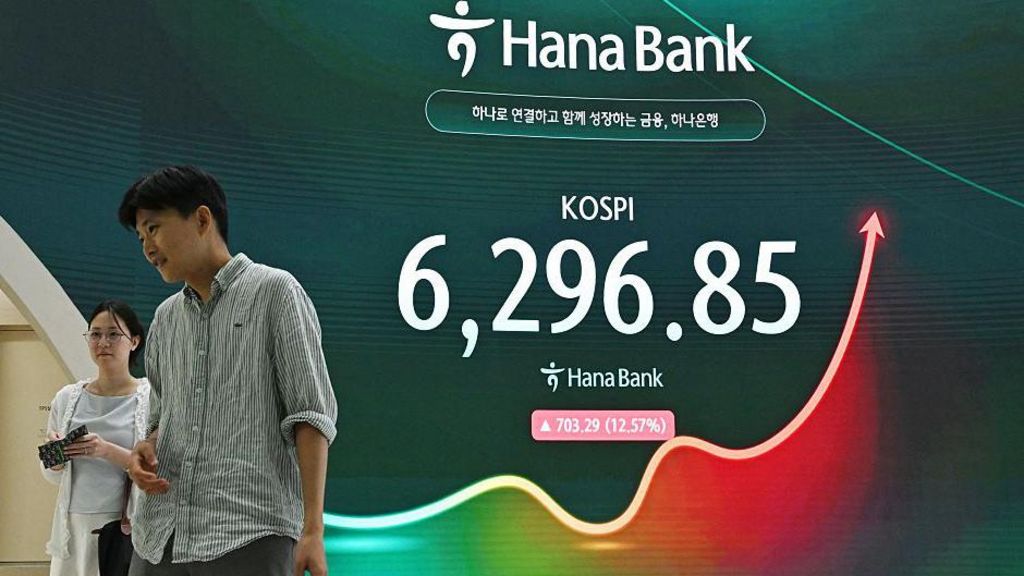
After a brutal three-day sell-off that erased hundreds of billions of dollars in market capitalization from South Korea’s equity markets, share prices staged a dramatic rally on Friday, clawing back a large portion of the recent losses. By the afternoon trading session, the country’s benchmark Kospi index surged nearly 17%, with the uptick fueled almost entirely by outsized gains from the nation’s two leading semiconductor manufacturers, SK Hynix and Samsung Electronics.
This sudden turnaround came on the heels of two key developments that restored investor confidence in AI-linked assets. First, positive earnings updates from United States tech giants Amazon and Microsoft rekindled market optimism around the massive capital inflows pouring into artificial intelligence research and infrastructure. Second, South Korean financial regulators rolled out targeted emergency measures designed to curb the aggressive sell-off that had shaken the market earlier in the week.
The rally in AI chip stocks spilled over into other regional markets, lifting benchmark indices in both Japan and Taiwan as bullish sentiment spread across the Asia-Pacific tech sector. For SK Hynix, a key memory chip supplier to AI industry leader Nvidia, share prices closed more than 17% higher on Friday, while Samsung, the world’s largest memory chip maker, notched a 23% gain.
Both companies had seen sharp valuation declines earlier in the week, as a global pullback in AI-related equities gathered steam. Investors had grown jittery over the scale of AI investments being made by large technology firms, with many questioning whether the sector’s sky-high valuations were justified by near-term revenue prospects.
South Korea’s equity markets have seen extraordinary volatility in recent months, driven in part by a surge in participation from retail investors who have piled into tech stocks amid the global AI boom. So far this year, the tech-heavy Kospi has triggered market-wide circuit breakers multiple times; these mechanisms are designed to pause trading temporarily to halt uncontrolled panic selling.
Despite the sharp pullback from the index’s all-time high set in mid-June, the Kospi still holds significant year-to-date gains: after more than doubling in value between January and mid-June, the index remains 50% above its closing level at the end of 2025, underscoring the dramatic run-up that preceded this week’s correction.