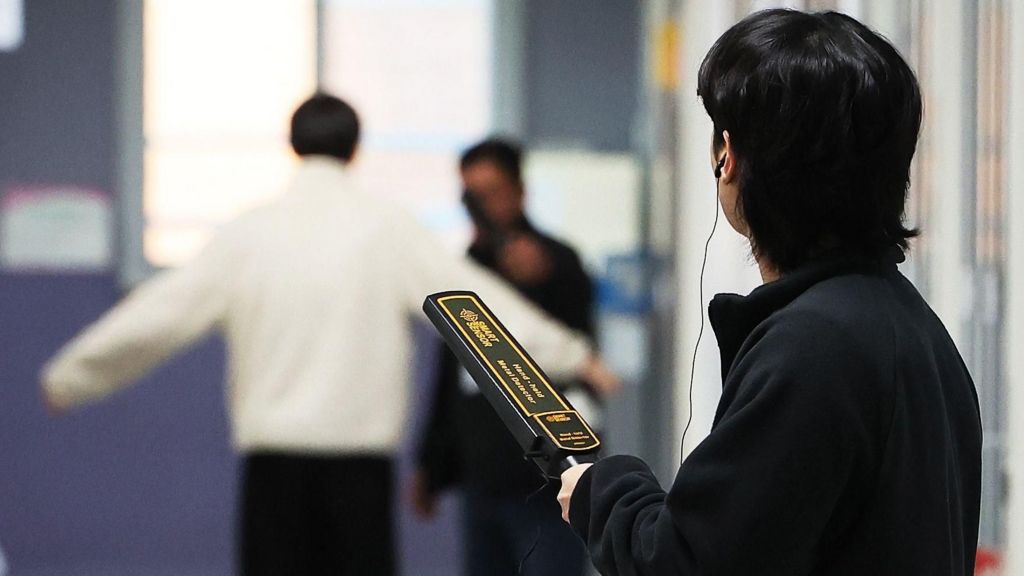
Against a backdrop of mounting public outcry over a wave of AI-fueled academic cheating scandals that erupted in the weeks leading up to South Korea’s make-or-break national college entrance exam, known locally as Suneung, education authorities rolled out a suite of unprecedented, last-minute safeguards this week to preserve the test’s long-cherished credibility. The annual eight-hour, multi-subject marathon assessment, which draws roughly 500,000 test-takers each November, carries such outsized cultural weight that the entire nation routinely pauses to accommodate it: construction sites halt operations, commercial flights adjust their takeoff and landing schedules, and routine military training exercises are suspended to eliminate ambient noise that could distract students during their exams. For generations, Suneung scores have been widely viewed as a defining gateway to elite university placements, coveted white-collar careers, and upward social mobility, cementing its status as one of the most high-stakes standardized assessments in the world. This year’s exam unfolded under extraordinary public scrutiny, triggered by a string of high-profile cheating cases that culminated in a viral confession from the top scorer of South Korea’s national certified tax accountancy exam. 34-year-old Han Won-seok had made headlines earlier this month for posting a near-perfect score, missing only one out of 160 test questions, before releasing a public video admitting he had used a miniature hidden camera to photograph exam questions, transmit the images to an AI tool to generate answers, and cross-check results on a hidden smartphone during the test. That revelation, paired with earlier confirmed incidents of secondary school and university entrance exam candidates using AI-powered smart glasses to cheat, spurred the education ministry to fast-track emergency anti-fraud protocols that had never been deployed for academic assessments before. The most striking of these measures was the repurposing of South Korea’s national public disaster alert system, which sent three mandatory, high-volume notifications to every active mobile phone in the country between 8 a.m. and 3 p.m. on exam day – overriding silent mode settings and even triggering alerts on the devices of international tourists using roaming data, unless handsets were fully powered off or set to airplane mode. Officials explained the system was calibrated to help detect unregistered smart devices hidden in exam halls, as any phone left powered on in a testing room would emit a distinct signal in response to the nationwide alert ping. Additional rules required test-takers to cover any visible buttons on shirts and jackets that could potentially conceal miniature cameras, and mandated targeted inspections of all eyewear worn by candidates to root out disguised AI smart glasses. While no major mass cheating incidents were recorded during this year’s Suneung, the education ministry confirmed Friday that 111 candidates were found in possession of unauthorized smart devices, with five of those individuals caught in the act of using the forbidden technology mid-exam. The sweeping precautions even sparked minor anxiety among fully honest test-takers, with multiple high school seniors telling local media outlets they had swapped their regular eyeglasses for contact lenses ahead of the exam to avoid being wrongly suspected of wearing AI-enabled smart glasses, while another student expressed fear that his thick horn-rimmed frames would be flagged as suspicious by proctors. Following the release of the preliminary exam day findings, South Korean Prime Minister Lee Jae Myung issued a formal public statement Friday calling for a full structural overhaul of the national standardized examination framework to address the growing threat of AI-assisted cheating. Lee emphasized that public assessment results form the foundational backbone of opportunity and resource distribution across South Korean society, and that bad actors leveraging AI to gain unfair advantages do not merely break exam rules – they erode the core public trust in social fairness that underpins the nation’s civic order.