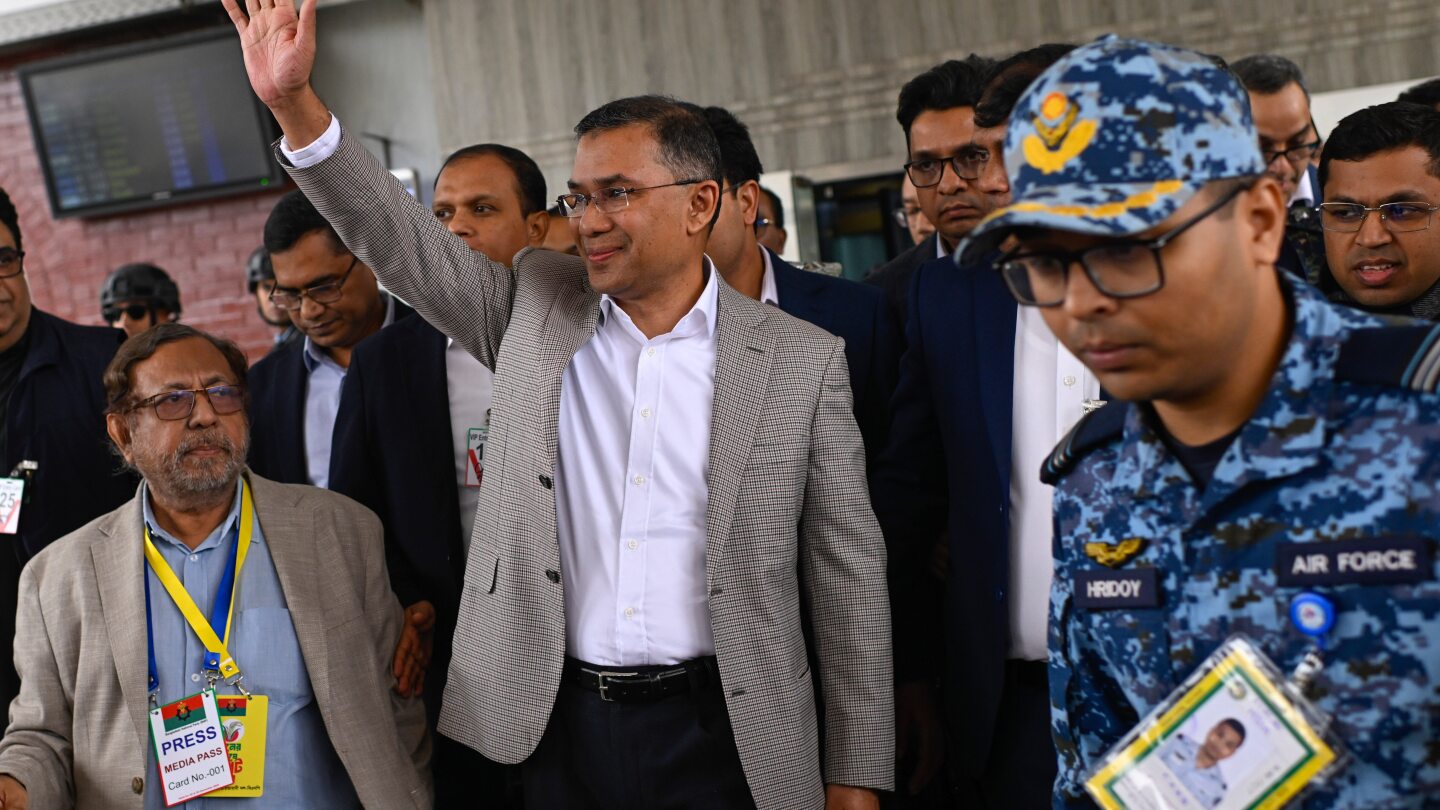
DHAKA, Bangladesh — In a politically charged homecoming, Tarique Rahman, the acting chairman of Bangladesh Nationalist Party (BNP), returned to Dhaka on Thursday after 17 years of self-imposed exile in London. His arrival marks a significant development in Bangladesh’s volatile political landscape ahead of February’s pivotal elections.
Rahman, son of former Prime Minister Khaleda Zia, arrived at Hazrat Shahjalal International Airport under tight security alongside his wife and daughter. The homecoming transformed into a massive political demonstration as supporters flooded a 2-kilometer radius between the airport and reception venue, with party leaders claiming millions had gathered to welcome the returning leader.
The 56-year-old politician originally left Bangladesh in 2008 for medical treatment after enduring torture during the military-backed caretaker government (2006-2008). His return follows acquittals on all criminal charges by the current interim government headed by Nobel laureate Muhammad Yunus, including allegations of involvement in a 2004 grenade attack on a political rally of current exiled leader Sheikh Hasina.
Rahman’s return occurs against the backdrop of profound political transformation. Bangladesh remains governed by an interim administration that assumed power following the 2024 uprising that ended Hasina’s 15-year rule. The Yunus government faces mounting criticism from international human rights organizations and domestic liberals who accuse it of eroding democratic institutions and permitting rising Islamist influence.
Following his reception, Rahman plans to visit his critically ill mother, former Prime Minister Khaleda Zia, who led the country from 2001-2006. The political dynasty began when Zia, a former housewife, entered politics after her husband President Ziaur Rahman’s assassination in 1981.
Despite his prolonged absence, Rahman maintained firm control over BNP through digital participation in meetings and rallies, facing no significant internal challenges to his leadership. His return sets the stage for a dramatic political confrontation as Bangladesh approaches what many consider its most consequential election in decades.