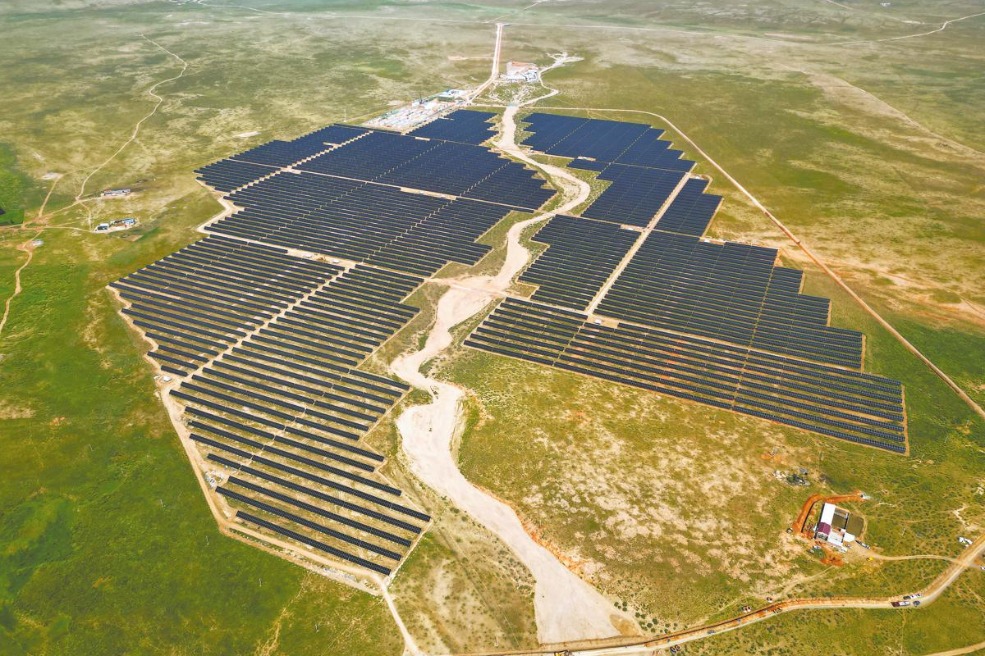
A groundbreaking ecological restoration initiative in China’s Inner Mongolia autonomous region is demonstrating remarkable success in combating desertification through an innovative integration of solar energy generation and biological rehabilitation.
The 700-hectare pilot project in Darhan Muminggan Joint Banner—spanning an area more than double the size of New York’s Central Park—leverages the region’s abundant solar radiation while addressing severe grassland degradation. This integrated approach utilizes elevated solar panels that serve dual purposes: generating clean electricity for nearby industrial hubs including Baotou and Hohhot, while simultaneously providing protective shelter for drought-resistant vegetation growing beneath the installations.
Regional authorities have implemented this novel strategy after decades of struggling against advancing desertification. The solution emerged through collaborative efforts between environmental experts, private enterprises, and local farming communities. By sowing grass seeds specifically adapted to arid conditions beneath the photovoltaic arrays, the project has initiated a sustainable recovery of previously degraded grasslands.
The technological infrastructure creates microclimates that reduce soil moisture evaporation and shield young plants from harsh winds, enabling vegetation to establish itself more effectively. This approach represents a significant advancement beyond traditional desertification control methods.
As the ecological restoration progresses, complementary industries are developing around the renewable energy site, creating economic opportunities alongside environmental benefits. The project stands as a practical implementation of the ‘lucid waters and lush mountains are invaluable assets’ concept, demonstrating how technological innovation can drive environmental conservation while meeting energy demands.
The timing of this achievement holds particular significance, coinciding with the 20th anniversary of the ecological conservation principle that has guided China’s environmental policies. This successful integration of clean energy production with ecological restoration offers a replicable model for other regions facing similar environmental challenges.