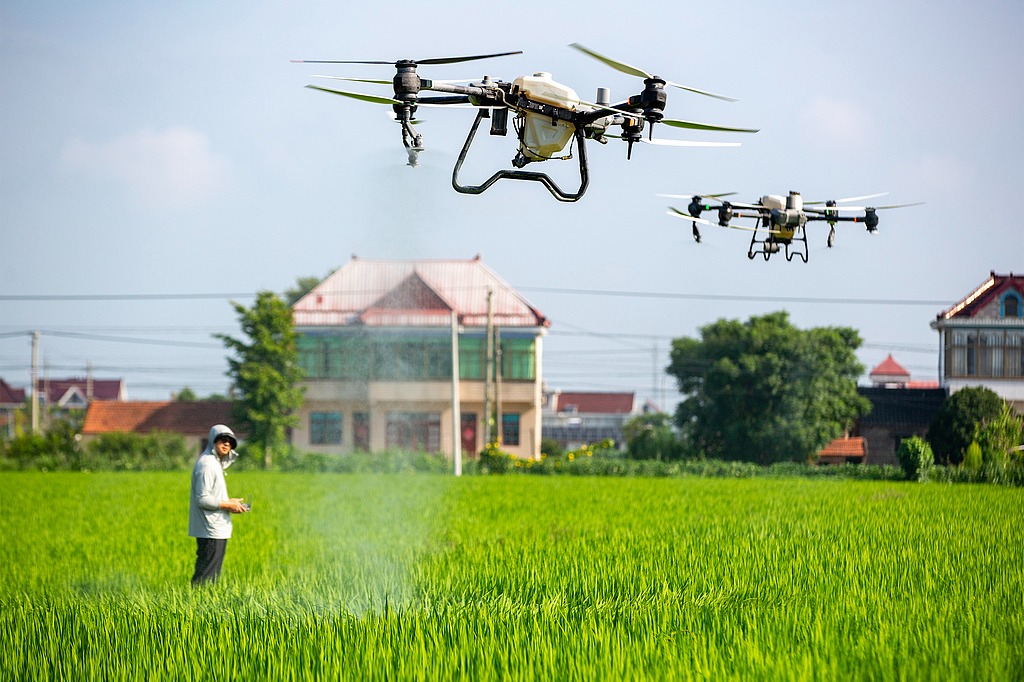
China is accelerating its agricultural transformation through advanced technologies as part of its 15th Five-Year Plan (2026-2030), positioning smart farming as the cornerstone of rural modernization and national food security. Minister of Agriculture and Rural Affairs Han Jun emphasized that modernizing agriculture remains a strategic priority for bolstering domestic development and mitigating external risks amid global uncertainties.
Han characterized rural modernization as a ‘ballast stone’ for economic and social stability, noting that bridging the urban-rural divide and ensuring farmers benefit from modernization are crucial for establishing a new development paradigm. By 2035, hundreds of millions of farmers are projected to transition into modern lifestyles, unleashing significant development momentum and consumption potential.
The initiative builds upon substantial foundations: China achieved record grain production of 715 million metric tons this year, with technological advancements contributing over 64% to agricultural growth. Despite this progress, challenges persist in addressing rural development gaps and sustaining farmer income growth.
A comprehensive technological overhaul is underway, including:
– Launching measures to increase grain production capacity by 50 million tons
– Accelerating high-standard farmland construction
– Advancing seed industry innovation through biotechnology breakthroughs
– Deploying smart agricultural machinery and AI-driven farming solutions
– Developing diversified food supply systems
– Expanding agricultural processing to enhance farmer incomes
China Agricultural University President Sun Qixin highlighted that developing ‘new quality productive forces’ tailored to local conditions is essential for overcoming development bottlenecks. Biotechnology serves as a core engine, with gene editing and synthetic biology breakthroughs poised to reshape agricultural production models.
The integration of big data, cloud computing, and artificial intelligence is transforming traditional farming practices. Next-generation agricultural technologies—from drones to intelligent farming robots—are accelerating the shift toward automated, data-driven production systems. China recently established its first quality inspection and testing center for smart agriculture technologies, filling a critical gap in the national testing system.
Concurrent with technological advancement, China is expanding its digital agriculture talent pool. Training programs focused on improving farmers’ mobile usage and e-commerce skills attracted nearly 40 million participants this year. The government also maintains its commitment to poverty prevention through dynamic monitoring systems and continued support policies, with all 832 previously impoverished counties having developed two to three competitive leading industries.
Employment among formerly impoverished populations has stabilized above 30 million, accounting for over two-thirds of household income. In the first three quarters of 2025, rural residents in these counties recorded per capita disposable income of 13,158 yuan ($1,872), representing 6.5% year-on-year growth that exceeded the national rural average.