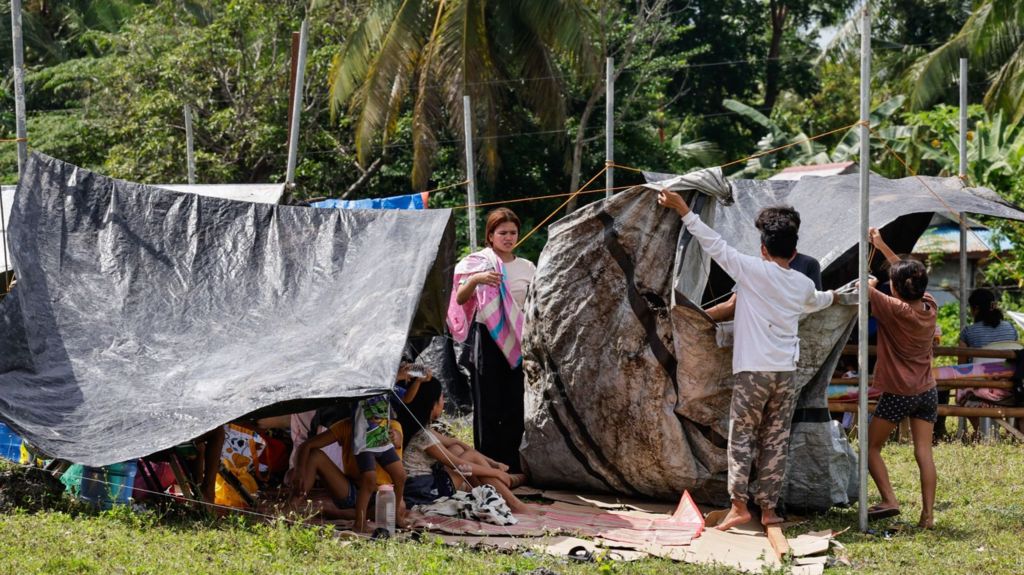
A devastating magnitude 6.9 earthquake struck the northern coast of Cebu, one of the Philippines’ most populous islands, on the night of September 30, leaving at least 72 people dead and 300 injured. The quake, which occurred in a region already grappling with the aftermath of a fierce typhoon season, has displaced approximately 40,000 people, forcing many to seek temporary shelter in tents and under the open sky. Among the survivors is Arguel Estalicas, a 35-year-old tourism officer from Medellin town, who described the overwhelming fear and dizziness she continues to experience. ‘I still couldn’t process what has happened to us,’ she told the BBC. The earthquake caused widespread destruction, collapsing homes, buildings, and churches, and cracking roads. Social media images showed residents huddled under plastic bags for shelter during light rain, while others slept outdoors, clinging to whatever resources they had. Lourenze Pareja, a 25-year-old community journalist from San Remigio, recounted the chaos he witnessed during the quake, describing his once-vibrant town as now resembling a ‘ghost town.’ The Philippines, located on the geologically unstable ‘Ring of Fire,’ is no stranger to natural disasters. This earthquake is among the deadliest in recent years, following the 2013 Bohol quake that killed over 200 people. Rescue operations are ongoing, with authorities working to deliver food, restore power and communication lines, and clear debris. The Philippine military has been deployed to assist in relief efforts, but daily necessities remain scarce. Survivors like Ms. Estalicas and Mr. Pareja remain hopeful, drawing strength from the Filipino spirit of bayanihan, or community cooperation. ‘My only prayer is that help won’t be delayed,’ Mr. Pareja said, urging relief efforts to extend to neighboring municipalities.
Sleeping in fields and struggling for basics: Filipinos contend with quake aftermath