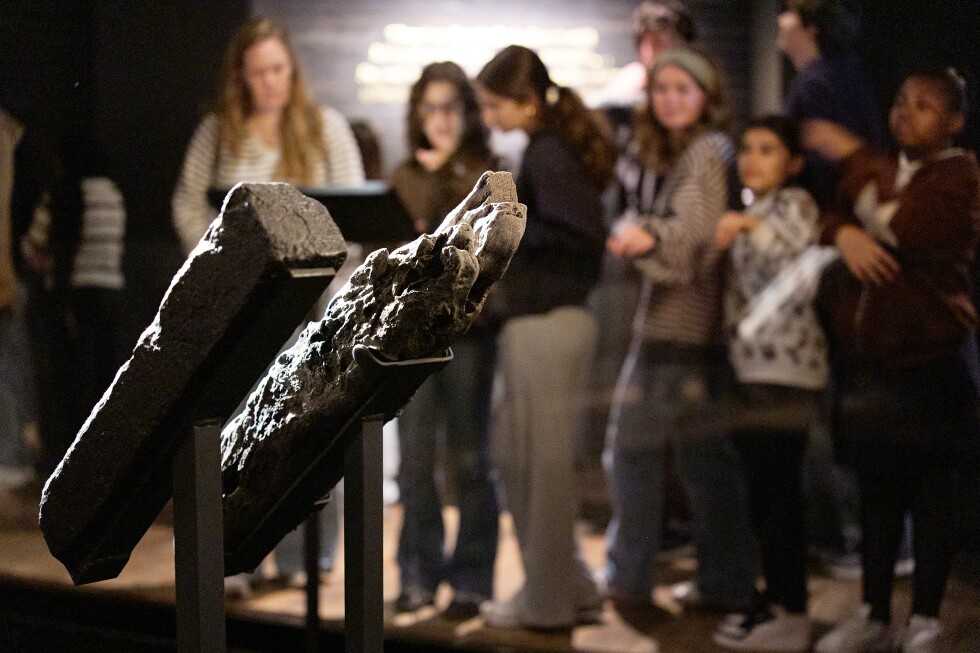
The National Museum of African American History and Culture will soon repatriate a significant historical artifact to South Africa, marking the conclusion of a decade-long loan agreement. A 33-pound timber fragment from the São José-Paquete de Africa slave ship, currently displayed in the museum’s “Slavery and Freedom” exhibition, will be carefully prepared for transportation to its home institution at the Iziko Museums of South Africa later this year.
The timber piece, which has been visually suspended above a dark void alongside original ship ballast since the museum’s 2016 opening, represents one of the first recovered wreckages of a sunken slave vessel. The São José met its tragic fate in December 1794 when the Portuguese ship, carrying over 400 captives from Mozambique destined for Brazilian slavery, struck rocks and sank near Cape Town. Approximately half of those aboard perished in the disaster, with survivors subsequently resold into slavery in the Western Cape region.
Museum officials emphasize the change stems solely from conservation requirements and loan agreement expiration, not external political pressures. The initial five-year loan was extended in 2021 and formally concludes on July 1. Due to the timber’s fragile condition, specialists are constructing a custom protective crate for its transatlantic journey.
While the wooden fragment will depart, other powerful artifacts from the vessel will remain on display for two additional years, including the ballast stones that counterbalanced human cargo. These will eventually be replaced by the ship’s original cargo manifesto, maintaining the exhibition’s narrative impact.
The São José artifact was identified and studied through the Slave Wrecks Project, an international collaborative research initiative that confirmed the vessel’s association with the transatlantic slave trade. The display occupies a solemn space within the museum’s Middle Passage exhibition, addressing the horrific ocean crossing where millions of enslaved Africans lost their lives.
Recent visitors expressed how the tangible nature of these artifacts transforms historical understanding from academic concept to emotional reality. Museum leadership acknowledges the timing might raise questions amid broader federal reviews of historical exhibits but maintains transparency about the purely conservation-based decision. The institution affirms that the powerful story of resilience and remembrance will continue despite the artifact’s return to its country of origin.