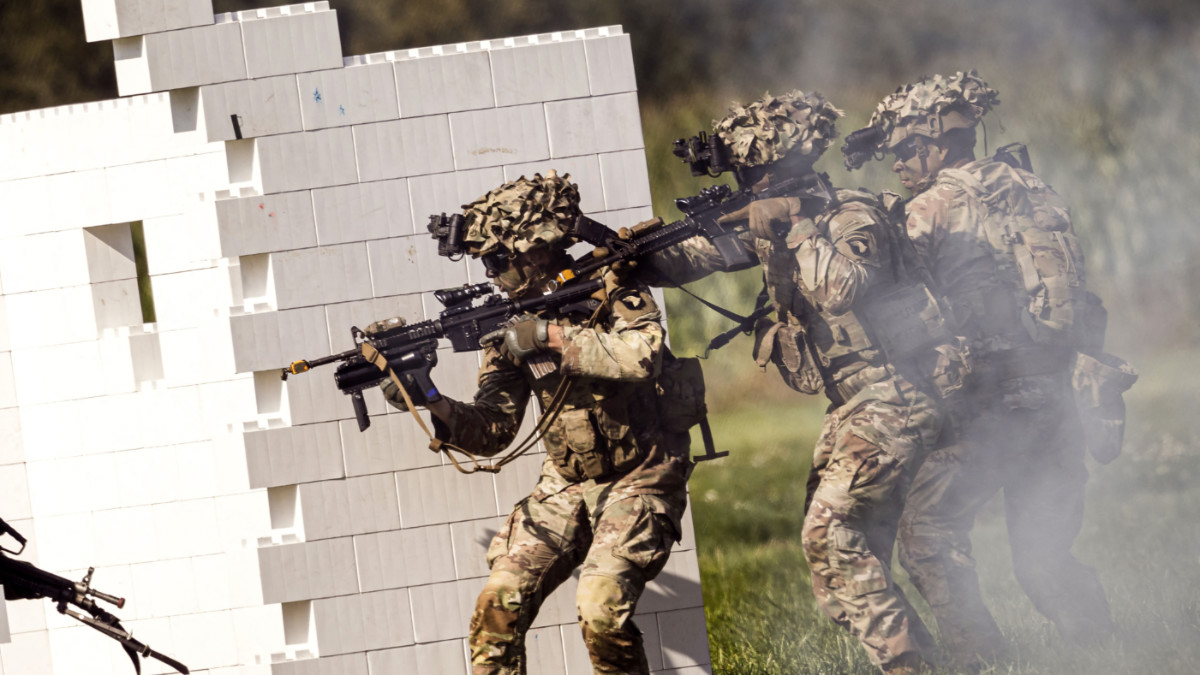
A potential US military operation to capture Iranian islands in the Gulf would confront American forces with a hazardous combat environment characterized by vulnerable supply lines and ambiguous strategic objectives, according to former US military officials and analysts interviewed by Middle East Eye.
The operational blueprint would commence with electronic warfare campaigns to disrupt Iranian radar and communications, followed by intensive aerial bombardment to dismantle coastal defenses. Seth Krummrich, former chief of staff for US special operations in the Middle East, emphasized the necessity of preliminary isolation efforts before any ground assault.
Primary targets under consideration include Kharg Island, responsible for 90% of Iran’s oil exports; Abu Musa and its associated islands, subject to territorial disputes with the UAE; and Qeshm Island, the largest and most fortified location containing tunnel networks for drones and missiles.
Military strategists note significant operational challenges distinct from historical Pacific island campaigns. Daniel Davis, former US Army lieutenant colonel, asserts that Iran’s control over the Strait of Hormuz would necessitate airborne insertion rather than amphibious landing due to the vulnerability of naval vessels. Potential transportation would involve V-22 Osprey aircraft, Chinook, and Black Hawk helicopters deploying troops from bases in Gulf partner nations.
The invasion force would comprise approximately 2,500 Marines from expeditionary units and 3,000 paratroopers from the 82nd Airborne Division. However, analysts highlight the critical dependency on basing rights from Gulf states including Saudi Arabia, UAE, and Kuwait—cooperation that remains politically complex.
Military experts draw concerning parallels to Britain’s 1982 Falklands campaign while noting more severe contemporary challenges. The geographical compression of the Gulf region and advancements in drone warfare create particularly adverse conditions. Kalev Sepp of the US Naval Postgraduate School noted that technological and geographical factors make such an operation more difficult than historical precedents.
Upon establishment of beachheads, US forces would face Iran’s decentralized ‘mosaic defense’ structure implemented by the Islamic Revolutionary Guard Corps. This guerrilla warfare approach, featuring 31 provincial commands with autonomous strike capabilities, would prevent conventional engagement and necessitate sustained defensive support from already stretched air and naval assets.
Logistical complications present another critical vulnerability. The requirement of approximately nine support personnel for every combat soldier—excluding maritime control and air cover—creates massive supply chain vulnerabilities under the umbrella of Iranian missile and drone capabilities. US bases throughout the Gulf have demonstrated vulnerability to Iranian strikes, with reporting indicating significant damage to regional facilities.
Experts suggest Iran could escalate through proxy forces like the Houthis targeting strategic waterways including the Bab al-Mandeb Strait, potentially triggering global energy price spikes. Additionally, seizure of economically critical islands like Kharg could prompt Iranian counter-escalation against regional energy infrastructure despite damaging their own economic interests.
Analysts conclude that most Iranian islands offer minimal strategic advantage unavailable through existing US bases in the region, questioning the fundamental operational rationale while highlighting extreme risks to personnel and regional stability.