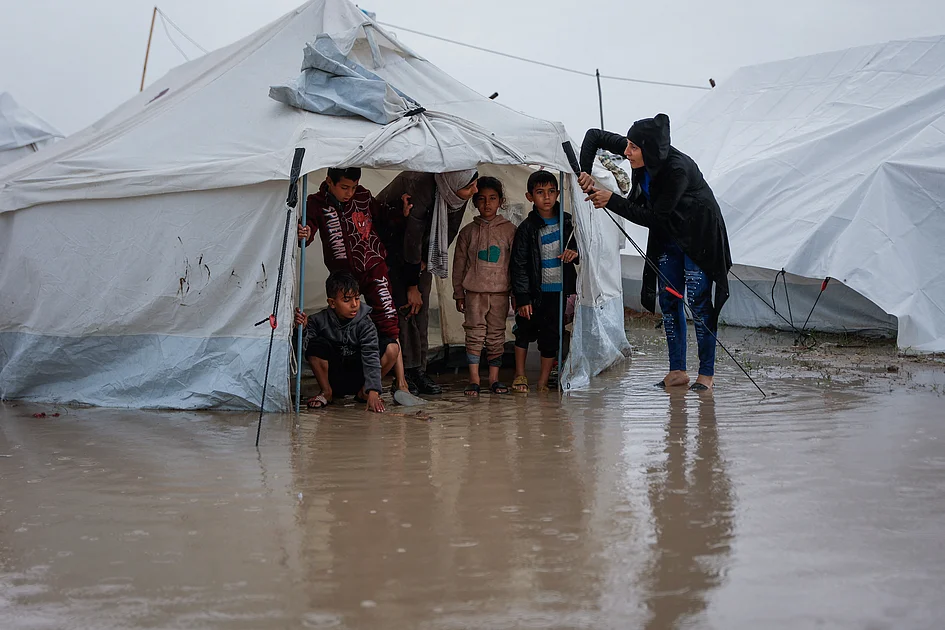
Heavy winter rainfall has plunged displaced Palestinians in Gaza into deeper misery, destroying or damaging over 42,000 tents and makeshift shelters according to United Nations assessments. The overnight deluge flooded camps within minutes, soaking food supplies and blankets while leaving vulnerable families exposed to freezing temperatures.
Jamil al-Sharafi, a 47-year-old father of six sheltering in Al-Mawasi, described watching his tent flood instantly. ‘My children are shivering from cold and fear… The tent was completely flooded within minutes. We lost our blankets, and all the food is soaked,’ he reported. His family is among approximately 1.5 million Gazans displaced by recent conflict, now surviving in temporary camps with inadequate protection from the elements.
This meteorological crisis follows similar heavy rains earlier in December that claimed at least 18 lives through building collapses and hypothermia according to Gaza’s civil defence agency. The UN humanitarian office confirmed 17 structures collapsed during the previous storm, compounding the devastation in a territory where 80% of buildings have already been damaged or destroyed by warfare.
Despite a fragile ceasefire between Israel and Hamas, the humanitarian situation remains critical. Displaced families crowd into tarpaulin tents surrounded by mud and standing water, with nighttime temperatures hovering between 8-12°C (46-54°F). Elderly resident Umm Rami Bulbul pleaded for mobile homes rather than tents, stating ‘Living in tents means we die from the cold in the rain and from the heat in the summer.’
The crisis is exacerbated by insufficient aid delivery. Amjad Al-Shawa, director of the Palestinian NGO Network in Gaza, revealed that of 300,000 tents needed, only 60,000 have reached the territory due to Israeli restrictions on humanitarian access. UNRWA chief Philippe Lazzarini condemned the situation on social media platform X, emphasizing ‘There is nothing inevitable about this. Aid supplies are not being allowed in at the scale required.’
Samia Abu Jabba articulated the collective despair: ‘I sleep in the cold, and water floods us and my children’s clothes. They are freezing. What did the people of Gaza and their children do to deserve this?’ The compounded crises of war destruction, inadequate shelter, and restricted aid have created what humanitarian organizations describe as one of the most severe emergency situations in the region.