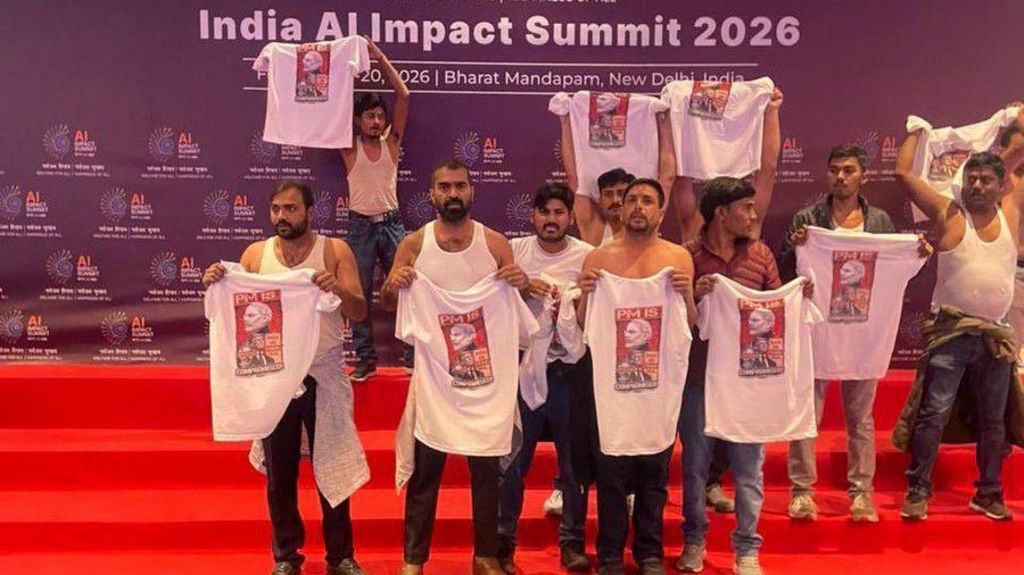
A dramatic demonstration at Delhi’s prestigious India AI Impact Summit has escalated into a significant political confrontation, exposing deep divisions over democratic expression in the world’s largest democracy. Members of the Indian Youth Congress, the youth wing of the primary opposition party, orchestrated a striking protest on February 20th during the summit’s closing ceremonies.
The protesters executed a carefully staged demonstration where they removed their jackets to reveal T-shirts criticizing Prime Minister Narendra Modi’s administration. Subsequently, they removed these shirts entirely while vocalizing strong opposition to rising unemployment rates and a proposed India-US trade agreement they claim would adversely affect farmers, small businesses, and youth employment prospects.
The visual documentation of this event rapidly circulated across social media platforms, triggering intense national discourse regarding appropriate forms and venues for political protest. This incident proved particularly contentious given the summit’s significance as a landmark gathering for artificial intelligence development in India and the Global South, featuring prominent international figures including Sam Altman and Dario Amodei.
Law enforcement authorities responded by arresting eight Youth Congress members, including National President Uday Bhanu Chib, on charges including rioting, criminal conspiracy, and unlawful assembly. Police allege the protest deliberately violated security protocols and involved jostling of officers, while investigators maintain Chib functioned as the ‘mastermind’ despite not being physically present at the demonstration.
The political fallout has reached the highest levels of government, with Prime Minister Modi condemning the Congress party for allegedly tarnishing India’s international standing. Conversely, Congress leader Rahul Gandhi has characterized the arrests as evidence of the government’s ‘dictatorial tendencies,’ defending the protest as legitimate patriotic expression rather than criminal activity.
This incident has ignited broader philosophical debates about democratic norms, with media outlets and political analysts offering polarized perspectives. Some commentators have criticized the protest as an inappropriate spectacle that undermined a significant international event, while others have defended it as a valid exercise of democratic dissent within important public forums.
The judicial proceedings continue as Chib remains in police custody, with his legal representatives challenging the evidentiary basis for conspiracy charges. The case has subsequently inspired additional protests from Youth Congress members, ensuring this political confrontation remains at the forefront of India’s ongoing discourse about the boundaries between legitimate protest and public disruption.