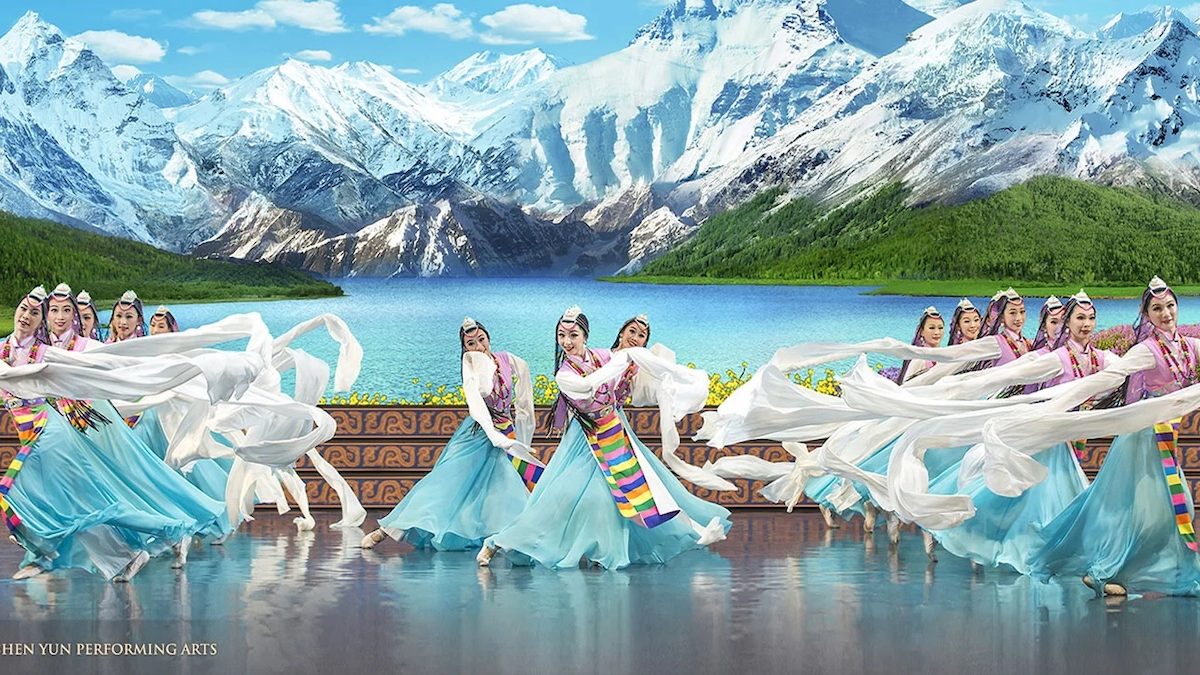
On a Tuesday evening, Australian Prime Minister Anthony Albanese was abruptly evacuated from his official Canberra residence, the Lodge, after a bomb threat was traced directly to the ongoing dispute over the New York-based dance troupe Shen Yun Performing Arts. In an emailed threat targeting the group, the sender claimed explosive devices would be detonated unless Shen Yun canceled its scheduled performances across Australia.
This incident is far more than an isolated act of intimidation; it marks the latest flashpoint in a growing, high-stakes transnational struggle over cultural representation, political narrative, and who holds the right to define Chinese culture for a global audience. To understand the stakes of this confrontation, it is first necessary to unpack the origins and mission of the organization at the center of the controversy.
Shen Yun, whose name translates loosely to “divine rhythms,” was founded in 2006 by practitioners of the Falun Gong spiritual movement. The group frames itself as a reviver of traditional Chinese culture, specifically what it calls “China before communism,” and operates as a global touring classical dance and music company based out of New York. Its performances blend elaborate choreography, symphonic scores, and digital backdrops with narrative segments that center on the alleged persecution of Falun Gong members within mainland China.
Falun Gong itself is a new religious movement that emerged in 1992, drawing roots from traditional Chinese qigong meditation practices and integrating moral teachings from Chinese Buddhism and Daoism. The Chinese government banned the group as an illegal organization in 1999, and over the following decades, Falun Gong evolved into a transnational dissident movement with clear religious, political, and cultural agendas. Shen Yun acts as one of the movement’s primary cultural outreach arms, alongside the media outlet The Epoch Times, and currently tours regularly to 36 countries, performing primarily in high-profile, elite cultural venues. The organization is best understood as a hybrid entity: it is simultaneously a commercial performing arts enterprise, a vehicle for a diasporic religious movement, and an platform for exiled political and cultural messaging that directly challenges the Chinese government’s global narrative.
Shen Yun has faced widespread criticism from multiple quarters. Chinese government officials have long labeled the group a dangerous “cult” and a political tool that peddles a distorted, misleading version of Chinese culture. The organization has also drawn condemnation from independent observers outside of China: a 2024 New York Times investigation exposed systemic poor treatment of injured dancers, with one former performer filing a lawsuit alleging the organization operates as an exploitative “forced labor scheme” that abuses young artists.
Beyond these critiques, the Chinese government’s sharp reaction to Shen Yun reveals a deeper core strategic concern. Since the beginning of the 21st century, Beijing has poured billions of dollars into building global cultural soft power, launching initiatives ranging from the Confucius Institute network to widespread expansion of state-sponsored international media. These efforts are built on a foundational premise: that the Chinese state is the sole legitimate custodian of Chinese civilization and the only authorized representative of Chinese cultural identity on the global stage. This framing aligns closely with Chinese President Xi Jinping’s “Chinese Dream” narrative, which emphasizes patriotism, national rejuvenation, and China’s rise as a dominant global power.
Shen Yun upends this entire premise by rejecting the Chinese state’s exclusive right to define authentic Chinese culture. For Shen Yun’s supporters, the organization preserves the true, unfiltered spirit and heritage of Chinese culture in the face of what they call the Chinese government’s ongoing transnational campaign to suppress Falun Gong.
Traditionally, global cultural representation and cultural diplomacy have been the exclusive domain of sovereign nation-states. State-backed entities – national ballet companies, symphony orchestras, cultural institutes like Confucius Institutes, and official festival delegations – have long been the primary vehicles for projecting a country’s soft power abroad. Shen Yun upends this established model entirely: it operates as a non-state actor that uses the universal language of performance art to advance a narrative that directly contradicts the Chinese government’s official representation of Chinese culture.
Rather than promoting the official Chinese concept of “positive energy,” Shen Yun centers its narrative on struggle, survival, and resistance against political repression, all while presenting its own interpretation of traditional Chinese culture. It is not merely presenting a cultural performance; it is actively challenging the Chinese state’s global cultural authority, arguing that authentic Chinese culture is shaped by diasporic communities and individual people, not by government mandate.
This confrontation has turned ordinary Western cultural spaces into unexpected battlegrounds for a new kind of 21st-century geopolitics. Shen Yun intentionally targets its outreach to Western liberal cultural markets, staging performances in major mainstream theaters, marketing itself as high-end cultural entertainment – tickets for its current Australian tour range from 100 to 300 Australian dollars – and claiming protection under widely accepted norms of artistic freedom.
The recent bomb threat that triggered Albanese’s evacuation, while authorities have found no credible evidence linking the threat to the Chinese government, illustrates how quickly cultural disputes can spiral into national security concerns in this new geopolitical landscape. What began as a disagreement over cultural representation has now spilled into the very heart of Australian political life, proving that cultural performances can carry outsized political weight in an era of transnational media and widespread diaspora political mobilization.
The Shen Yun controversy is not an isolated incident; it is a clear symptom of a shifting global geopolitical order marked by the fragmentation of traditional cultural sovereignty. Multiple competing actors now vie for the right to define what counts as authentic Chinese culture, and who gets to represent that culture to the world. From major theater halls across Western countries to the prime minister’s official Canberra residence, these transnational cultural and political struggles are increasingly playing out in public view. As this analysis from Haiqing Yu, a professor in the School of Media and Communication at RMIT University, notes, Western liberal democracies like Australia can expect to see more such disputes in the coming years, as culture, religion, and political legitimacy become ever more deeply entangled across national borders.