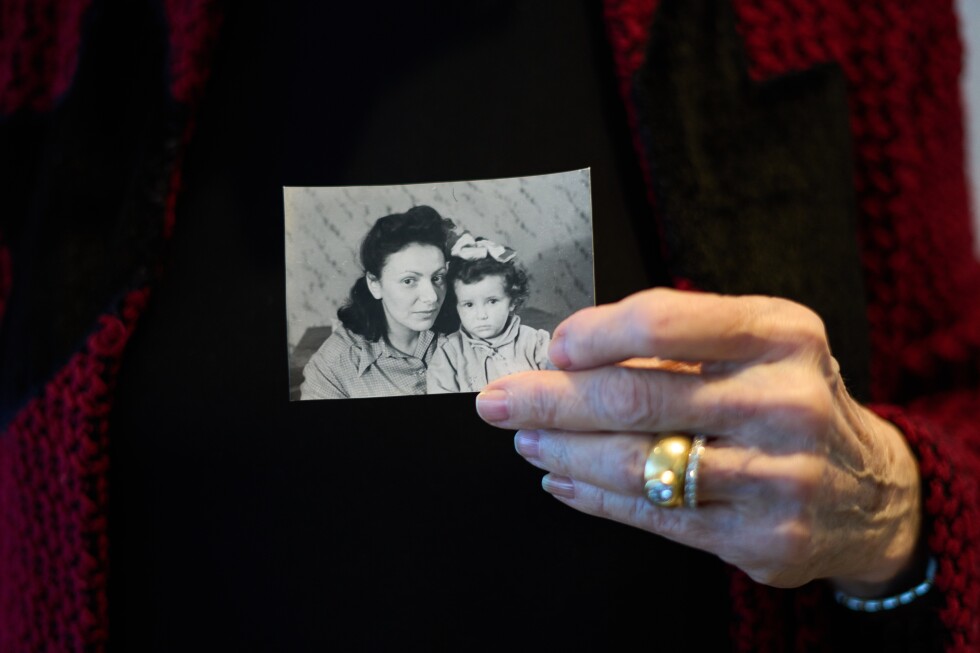
TEL AVIV, Israel — Ilana Kantorowicz Shalem, among the youngest living Holocaust survivors at 81 years old, has chosen to break her lifelong silence by revealing an extraordinary story of survival that begins with her birth in the Bergen-Belsen concentration camp during the final days of World War II.
Her mother, Lola Kantorowicz, concealed her pregnancy amidst the horrific conditions of the camp, where widespread starvation made distended bellies commonplace. On March 19, 1945—just thirty days before British forces liberated the camp—Ilana was born as Russian troops advanced through Germany. Archivist Sima Velkovich of Yad Vashem described the circumstances as “unimaginable,” noting the camp was filled with “mountains of corpses” and thousands of desperately ill prisoners at the time.
Shalem’s survival represents a statistical miracle. Most infants born in concentration camps were immediately killed by Nazi authorities. Her existence only became possible because the Nazi leadership was in disarray during the war’s final weeks.
The backdrop to this revelation comes as the world prepares to observe International Holocaust Remembrance Day on January 27, the anniversary of the liberation of Auschwitz-Birkenau. This year’s commemorations occur amidst rising global antisemitism following the Israel-Hamas conflict.
Shalem’s parents, Lola Rosenblum and Hersz (Zvi) Abraham Kantorowicz, first met as teenagers in the Tomaszow Ghetto in Poland. They maintained a clandestine relationship through multiple labor camps after being separated from their families. Though they married informally in the ghetto, they were ultimately separated in 1944. Hersz perished in a death march just days before the war’s end.
Lola survived Auschwitz, the Hindenburg labor camp, and a death march to Bergen-Belsen while pregnant. “If they discovered she was pregnant, they would have killed her,” Shalem explained. “She hid her pregnancy from everyone, including her friends, because she didn’t want the extra attention or anyone to give her their food.”
Following liberation, baby Ilana became a symbol of hope in the displaced persons camp. “Actually, I was everyone’s child,” Shalem recalled. “For them, it was some kind of sign of life.” Photographs from the period show a healthy infant surrounded by adoring adults who saw her as “a new seed” of hope.
Shalem noted that discussing Holocaust experiences was largely taboo in Israeli society during the 1960s when she first began asking her mother questions. “Now we know, in order to absorb trauma, we need to talk about it,” she said, contrasting this with the immediate public sharing by survivors of the October 7 Hamas attacks.
The decision to share her story comes as Holocaust survivors dwindle in number. According to the Claims Conference, approximately 196,600 survivors remain alive today, with nearly half residing in Israel. Nearly 25,000 survivors passed away last year alone, with the median age now 87.
Shalem, who has two daughters, reflects on her mother’s extraordinary strength: “It’s a situation that was very unusual, it probably required special strength to be able to believe. She said that one of the things was that if she had known my father was killed, she wouldn’t have tried so hard. She wanted him to know me.”