On Tuesday, Shanghai became the focal point for global education and technology innovation as it hosted the 11th Science Education Forum organized by the Academic Divisions of the Chinese Academy of Sciences, bringing together hundreds of stakeholders to examine how artificial intelligence and human intelligence can work in tandem to reshape modern K-12 and higher education.
Held at Shanghai Jiao Tong University, this year’s forum centered its core discussions on two pressing priorities for modern education: the ongoing transformation of science-focused classrooms and the advancement of adaptive, personalized learning for primary and secondary school students. More than 400 attendees, including school principals, K-12 frontline educators, educational research scholars, and university-based experts from across China, participated in targeted workshops and dialogues exploring the shifting landscape of 21st century education.
Speaking at the opening ceremony, representatives from key international bodies including the United Nations Development Programme and the United Nations Educational, Scientific and Cultural Organization joined leadership from the Chinese Academy of Sciences to set the agenda for the event. Forum participants uniformly emphasized that robust, forward-thinking science education forms the foundational backbone of nurturing the next generation of innovative talent. They highlighted that the thoughtful deep integration of artificial intelligence tools with human-led instruction is injecting critical new momentum into science education systems to meet the demands of the modern era.
On the same day the main forum concluded, Shanghai Jiao Tong University convened a parallel high-level summit at Shanghai Grand Zero Bay focused on AI-driven empowerment for the integrated development of education, scientific research, and talent cultivation. This complementary event drew university presidents and senior representatives from more than 40 top higher education institutions across the globe. Through a series of keynote addresses and closed-door in-depth dialogues, attendees exchanged insights on three core challenges: reshaping educational frameworks to keep pace with AI advancement, leveraging new technologies to accelerate scientific progress, and adapting talent development pipelines to meet evolving workforce needs in the AI age.
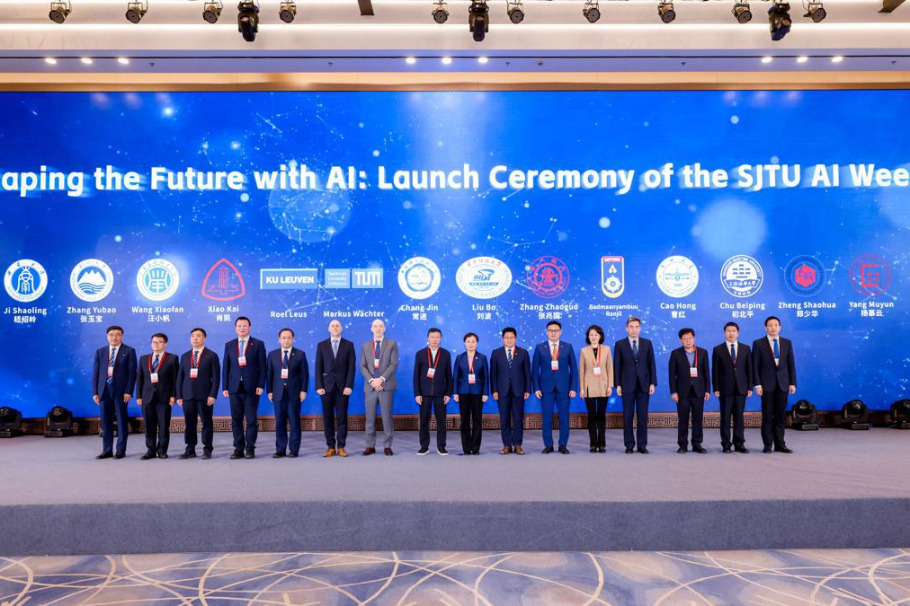
To cap off the day’s announcements, organizers officially launched the annual “SJTU AI Week” initiative, a recurring event scheduled to take place every April. The program is designed to build actionable connections between the academic education sector, cutting-edge technology research, and industrial practice, creating a sustained cross-disciplinary platform that fosters collaborative exchange and innovative problem-solving at the intersection of AI and education.