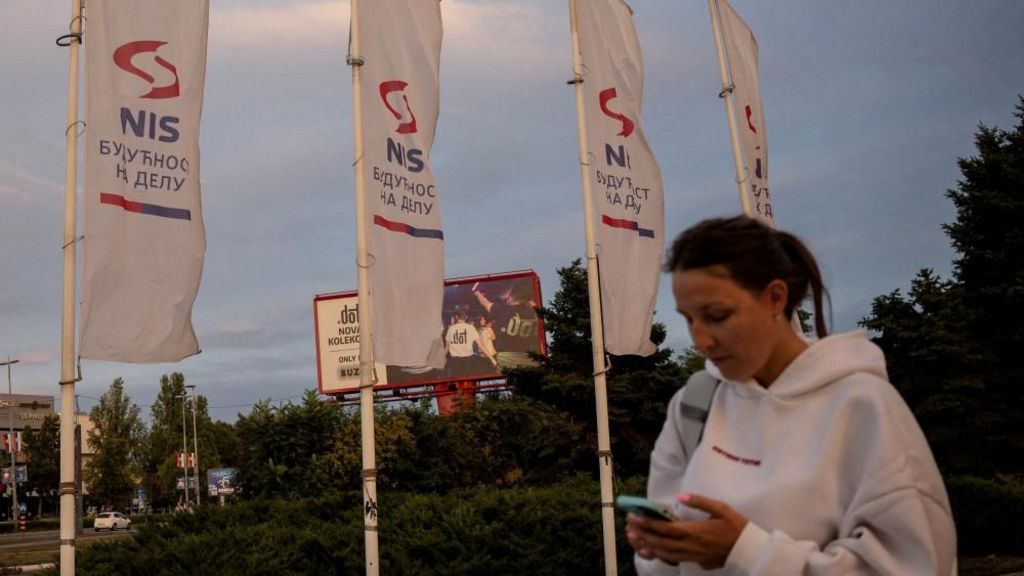
Serbia finds itself in a precarious position as US sanctions on its national oil company, NIS, exacerbate tensions with its traditional ally, Russia. Russian state-owned energy giants Gazprom and Gazprom Neft control over 50% of NIS, placing the company in a bind following the sanctions imposed last month due to its ties to Russia’s energy sector. Serbian Energy Minister Dubravka Djedovic Handanovic revealed that NIS’s Russian shareholders have sought a US waiver, signaling their willingness to transfer control to a third party. However, time is running out, with Serbia’s oil refineries expected to exhaust their crude supply by the end of November. The sanctions have already disrupted NIS’s operations, forcing its petrol stations to stop accepting Visa and Mastercard payments, while Croatia has halted oil deliveries via the Janaf pipeline. Serbia is not alone in facing such challenges; neighboring Bulgaria has moved to nationalize its sole oil refinery ahead of impending sanctions. Meanwhile, Hungary secured a one-year waiver from US sanctions, highlighting the region’s divergent responses. The crisis has strained Serbia’s historically close ties with Russia, particularly over energy and arms trade. While Serbia relies on Russian gas at favorable rates, Moscow appears reluctant to renew the supply deal, leaving President Aleksandar Vucic ‘very disappointed.’ Additionally, Serbia’s arms exports to third countries, which indirectly support Ukraine, have further soured relations. Despite these challenges, Vucic remains committed to Serbia’s EU integration, a stance that may be reinforced by the current crisis. The outcome of the US waiver request remains uncertain, but the episode underscores the broader geopolitical shifts reshaping the Balkans.