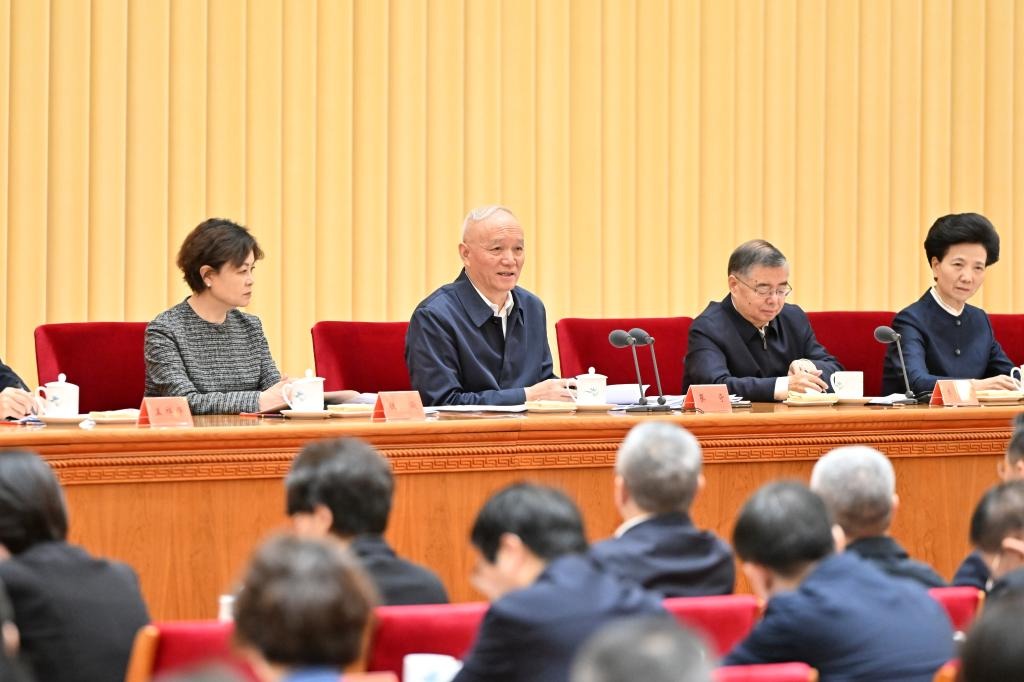
In a significant national meeting of propaganda officials convened in Beijing on January 5, 2026, senior Communist Party of China official Cai Qi articulated the crucial role of ideological work in supporting China’s modernization objectives. The high-level gathering brought together publicity officials from across the nation to coordinate strategic communications efforts.
Cai Qi, who serves on the Standing Committee of the Political Bureau of the CPC Central Committee and as a member of the Secretariat, outlined five priority areas for the country’s propaganda work. These include intensifying the study and dissemination of the Party’s theoretical innovations, strengthening the Party’s capacity to guide public opinion, promoting socialist core values, developing cultural services and industries, and enhancing the global influence of Chinese civilization.
The senior leader emphasized that these efforts would provide essential ideological assurance, spiritual motivation, and favorable cultural conditions for achieving national rejuvenation through Chinese modernization. Specifically, he highlighted the importance of establishing a robust foundation during the initial phase of China’s 15th Five-Year Plan period (2026-2030).
Cai further stressed the necessity of consolidating socialist core values, advancing the integration of cultural and tourism sectors, and improving international communication capabilities to present a comprehensive and authentic representation of China to the global community.
Concurrent with Cai’s address, Li Shulei, head of the Publicity Department of the CPC Central Committee and member of the Political Bureau, detailed specific implementation tasks for the propaganda system. Li emphasized the critical need for effective execution of these directives with a heightened sense of responsibility and mission.
The high-level meeting signifies the continued importance the CPC leadership places on ideological work as an integral component of China’s development strategy and governance approach.