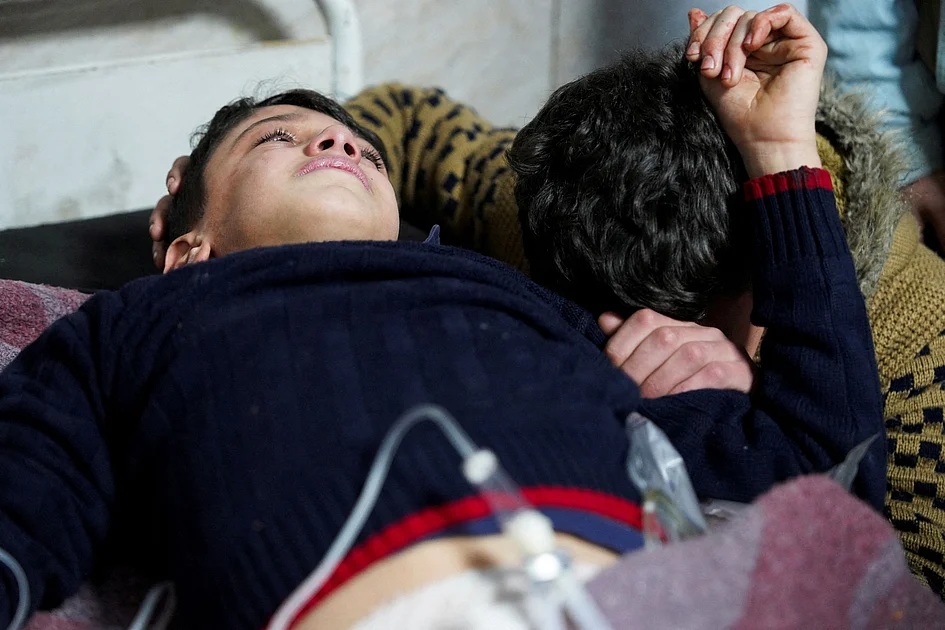
The Syrian city of Aleppo has been plunged into a state of emergency as persistent armed confrontations between government forces and Kurdish-led factions entered their second consecutive day. The escalating violence has prompted authorities to implement widespread closures of educational institutions, government offices, and commercial establishments throughout the northern metropolis.
According to state media reports, the renewed hostilities represent the most severe breach of a March 2025 agreement that envisioned the integration of Kurdish semi-autonomous administrations into Syria’s central governance structure. The conflict has already claimed nine lives, predominantly civilians, with conflicting accounts from both sides regarding responsibility for initiating the combat operations.
Civil aviation authorities have enacted emergency measures, suspending all flight operations at Aleppo International Airport for 24 hours and diverting air traffic to Damascus International Airport. The transportation disruption compounds the city’s paralysis, with residents reporting complete blackouts in numerous neighborhoods and minimal civilian movement after dark.
Eyewitness accounts depict a city under siege. Abdul Karim Baqi, a 50-year-old resident of one of Aleppo’s Kurdish-majority districts, described to AFP: ‘During nighttime, Aleppo transformed into an abandoned urban landscape—devoid of activity, with shuttered commercial establishments and extensive power outages creating pervasive darkness across numerous thoroughfares.’
The Kurdish-administered neighborhoods of Ashrafieh and Sheikh Maqsud have reportedly been completely encircled by government forces. Abdul Karim Omar, representing Kurdish autonomous administration in Damascus, asserted that these areas remain under the control of Kurdish security forces possessing only light weaponry, denying allegations that shelling originated from these districts.
The current violence evokes traumatic memories of Aleppo’s destructive role during the Syrian civil war, when the city endured devastating urban combat before government forces reclaimed control in 2016. The present conflict emerges against the backdrop of failed implementation of the integration agreement, with Kurdish advocates continuing to push for decentralized governance arrangements that Syria’s current Islamist leadership has consistently rejected.