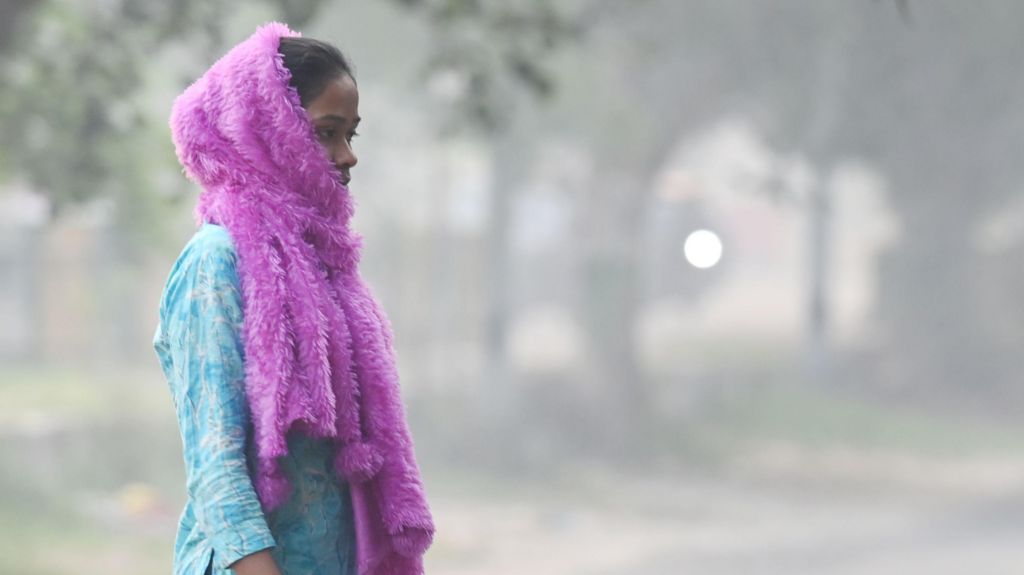
Delhi, the Indian capital, is grappling with a severe air pollution crisis, prompting authorities to implement stringent measures to mitigate the health risks. Schools have been directed to adopt hybrid learning models for primary students, while non-essential construction activities have been suspended. On Tuesday, stricter anti-pollution protocols were enforced, including restrictions on the movement of goods carriers in the city and its suburbs. The air quality in Delhi has plummeted to ‘severe’ levels, posing significant health hazards to both healthy individuals and those with pre-existing conditions. On Wednesday, the PM2.5 concentration soared to 438, a staggering 30 times higher than the World Health Organization’s (WHO) safe limit of 15 and eight times above India’s national average. Doctors have issued urgent advisories, urging residents, particularly children and the elderly, to avoid outdoor activities unless absolutely necessary and to wear protective masks when venturing outside. The recurring issue of toxic air quality in Delhi and northern India during winter is attributed to a combination of factors, including low wind speeds, industrial emissions, vehicle exhaust, dropping temperatures, and the seasonal burning of crop stubble in neighboring states. The Delhi government has activated Stage 3 of the Graded Response Action Plan (GRAP), which includes bans on mining, stone crushing, and the movement of vehicles carrying dust-generating materials. The worsening air quality has sparked public protests and political disputes, with opposition leader Saurabh Bhardwaj accusing the government of manipulating air quality data and failing to declare a public health emergency. The ruling Bharatiya Janata Party (BJP) has denied these allegations, asserting its commitment to pollution control. Delhi Environment Minister Manjinder Singh Sirsa emphasized that air quality data is publicly accessible and clarified that water sprinkling near monitors aims to reduce dust, not manipulate readings.