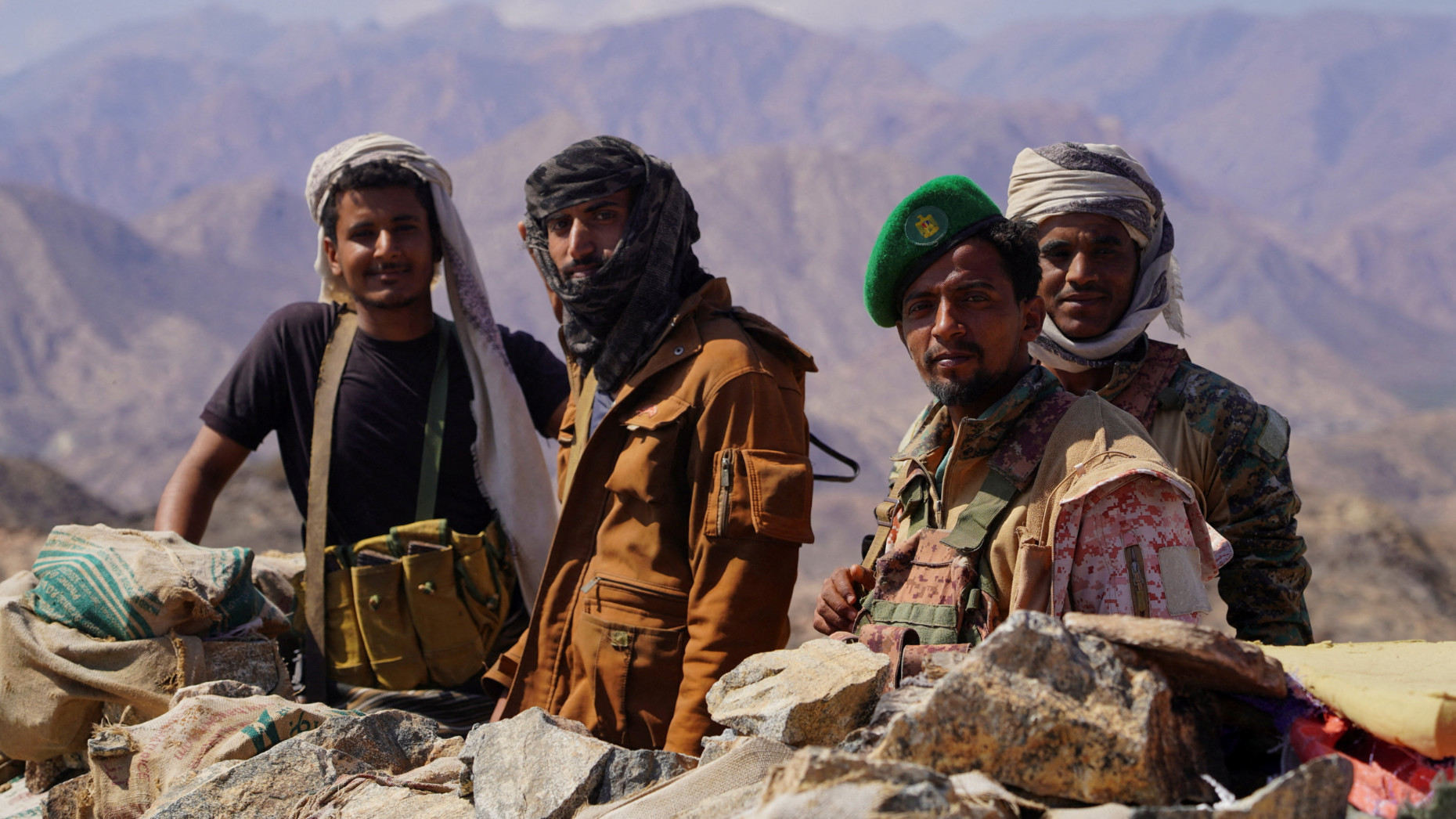
A significant military redeployment is underway in Yemen’s complex civil war landscape as Saudi-backed forces withdraw from key positions, creating new geopolitical tensions between Gulf powers. The National Shield Forces (NSF), a pro-government military faction, have unexpectedly vacated their regular bases across southern governorates including Aden, Lahj, Abyan, and al-Dhali, repositioning to the strategic corridor between al-Wadiah and al-Abr—immediately west of the contested Hadramaut region.
This development follows weeks of escalating tensions sparked by the Emirati-backed Southern Transitional Council (STC) asserting control over Hadramaut and al-Mahra governorates. The STC’s armed wing has refused to withdraw from these eastern territories despite pressure from Yemen’s internationally recognized Presidential Leadership Council (PLC).
Notably, a WhatsApp voice recording circulated by NSF commander Bashir Seif congratulated troops on the redeployment while conspicuously omitting any mention of PLC president Rashad al-Alimi, instead expressing exclusive gratitude to Saudi Arabia’s defense ministry—a telling diplomatic snub that underscores shifting alliances.
Local reports indicate this realignment follows closed-door negotiations between STC representatives and Saudi military officials, resulting in a tentative understanding: control of Hadramaut would transition to STC-aligned Hadrami Elite Forces, with the separatist group committing to withdraw its own combat units. As part of this arrangement, the STC would consolidate authority over Aden and Socotra while NSF forces establish presence near Saudi border regions.
The STC justified its eastern expansion as a necessary campaign against corruption, smuggling networks, and extremist organizations including Islamic State and al-Qaeda in the Arabian Peninsula, claiming to restore stability to neglected regions. However, the group’s ultimate objective remains the secession and re-establishment of an independent Southern Yemen, reversing the 1990 unification.
This power play has exposed growing friction between Saudi Arabia and the United Arab Emirates, both nominal allies in the coalition against Houthi rebels. Saudi Arabia has historically supported Hadrami tribes and the PLC, while the UAE openly backs and funds the separatist STC, with many STC leaders maintaining direct ties to Abu Dhabi.
The tension manifested unusually publicly through critical coverage in Saudi news outlets—a rare display of diplomatic divergence reminiscent of their differing approaches to the Sudan conflict. Saudi Arabia subsequently closed Yemen’s airspace temporarily, a move analysts suggest facilitated the strategic withdrawal from STC-controlled territories including Aden’s Presidential Palace, facilities at Aden International Airport, and Mayun Island in the critical Bab al-Mandab Strait.
Concurrently, the STC has been establishing parallel governance structures including the newly created Southern Fatwa Authority, extending its influence beyond military and administrative control to religious legitimacy—a significant step in consolidating state-like authority amid Yemen’s fractured political landscape.