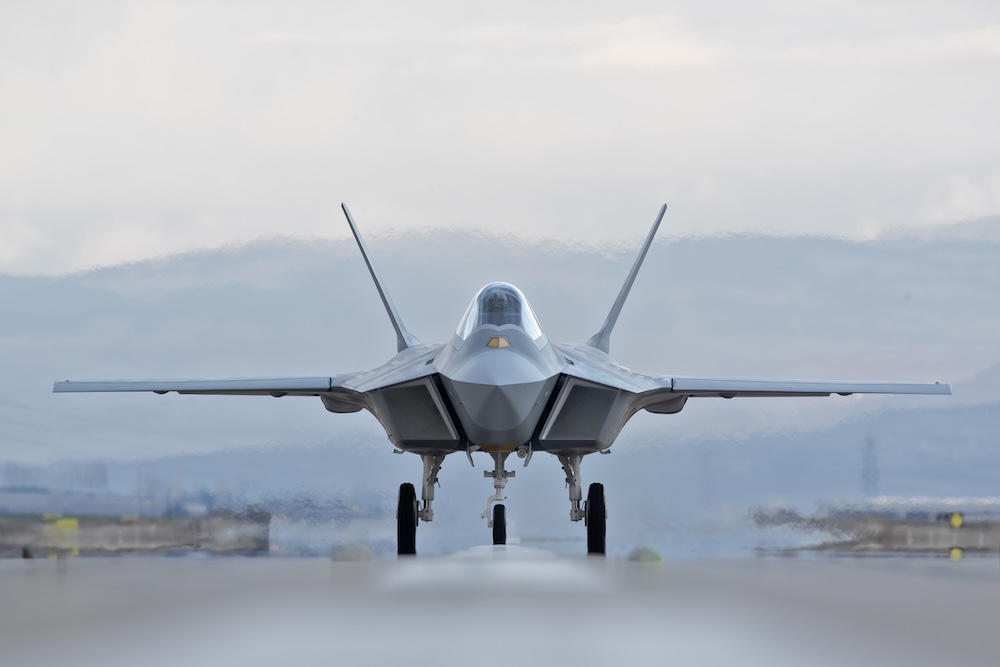
Turkish President Recep Tayyip Erdogan has announced that Saudi Arabia is poised to become a strategic partner in Turkey’s ambitious fifth-generation Kaan fighter jet program. The revelation came during Erdogan’s return journey from diplomatic visits to Egypt and Saudi Arabia, where defense cooperation emerged as a cornerstone of bilateral discussions.
“We are executing substantial defense industry collaboration agreements with Saudi Arabia and remain committed to enhancing these partnerships further,” Erdogan stated to accompanying journalists. He emphasized that a joint investment framework for the Kaan initiative is under active consideration, with implementation potentially imminent.
Turkey’s pursuit of advanced aerial capabilities gained urgency following its 2019 expulsion from the U.S.-led F-35 program, a consequence of Ankara’s controversial acquisition of Russian S-400 missile defense systems that triggered Congressional sanctions. The Kaan project, while technologically ambitious, presents significant financial challenges that have prompted Turkey to seek international investment partners.
The program recently secured a major endorsement through Indonesia’s commitment to acquire 48 Kaan aircraft in a landmark $10 billion agreement spanning ten years, which includes localized co-production components. Several nations including Qatar and Azerbaijan have additionally expressed procurement interest.
Technologically, the Kaan prototype achieved its inaugural flight in February 2024 utilizing temporary General Electric F110-GE-129 engines—the same powerplants employed by Turkey’s F-16 fleet. Turkish Aerospace Industries (TAI), the program lead, is concurrently developing indigenous engine technology to achieve full operational independence.
Delivery timelines project the first Kaan jet joining the Turkish Air Force by 2028, though analytical assessments suggest potential delays until 2030. Initial production models (Block-1 variants) are scheduled for deployment between 2030 and 2033, representing a critical milestone in Turkey’s defense industrialization strategy.