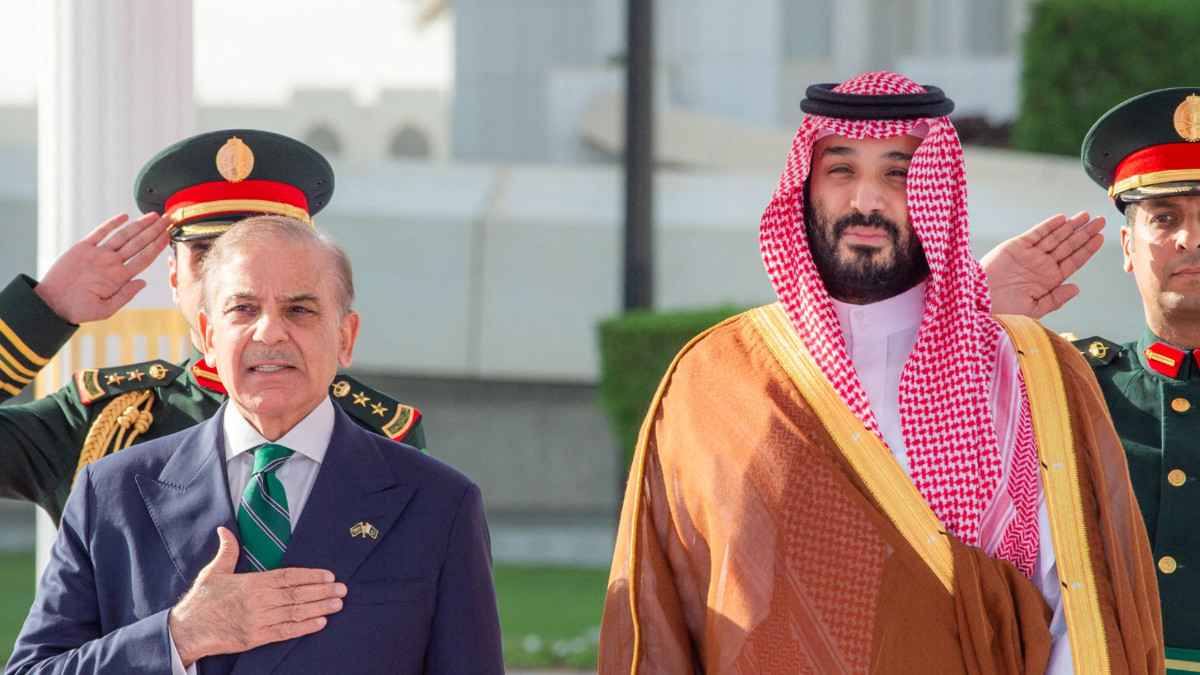
A prominent Saudi geopolitical analyst has revealed that any direct Saudi involvement in a US-Israeli military campaign against Iran would trigger the kingdom’s mutual defense agreement with Pakistan, potentially bringing Pakistani nuclear capabilities into the regional conflict.
Salman al-Ansari, a respected Saudi geopolitical researcher, stated in an exclusive interview with Canada’s CBC News that full Saudi military engagement would make Iran “the biggest loser” due to the automatic activation of the Riyadh-Islamabad defense pact. “We can say it literally that there is a nuclear umbrella over Saudi Arabia,” al-Ansari emphasized during the revealing discussion.
The significant defense agreement, formalized last year following Israeli strikes on Hamas negotiators in Doha, establishes a collective security framework structurally comparable to NATO’s Article 5. Official documents from both governments explicitly state that “any aggression against either country shall be considered an aggression against both,” creating potential obligations for Pakistani military assistance if Saudi territory faces sustained attacks.
This development occurs amid escalating regional tensions, with Saudi infrastructure already experiencing repeated assaults from Iranian ballistic missiles and drone attacks. Critical facilities including the US Embassy in Riyadh, Prince Sultan Air Base, and vital energy installations have been targeted, while Iran’s strategic control over the Strait of Hormuz has significantly impacted Saudi oil exports.
Despite developing alternative energy export routes like the East-West pipeline, which maintains approximately four million barrels per day in crude sales bypassing Hormuz, Saudi leadership faces mounting pressure regarding potential direct involvement in offensive operations against Iran. The kingdom, along with other Gulf states, had previously lobbied the Trump administration against military engagement with Tehran.
The Pakistan dimension introduces complex global implications, potentially internationalizing the conflict beyond the Middle East. Pakistani Foreign Minister Ishaq Dar recently confirmed discussing the defense pact directly with Iranian counterpart Abbas Araghchi, noting Tehran’s demand for assurances that Saudi territory wouldn’t serve as a staging ground for attacks against Iran.
Energy dependencies further complicate the situation, with Pakistan relying heavily on Gulf crude oil and natural gas imports. In a significant development this week, a Pakistani-flagged tanker successfully transited the Strait of Hormuz with its tracking systems active—the first vessel carrying non-Iranian crude to do so—following apparent diplomatic negotiations between Islamabad and Tehran.