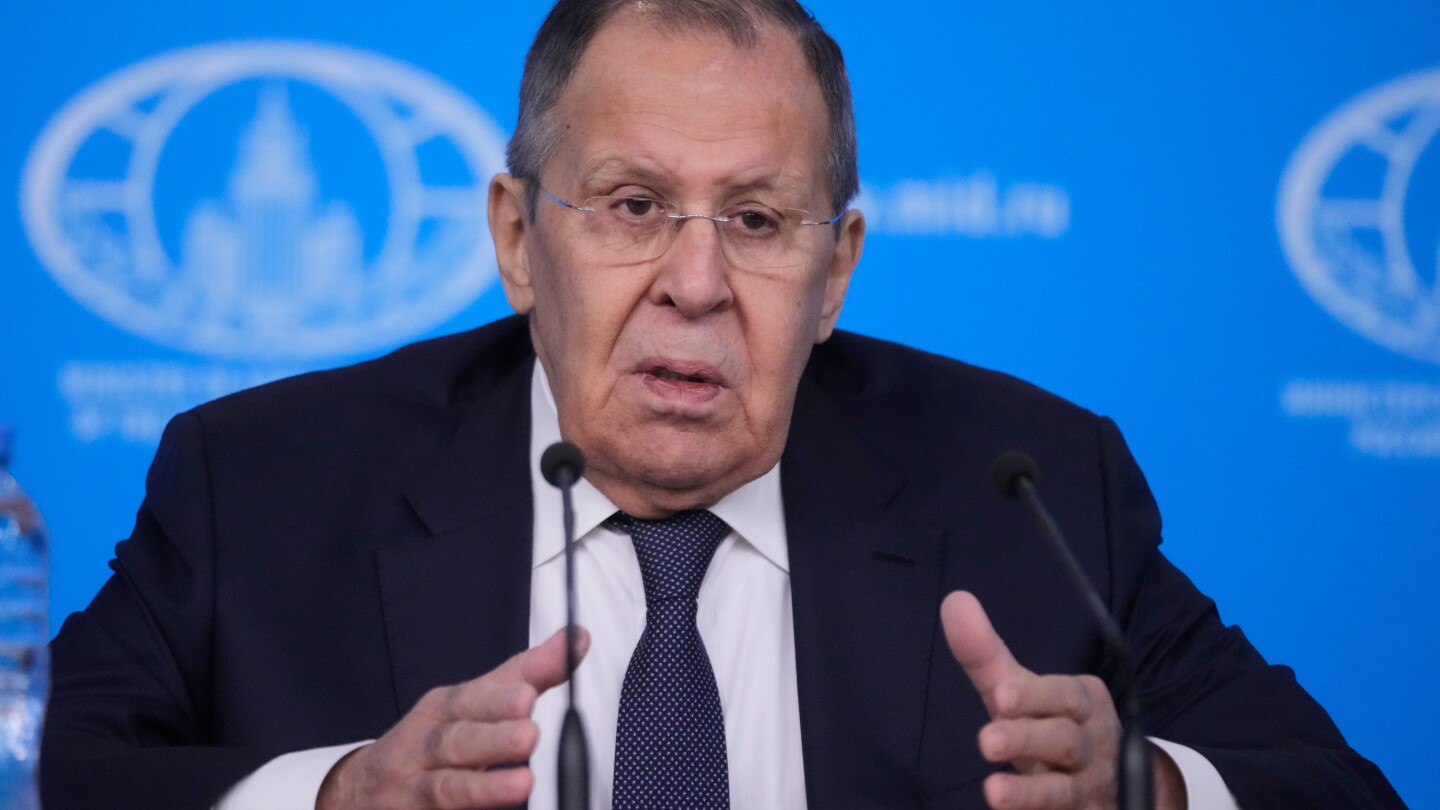
Russian Foreign Minister Sergey Lavrov declared Tuesday that former U.S. President Donald Trump’s attempt to acquire Greenland signals a “deep crisis” within NATO that threatens the alliance’s fundamental cohesion. Speaking at his annual foreign policy briefing in Moscow, Lavrov characterized the episode as evidence of deteriorating unity among Western nations.
Lavrov expressed astonishment at the geopolitical implications, noting that “it was hard to imagine before that such a thing could happen” within the military alliance. He suggested the move could theoretically create scenarios where “one NATO member is going to attack another NATO member,” fundamentally undermining the bloc’s security foundations.
The Russian diplomat framed Trump’s actions as upending the Western-established “rule-based global order” that Moscow has consistently criticized. “Now it’s not the Collective West writing the rules but just one its representative,” Lavrov stated sardonically, adding that “the Euro-Atlantic concept of ensuring security and cooperation has discredited itself.”
Regarding Greenland’s status, Lavrov described Denmark’s control as “a vestige of the colonial past,” asserting that “Greenland isn’t a natural part of Denmark.” However, he firmly denied Trump’s suggestions that Russia or China pose threats to the Arctic territory, stating “We have no relation to that.”
Lavrov offered measured support for Trump’s proposed ‘Board of Peace,’ noting the Kremlin is studying the invitation. He praised this initiative as reflecting “the U.S. understanding that even with the foreign policy philosophy it has it considers necessary to rally a group of nations that would cooperate with them.”
The Foreign Minister particularly commended Trump’s approach to Ukraine negotiations, describing the U.S. as the only Western country that has “expressed understanding of the need to take Russian interests into account.” He criticized European allies for attempting to modify proposals that initially included protections for Russian speakers and the Moscow-affiliated Ukrainian Orthodox Church.
Lavrov warned that Moscow “won’t allow the luxury of once again letting the Kyiv regime to take a break and rearm,” while expressing pessimism about agreements with European leaders who “drove themselves too deeply into hating Russia.”
The diplomat also addressed broader tensions, condemning the U.S. capture of Venezuelan leader Nicolás Maduro as “crude military intervention” and criticizing Washington’s rejection of extending New START nuclear arms limits. Despite these tensions, Lavrov expressed openness to continued dialogue with the U.S. based on “mutual respect for national interests,” recalling productive discussions with Secretary of State Marco Rubio in Riyadh.