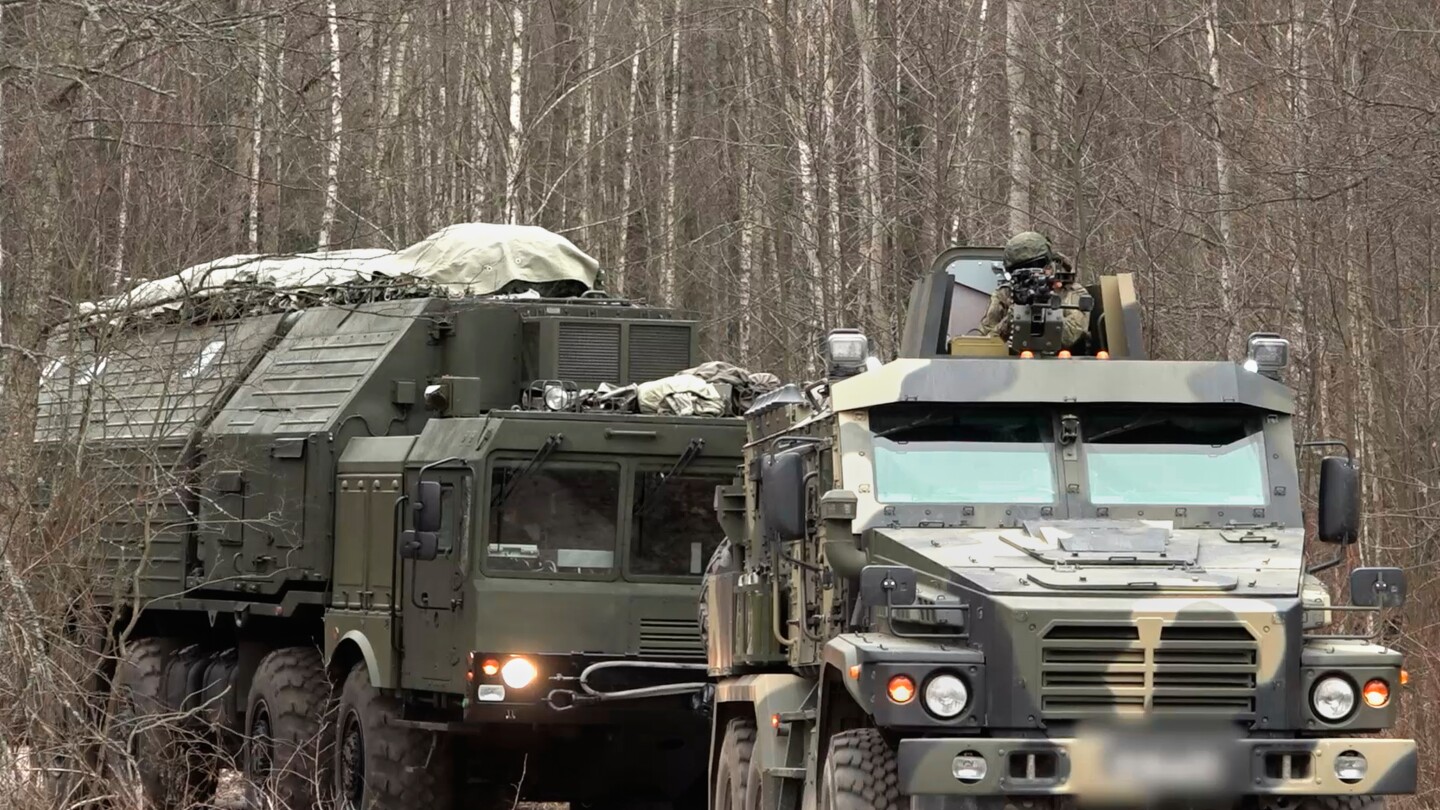
Russia’s Ministry of Defense confirmed on Tuesday the operational deployment of its advanced Oreshnik missile system, a nuclear-capable weapon platform, during a ceremonial event in Belarus. The announcement arrives at a delicate juncture in international efforts to broker peace between Moscow and Kyiv.
President Vladimir Putin had previously indicated in early December that the Oreshnik system would assume combat duties this month. During high-level military consultations, the Russian leader emphasized that Moscow would pursue expanded territorial gains should Ukraine and Western allies reject Kremlin conditions in ongoing negotiations.
The missile system, whose name translates to “hazelnut tree” in Russian, represents a significant escalation in Russia’s strategic capabilities. Military experts confirm the Oreshnik can deliver multiple warheads at hypersonic velocities reaching Mach 10, with sufficient range to target locations across Europe. The system accommodates both conventional and nuclear payloads.
This deployment coincides with complex diplomatic maneuvers. Recent discussions between U.S. leadership and Ukrainian President Zelenskyy yielded optimistic statements regarding potential peace settlements, though critical obstacles remain unresolved. Key sticking points include territorial withdrawal parameters and the status of the Russian-occupied Zaporizhzhia nuclear facility, among Europe’s largest atomic energy installations.
President Putin continues to posture from a position of military strength, emphasizing the creation of buffer zones along Russia’s borders while reporting advances in Donetsk and Zaporizhzhia regions. The Oreshnik’s operational history includes a November 2024 combat test against a former Soviet missile factory in Dnipro, Ukraine.
The introduction of these intermediate-range missiles—weapons previously restricted under the now-defunct INF Treaty abandoned by both Moscow and Washington in 2019—signals a new phase in regional security dynamics. Russian military leadership has explicitly noted the system’s potential application against NATO members providing long-range strike capabilities to Ukraine.