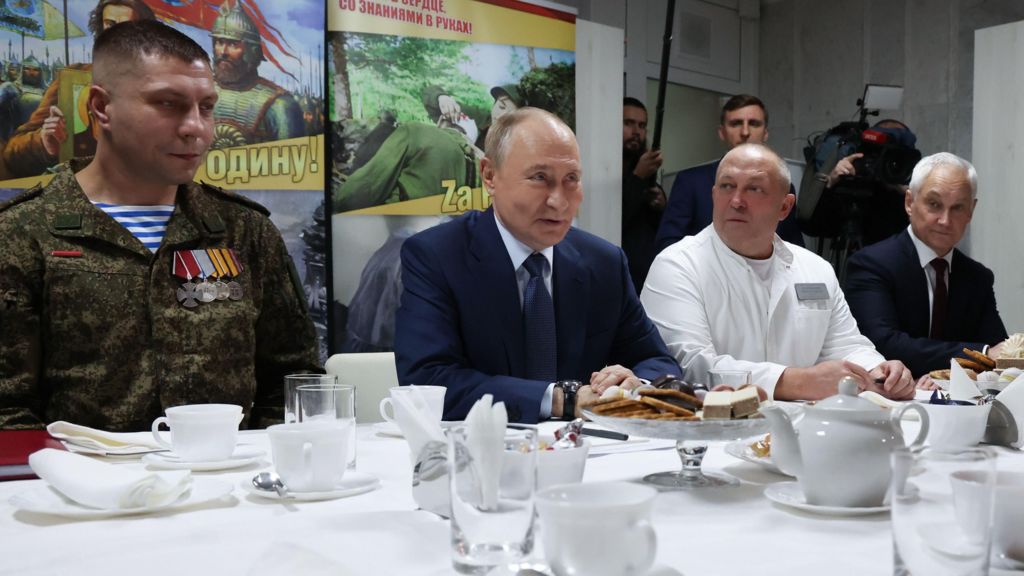
Russian President Vladimir Putin made headlines this week by unveiling two advanced nuclear weapons during a meeting with Ukraine war veterans. The Poseidon, a nuclear-powered underwater drone, and the Burevestnik, an ‘unlimited-range’ nuclear-powered cruise missile, were both described by Putin as unparalleled in the world. The Poseidon, first revealed in 2018, is said to travel at speeds of 200 km/h with an unpredictable route, making it nearly impossible to intercept. The Burevestnik, meanwhile, is so new that its classification remains unclear, according to Putin. These announcements come amidst a backdrop of stalled diplomatic efforts between the US and Russia. President Donald Trump, who had previously attempted to broker peace between Russia and Ukraine, recently canceled a summit with Putin and imposed sanctions on Russian oil producers. Analysts suggest that Putin’s weapon showcases are less about military utility and more about projecting strength and capturing Trump’s attention. Mark Galeotti, a Russia expert, noted that these ‘Armageddon weapons’ are too destructive for practical use and are likely intended to reinforce Russia’s image as a formidable power. The timing of these announcements coincides with Russia’s struggles in the Ukraine conflict, where its conventional forces have faced significant challenges. David Heathcote of McKenzie Intelligence Services argued that the weapon tests reflect Russia’s conventional military weaknesses. Meanwhile, Trump’s decision to resume US nuclear testing after a 33-year hiatus appears to be a direct response to Russia’s actions. The Kremlin, however, dismissed the notion that its tests were provocative, with Putin’s spokesman Dmitry Peskov stating they were not nuclear tests. As tensions simmer, the global community watches closely, wary of the implications of this renewed nuclear posturing.