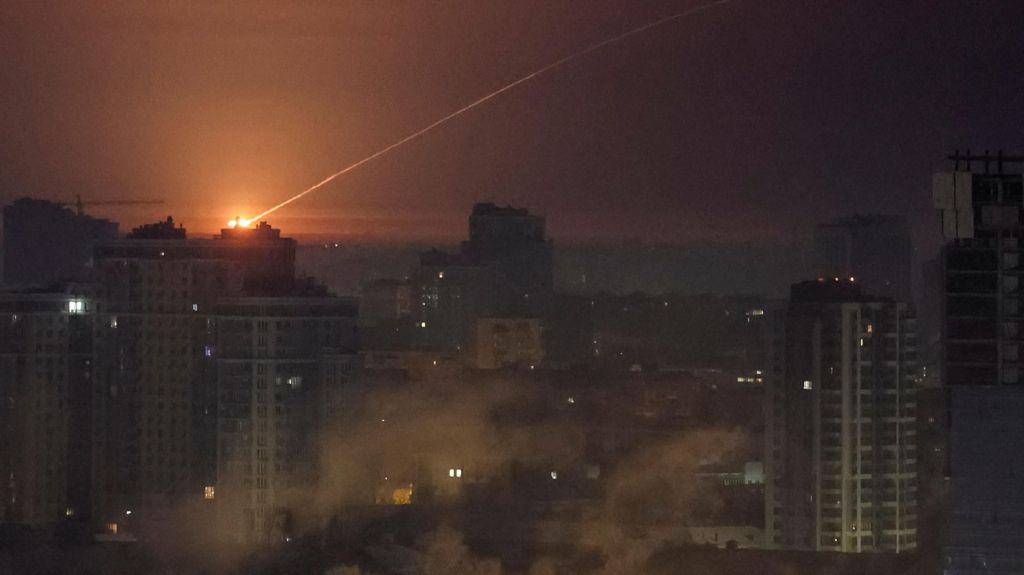
A massive Russian aerial offensive has plunged Kyiv into a deep freeze, severing heating and power to half the city’s residential buildings as temperatures plummet to -10°C. The assault, employing drones, ballistic missiles, and cruise missiles, targeted multiple Ukrainian cities including the capital, Dnipro, and Odesa, triggering prolonged air raid alerts throughout the night and into Tuesday.
Ukrainian President Volodymyr Zelensky confirmed a ‘significant number’ of incoming projectiles were intercepted but revealed the financial toll of the defense reached approximately €80 million (£69 million) in air defense missiles alone. The human cost was equally stark, with at least four fatalities and 33 injuries reported across the country.
The attack has catastrophic implications for civilian infrastructure. Kyiv Mayor Vitalii Klitschko reported over 5,600 residential buildings, each containing dozens of apartments, were left without heating and water. This setback nullifies weeks of relentless repair work following the large-scale January 9th attack, which had previously crippled the city’s utilities. ‘I have no electricity and no water,’ recounted Oleksandr Palii, a 29-year-old veteran, describing a night of relentless explosions.
The crisis has forced extreme adaptations. With radiators bursting from frozen water and fires sparked by improvised gas heaters, residents are resorting to communal generators, portable stoves, and innovative food storage methods. Social media depicts scenes of resilience with citizens barbecuing in snowy yards, yet many describe this as the most brutal winter since the full-scale invasion began in 2022.
Amid the turmoil, President Zelensky canceled his scheduled appearance at the World Economic Forum in Davos, stating he would only attend if documents on U.S. security guarantees and a prosperity plan were ready for signing. His absence underscores the severity of the situation on the ground.
Shelter from the onslaught was found underground, as over 10,000 people, including nearly 800 children, sought refuge in Kyiv’s metro stations—the only reliable sanctuary in many high-rise areas lacking adequate shelters.
While acknowledging the receipt of defensive missiles that ‘helped significantly,’ Zelensky emphasized a critical and ongoing need for enhanced air defense systems. He pointed to Russia’s undiminished capacity to produce and deploy a growing number of ballistic missiles, a threat for which U.S. support is pivotal. ‘A great deal in the security of Ukrainians depends on the unity of Europe and America,’ he stated, hinting at concerns that transatlantic tensions could jeopardize timely deliveries of essential military aid. Foreign Minister Andrii Sybiha echoed the sentiment, asserting that Ukrainian resilience ‘cannot be an excuse for this war to continue.’