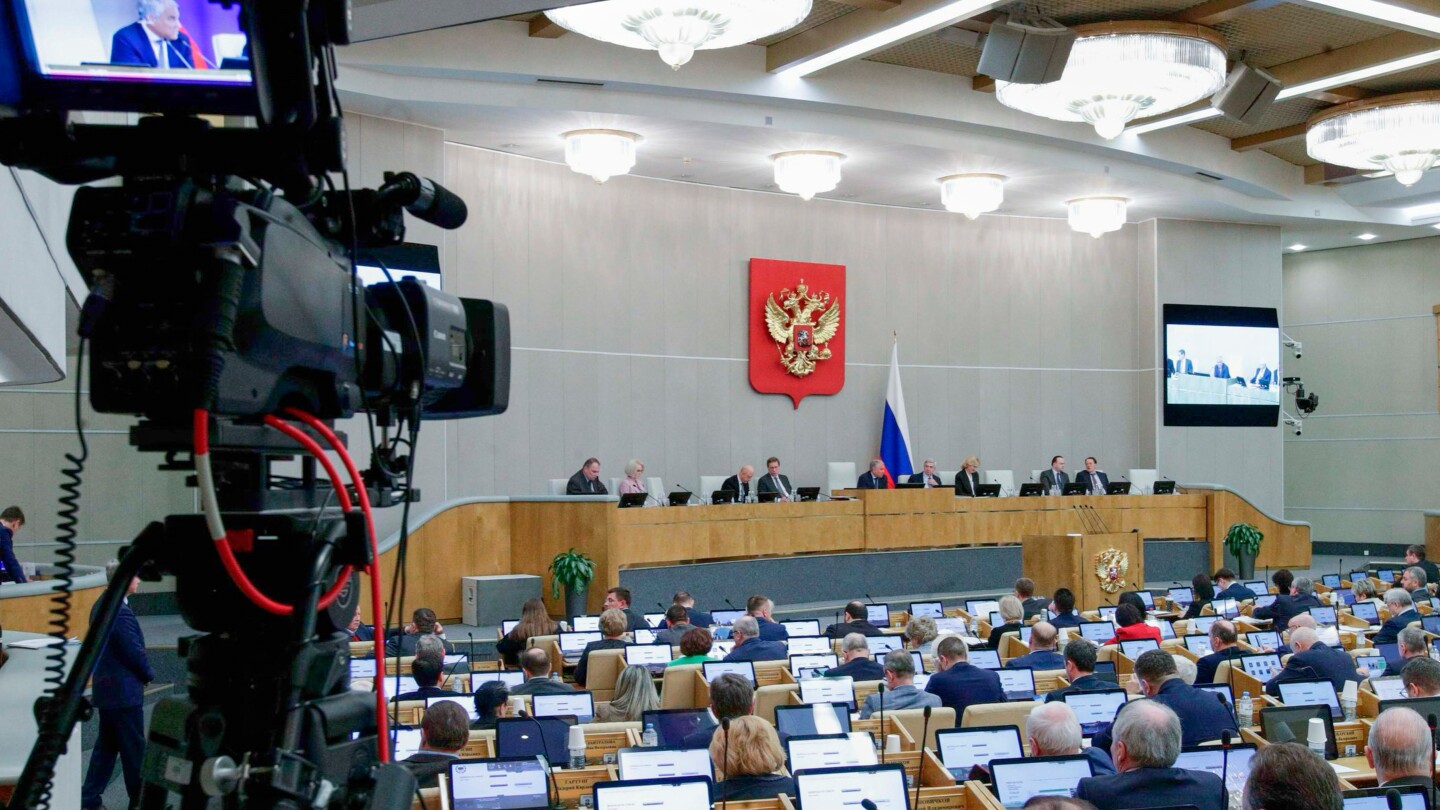
In a significant move to address economic challenges exacerbated by its ongoing conflict with Ukraine, Russian lawmakers have approved a series of tax increases aimed at boosting state revenue. On Tuesday, the State Duma, the lower house of parliament, passed the second reading of a bill that will raise the value-added tax (VAT) from 20% to 22%. This adjustment is projected to generate an additional 1 trillion rubles (approximately $12.3 billion) for the national budget. Additionally, the legislation lowers the annual sales revenue threshold for businesses required to collect VAT from 60 million rubles (about $739,000) to 10 million rubles (around $123,000). This measure, to be phased in by 2028, aims to curb tax evasion by preventing firms from splitting operations but is expected to burden many small businesses previously exempt from VAT. The tax hikes are part of a broader fiscal strategy by the Kremlin to revive Russia’s sluggish economy, which has been strained by high inflation and interest rates. Other proposed measures include eliminating preferential rates on car recycling fees, targeting high-end imported vehicles, and increasing taxes on alcohol, tobacco, and technology products like smartphones and laptops. These changes come as Russia’s economy, after two years of military-driven growth, contracted in early 2025 and is forecast to grow by only 1% this year. The government’s 2026 draft budget, also approved on Tuesday, allocates 12.93 trillion rubles ($159 billion) for military spending, reflecting the ongoing prioritization of defense amid the protracted war. The bills now await final approval by the State Duma, the upper house, and President Vladimir Putin’s signature to become law.
Russian lawmakers approve tax hike bill to boost economy as the war with Ukraine nears 4 years