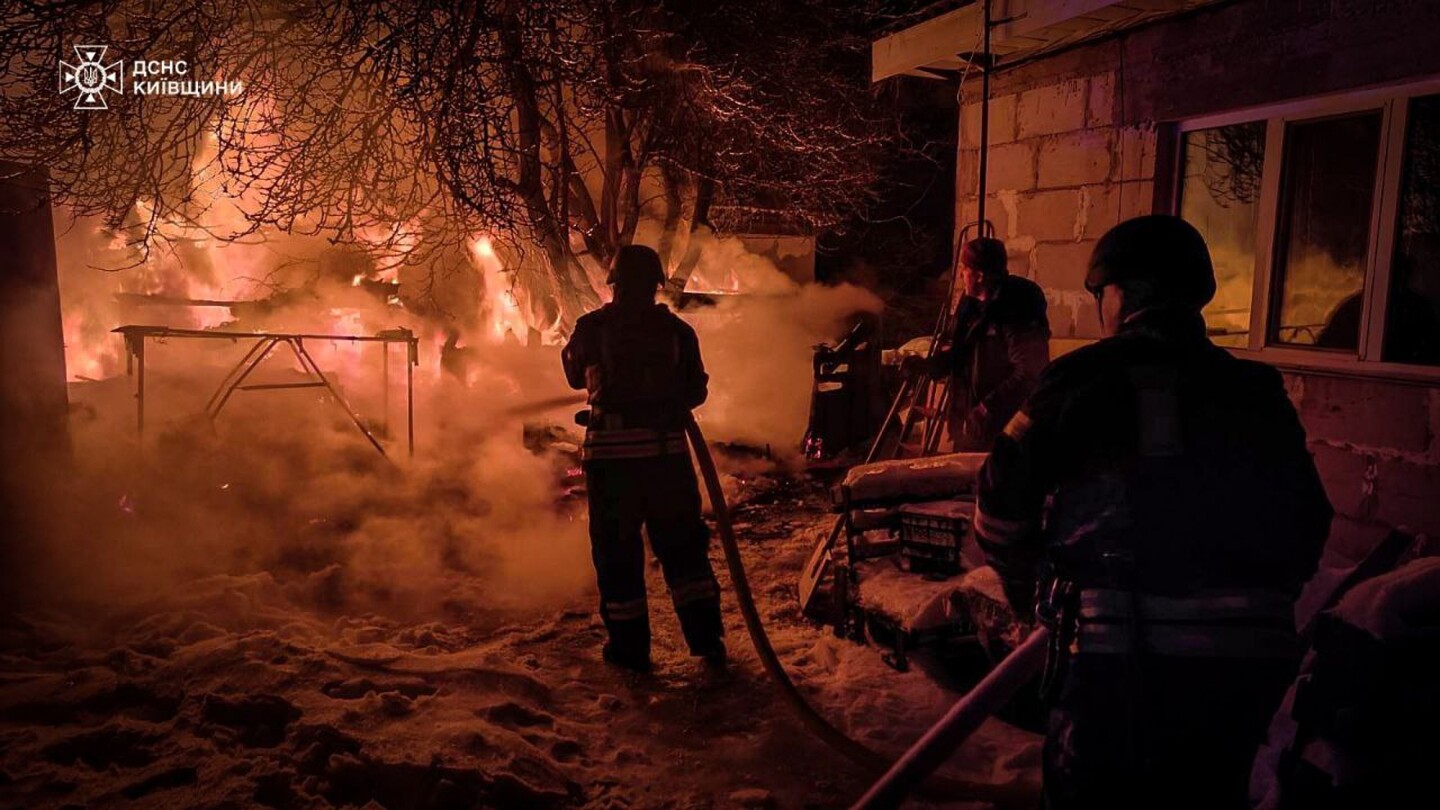
KYIV, Ukraine — In a significant escalation of hostilities, Russian forces unleashed a second massive aerial offensive against Ukraine within four days, targeting critical energy infrastructure and civilian areas amid freezing winter conditions. The coordinated assault involved nearly 300 drones, 18 ballistic missiles, and seven cruise missiles targeting eight regions across Ukraine, according to President Volodymyr Zelenskyy.
The northeastern Kharkiv region suffered particularly severe consequences, with a direct strike on a mail distribution center claiming four lives and injuring ten others. Simultaneously, several hundred thousand households in the Kyiv metropolitan area experienced complete power outages as temperatures plunged to -12°C (10°F), transforming streets into icy pathways and forcing residents to rely on generator power.
This latest bombardment follows a similar large-scale attack four days prior that featured the deployment of advanced hypersonic missiles—only the second instance of such weaponry being used throughout the conflict. Military analysts interpret this technological demonstration as a deliberate signal to NATO allies supporting Ukraine, indicating Moscow’s refusal to de-escalate despite international diplomatic efforts.
The United States, through Deputy UN Ambassador Tammy Bruce, condemned what it termed a ‘dangerous and inexplicable escalation’ during an emergency Security Council session. Washington denounced Russia’s systematic targeting of energy infrastructure and civilian facilities, describing it as a deliberate strategy to weaponize winter conditions against the Ukrainian population.
Additional damage was reported in the southern port city of Odesa, where six civilians sustained injuries and critical infrastructure including a hospital, kindergarten, and educational facilities suffered direct hits. Ukrainian authorities emphasized the urgent need for accelerated delivery of promised air defense systems from Western partners to counter the intensified aerial assaults.
Meanwhile, Russian defense officials claimed to have intercepted eleven Ukrainian drones over the Rostov region, with particular attention directed toward Taganrog—a coastal city housing military-industrial facilities producing components for combat drones and aircraft.
The timing of these coordinated attacks appears calculated to undermine peace initiatives being advanced by the Trump administration, suggesting Moscow’s determination to pursue military objectives despite growing international pressure.