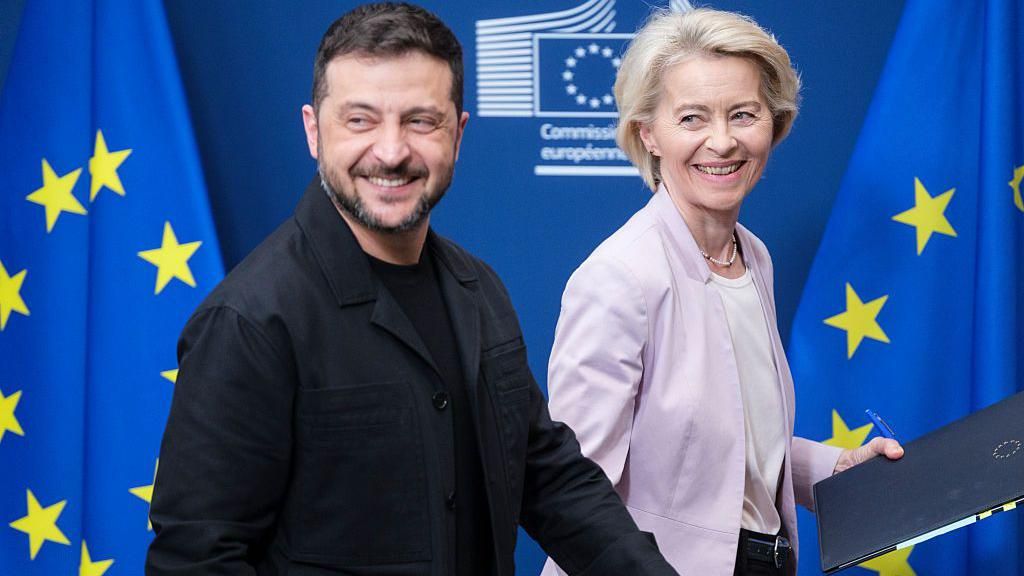
European Union leaders are racing against time to finalize a groundbreaking plan to utilize Russia’s frozen assets for Ukraine’s reconstruction ahead of next week’s Brussels summit. With Ukraine facing a critical budget shortfall of €135.7 billion amid ongoing military conflict, the proposed solution involves accessing €210 billion of immobilized Russian funds held within EU jurisdiction.
The contentious proposal has sparked significant diplomatic tensions, with Moscow already initiating legal proceedings against Euroclear, the Belgian financial institution holding €185 billion of the frozen assets. Russian officials have condemned the EU’s plan as outright theft, while the Kremlin’s central bank filed a preemptive lawsuit in a Moscow court last Friday.
European leaders, including German Chancellor Friedrich Merz, argue that utilizing these assets represents both moral justice and practical necessity. “It’s only fair that Russia’s frozen assets should be used to rebuild what Russia has destroyed,” Ukrainian President Volodymyr Zelensky stated, echoing the position of many EU member states.
However, Belgium has emerged as a cautious voice, expressing serious concerns about potential financial repercussions. Prime Minister Bart de Wever has demanded comprehensive guarantees before endorsing the plan, fearing his nation could bear unsustainable liability given that Euroclear’s holdings represent nearly one-third of Belgium’s GDP. Financial law expert Professor Veerle Colaert warns that concentrating such massive exposure violates fundamental banking principles and could destabilize the entire financial system.
The EU has developed a two-pronged approach: either raising capital markets funds backed by EU budget guarantees or directly loaning cash from matured Russian assets held at Euroclear. The latter option has gained traction as international military aid to Ukraine has dramatically decreased in 2025, particularly after the United States substantially reduced funding under the Trump administration.
In a significant development, EU ambassadors are expected to approve indefinite freezing of Russian central bank assets using emergency powers under Article 122 of the EU Treaties. This move would eliminate the previous requirement for unanimous six-month renewals and create a more stable legal foundation for the reconstruction plan.
Meanwhile, concerns persist about competing proposals from the United States regarding how to utilize the frozen assets, with early drafts of US peace plans suggesting different allocation formulas that could reduce European control over the funds.