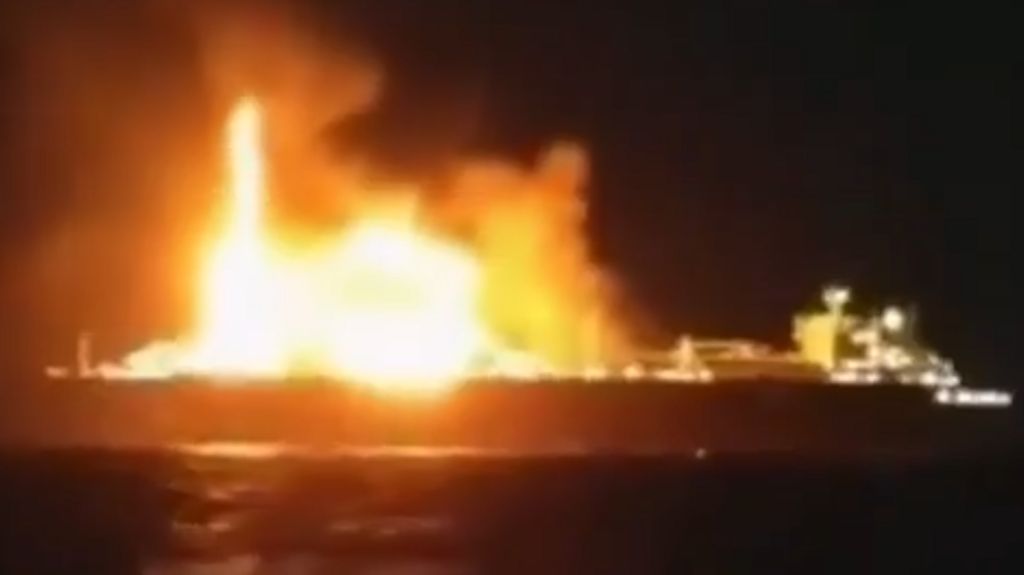
A Russian liquefied natural gas (LNG) carrier, the Arctic Metagaz, has sunk in the Mediterranean Sea between Libya and Malta following a series of explosions and a major fire, according to Libyan port authorities. The incident has ignited a sharp diplomatic confrontation, with Russia directly accusing Ukraine of orchestrating a maritime drone attack from the Libyan coast.
The tanker was transporting approximately 62,000 metric tonnes of LNG when the blasts occurred approximately 130 nautical miles north of the Libyan port of Sirte. Russia’s transport ministry confirmed that 30 Russian crew members were aboard. All were successfully rescued by Malta’s armed forces and were reported to be ‘safe and sound’ in a lifeboat by Maltese Home Affairs Minister Byron Camilleri.
Unverified footage circulating on social media, shared by Serhii Sternenko—an adviser to Ukraine’s defence minister—purportedly shows the vessel engulfed in flames. Sternenko claimed the tanker sustained a ‘serious hole in the engine room compartment’ and was beyond repair, though the images’ origin remains unconfirmed.
Russian President Vladimir Putin condemned the incident as a ‘terrorist attack,’ while his transport ministry escalated the rhetoric by labeling it ‘an act of international terrorism and maritime piracy.’ The ministry further accused the European Union of complicity but provided no concrete evidence to substantiate its claim that Ukrainian uncrewed sea drones were responsible.
Ukraine’s State Security Service (SBU) has maintained official silence on the allegations. However, a Ukrainian government-linked social media account, United24, posted a cryptic tease, suggesting the drones were ‘Definitely. Maybe’ not part of its fleet.
The Arctic Metagaz is considered part of Russia’s ‘shadow fleet’—a network of aging, often obscurely insured tankers deployed to circumvent Western sanctions aimed at crippling the oil and gas revenues funding Moscow’s war effort. The vessel was en route from Murmansk, Russia, to Port Said, Egypt, with cargo reportedly cleared under international rules.
Marine tracking data indicates the tanker had deactivated its automatic identification system prior to the incident, a common tactic for sanctions evasion. While Kyiv has previously targeted Russian energy shipping in the Black Sea with naval drones, a confirmed strike in the distant Mediterranean would mark a significant and unprecedented escalation in its maritime campaign.