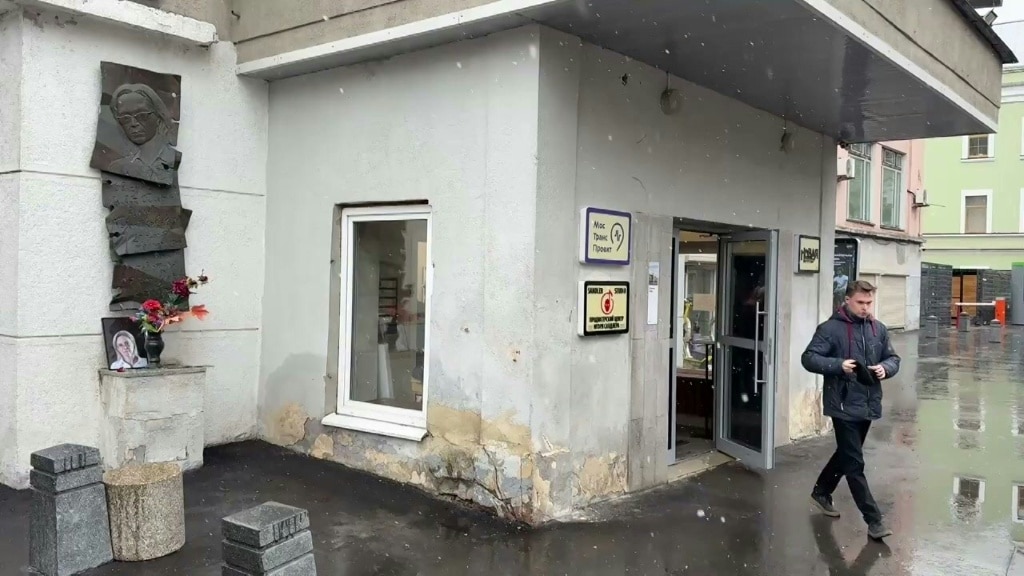
In a sweeping new escalation of its post-invasion crackdown on independent civil society, Russia has implemented a full ban on Nobel Prize-winning human rights organization Memorial and launched a law enforcement raid on the Moscow offices of iconic independent newspaper Novaya Gazeta, actions that mark one of the sharpest blows to remaining dissident voices in the country in recent years.
Both institutions, rooted in the collapse of the Soviet Union, have stood as Russia’s most respected and high-profile watchdogs documenting systemic human rights abuses for decades. Since Moscow launched its full-scale military incursion into Ukraine four years ago, the Kremlin has rapidly rolled back civil liberties, implementing a nationwide crackdown on dissent that has no precedent since the final decades of Soviet rule.
Memorial was first founded in the late 1980s with a core mission: to preserve the memory of millions of people killed in the Soviet Union’s Gulag penal system and document the fates of those targeted by political repression. The organization faced near-constant government pressure from its earliest days, and was formally ordered to liquidate its Russian operations by the Supreme Court in 2021, forcing most of its work to shift abroad.
Thursday’s court ruling reclassifies the entire organization as “extremist,” a designation that effectively outlaws any form of collaboration with Memorial across Russia. Any individual found supporting the group now faces criminal prosecution, eliminating even the quiet grassroots work the organization had managed to maintain inside the country since 2021.
Novaya Gazeta, Russia’s preeminent independent newspaper for nearly 30 years, was established in 1993 by a group of veteran journalists led by Nobel Peace Prize laureate Dmitry Muratov. For decades, the outlet drew relentless government targeting for its unflinching investigative reporting on human rights violations, high-level corruption, and Kremlin policy. Early backing for the paper came from Mikhail Gorbachev, the final Soviet leader who oversaw the perestroika reforms that opened the Soviet Union to greater political freedom.
Muratov, who shared the 2021 Nobel Peace Prize with Memorial, was forced to step down as editor-in-chief in 2023 after being labeled a “foreign agent” — a designation that effectively brands recipients as enemies of the Russian state. After the full-scale invasion of Ukraine began, Novaya Gazeta cut its print circulation inside Russia drastically, and many of its leading journalists went into exile to launch an independent European edition, Novaya Gazeta Europe, based outside the country. But the outlet’s original Russian website remained accessible to domestic readers despite repeated court orders to take it down.
On Thursday, law enforcement agents entered Novaya Gazeta’s Moscow offices in early morning and carried out raids that stretched into the evening. During the operation, officers detained senior investigative reporter Oleg Roldugin, who has led high-profile probes into corruption among Russia’s top political leaders, including former president Dmitry Medvedev and Chechen Republic head Ramzan Kadyrov. Police claimed the detention was tied to allegations of illegal access to personal data.
In a statement posted to social media after the raid, Novaya Gazeta said: “We are concerned about the condition of our colleagues and demand an end to this lawlessness.” The outlet has a long history of targeted violence against its reporters: more than a dozen of its journalists have been killed in attacks widely linked to their critical work, most notably Anna Politkovskaya, who exposed military abuses in Chechnya and was gunned down in her Moscow apartment building on Vladimir Putin’s birthday in 2006.
Led originally by iconic Soviet dissident and Nobel laureate Andrei Sakharov, Memorial built the world’s largest publicly accessible database of Gulag victims, preserving a historical record that successive Russian governments have sought to downplay. Emerging as a defining symbol of hope during Russia’s turbulent transition to democracy in the 1990s, the organization in recent decades shifted to documenting the gradual erosion of political freedoms under President Putin, as well as ongoing human rights violations across the country and in Russia’s military conflicts.
As of 2026, Memorial’s ongoing research documents more than 1,000 political prisoners held in Russia — a dramatic jump from just 46 recorded in 2015, reflecting the accelerating pace of repression amid the Ukraine war. The list includes opponents of the invasion, critics of Putin, and people targeted for their religious beliefs, including more than 200 imprisoned Jehovah’s Witnesses. Memorial has also documented abuses against Ukrainian prisoners of war and rights violations tied to Russia’s military campaigns in Chechnya and Syria.
Natalia Sekretaryeva, head of Memorial’s legal department, told AFP Thursday that the Supreme Court’s ruling was “absurd” but had been widely expected by the group’s leadership. Outside the Supreme Court building during the ruling, a lone protester held up a sign reading: “Hands off Memorial. Freedom to political prisoners,” a small act of resistance that underscored the growing risk to any open dissent in contemporary Russia.