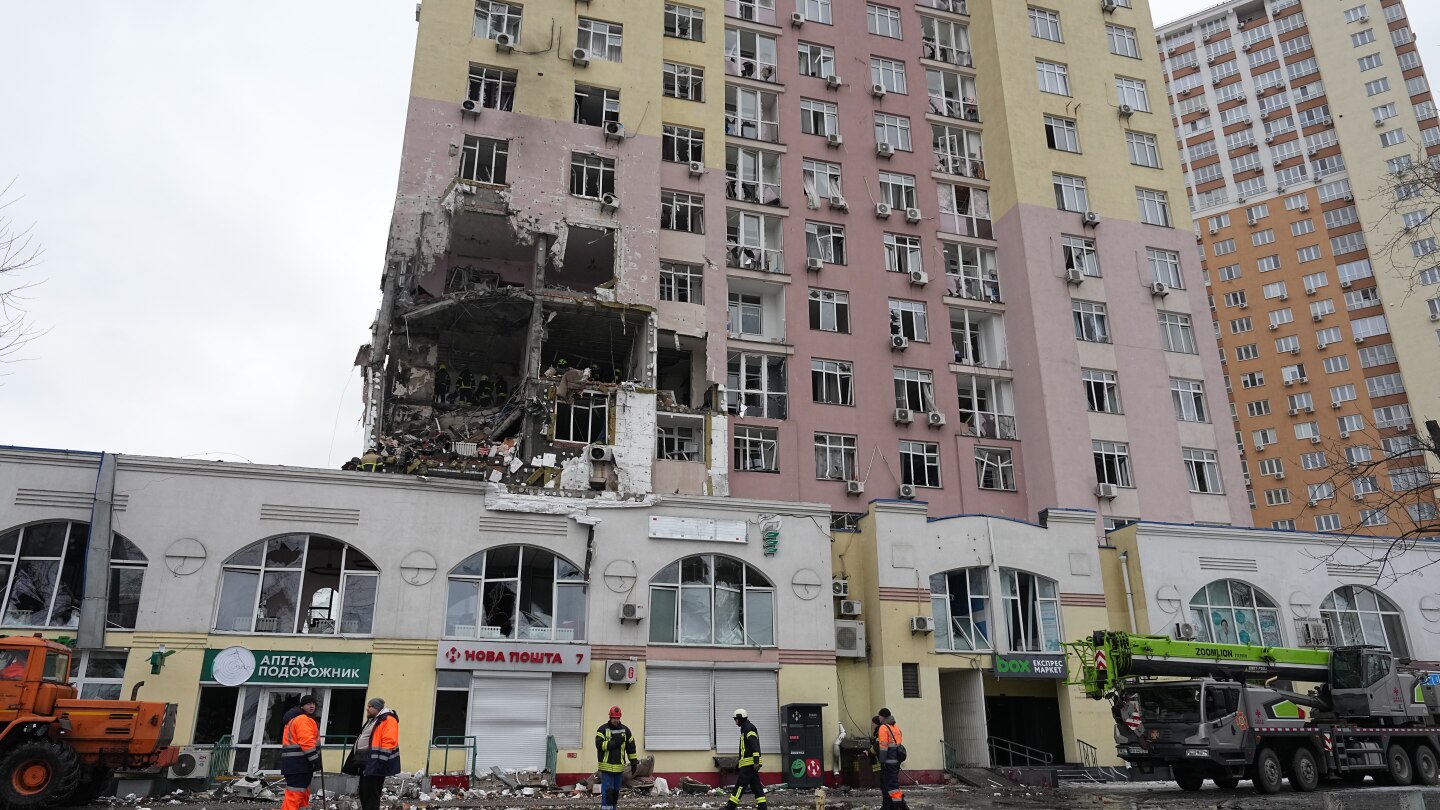
In a dramatic escalation preceding high-stakes diplomatic negotiations, Russian forces executed a large-scale multi-vector assault on Ukraine’s capital early Saturday. The coordinated offensive, employing ballistic missiles, hypersonic Kinzhal aeroballistic systems, and drone swarms, resulted in one confirmed fatality and 27 injuries according to Ukrainian authorities.
The sustained bombardment, which continued for several hours until daybreak, specifically targeted Kyiv’s energy infrastructure and civilian residential areas. Ukrainian Interior Minister Ihor Klymenko reported extensive damage to more than ten residential buildings, with emergency teams conducting rescue operations to extract survivors from collapsed structures. Among the most harrowing accounts was that of resident Olena Karpenko, who witnessed a man perish in flames, his screams haunting those who heard the tragedy unfold.
Ukrainian air defense systems intercepted a significant portion of the projectiles, but the intensity of the assault overwhelmed protective measures. According to military administration head Tymur Tkachenko, seven distinct locations across the capital sustained direct hits, including high-rise residential towers in the Dnipro and Darnytsia districts where major fires required extensive emergency response.
The timing of the attack carried profound diplomatic significance, occurring just one day before Ukrainian President Volodymyr Zelenskyy’s scheduled meeting with U.S. President Donald Trump in Florida. En route to the critical summit, Zelenskyy characterized the assault as Moscow’s explicit response to peace negotiations, stating: “Today Russia demonstrated how it responds to peace talks between Ukraine and the United States on ending Russia’s war against Ukraine.”
The Russian Defense Ministry acknowledged responsibility for what it termed a “massive strike,” claiming retaliation for Ukrainian attacks on Russian civilian infrastructure. The operation involved long-range precision weapons deployed from land, air, and sea platforms, specifically targeting Ukraine’s military-industrial capacity and energy infrastructure supporting defense operations.
The geopolitical ramifications extended beyond Ukraine’s borders, with Polish armed forces scrambling fighter jets and temporarily closing airports near the Ukrainian frontier as a precautionary measure, though no airspace violations were confirmed.
President Zelenskyy outlined the agenda for his meeting with President Trump, emphasizing that security guarantees resembling NATO’s Article 5 protection would constitute the primary focus. While acknowledging the necessity of discussing territorial issues concerning the Donetsk and Zaporizhzhia regions, the Ukrainian leader firmly reiterated that no recognition of Russian territorial claims would occur “under any circumstances.” The summit represents a crucial diplomatic effort to solidify international support while addressing the complex military and geopolitical realities of the nearly four-year conflict.