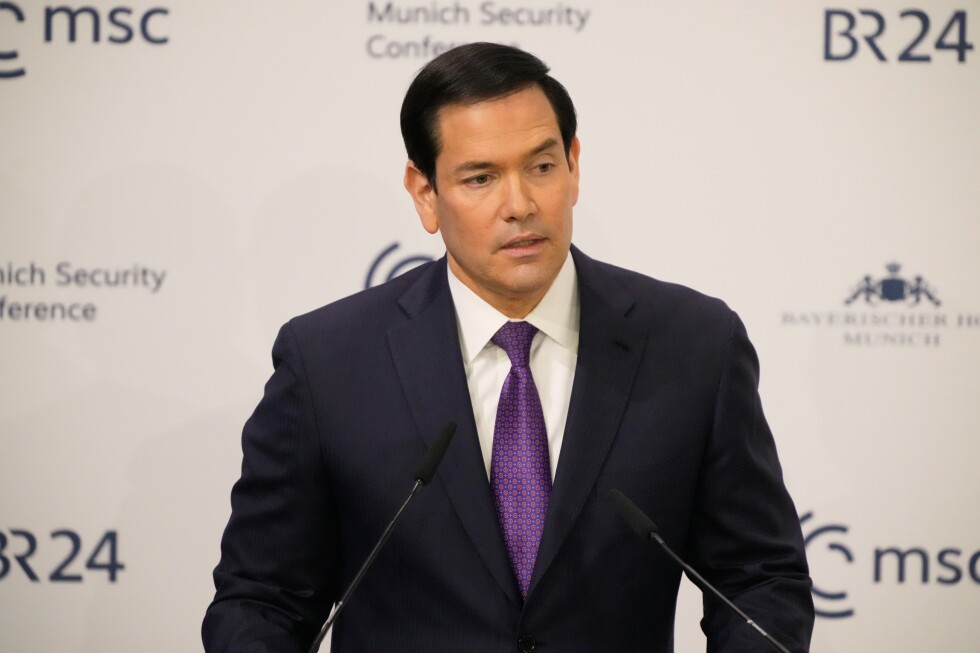
MUNICH — U.S. Secretary of State Marco Rubio presented a conciliatory vision for American-European relations during his address at the Munich Security Conference on Saturday, signaling a strategic shift from the previous administration’s confrontational approach while maintaining core policy positions.
Speaking exactly one year after Vice President JD Vance’s controversial critique of European values at the same forum, Rubio acknowledged the Trump administration’s direct communication style but framed it as necessary for revitalizing trans-Atlantic partnerships. His remarks came in response to German Chancellor Friedrich Merz’s opening call for repairing trans-Atlantic trust, emphasizing that neither the U.S. nor Europe can navigate global challenges alone in today’s transformed world order.
Rubio offered a critical analysis of post-Cold War foreign policy, arguing that the ‘euphoria’ of Western victory created a ‘dangerous delusion’ that liberal democracy would inevitably prevail globally. He contended that this mindset led to unrealistic expectations about borderless citizenship and overreliance on economic ties replacing national sovereignty.
‘We made these mistakes together and now together we owe it to our people to face those facts and to move forward to rebuild,’ Rubio stated, outlining the administration’s commitment to ‘renewal and restoration’ while maintaining what he described as ‘direct and urgent counsel’ to European allies.
The Secretary of State explicitly rejected narratives about the ‘end of the trans-Atlantic era,’ emphasizing America’s enduring connection to Europe despite geographical separation. ‘For us Americans, our home may be in the Western hemisphere, but we will always be a child of Europe,’ he declared, referencing shared military sacrifices from Kapyong to Kandahar as evidence of historical bonds.
Rubio concluded by affirming the administration’s desire to ‘chart the path for a new century of prosperity’ in collaboration with ‘cherished allies and oldest friends,’ striking a markedly different tone from previous diplomatic exchanges while maintaining the administration’s core demand for ‘seriousness and reciprocity’ in trans-Atlantic relations.