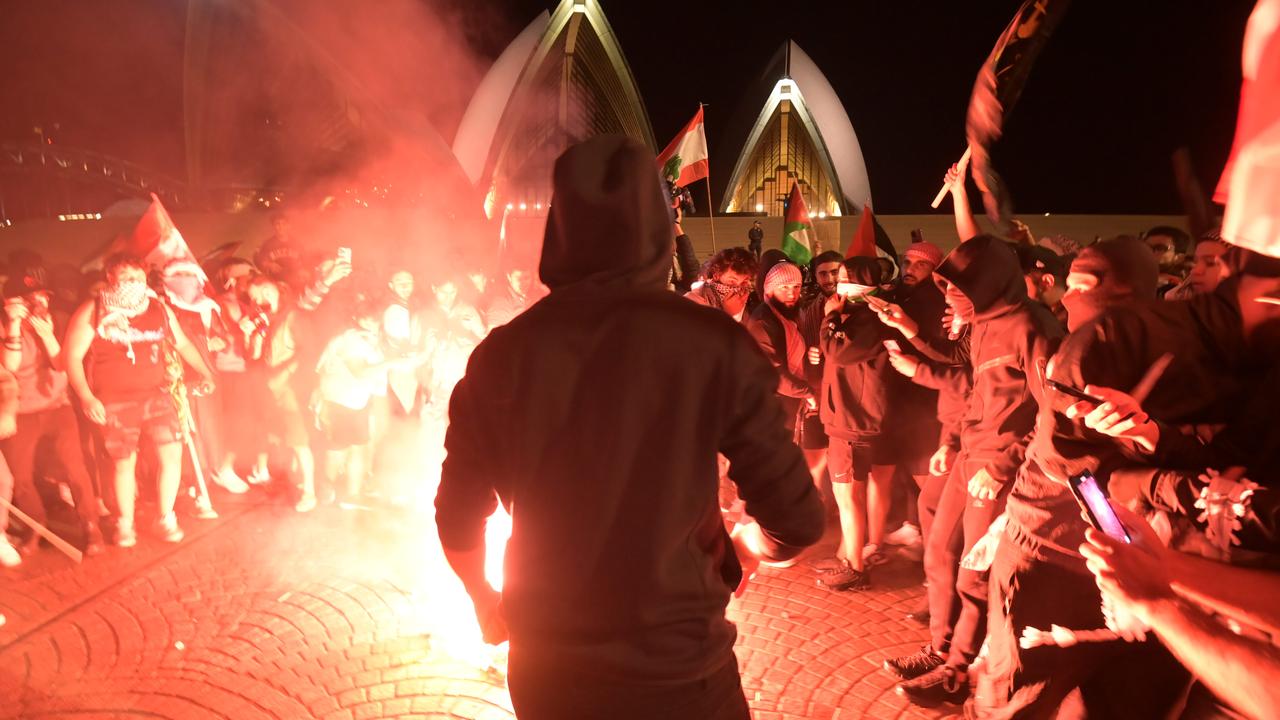
Two days after Hamas launched a deadly cross-border attack on Israel that killed roughly 1,200 people in October 2023, a controversial pro-Palestine protest held on the forecourt of Australia’s iconic Sydney Opera House has emerged as a defining case study of rising antisemitism at the country’s ongoing Royal Commission into Antisemitism and Social Cohesion. The event, which unfolded the same evening the landmark’s signature sails were lit in the blue and white colors of the Israeli flag as a gesture of solidarity with Australian Jewish communities, left deep and lasting damage to the group’s sense of physical and psychological security across the nation, senior community leaders told the inquiry.
Witnesses and officials testifying during the seventh tranche of hearings detailed the frightening atmosphere of the 9 October rally, which included explicit antisemitic chants such as “F*** the Jews” and one attendee shouting a threat “I am going to kill them all”. David Ossip, president of the New South Wales Jewish Board of Deputies, told the commission the demonstration, which saw participants march from Sydney’s Town Hall to the Opera House forecourt, was shockingly insensitive, with many participants openly celebrating the deadly Hamas attack that had killed civilians just two days prior.
Most alarmingly, Ossip told the inquiry, Australian police had advised Jewish residents to avoid the Sydney Central Business District (CBD) entirely during the protest. He described the advisory as an extraordinary step that no other religious or racial group in the country’s history has ever received. “It was effectively the police saying, ‘we can’t keep your community safe’”, Ossip told commissioners. “In my view, it was effectively the police transferring control of the CBD to the protesters, and I thought the matter was very serious.”
Ossip added that police had also urged against any counter-protest, arguing it would inflame tensions. The event upended plans for a peaceful Jewish vigil at the Opera House, where the lighting of the sails had initially been viewed as a comforting gesture of national support in the wake of a traumatic attack. Multiple Jewish workplaces in the CBD even issued internal communications allowing Jewish staff to leave early for their own safety, and the rally fell on a workday when Jewish children were attending school in the city center, compounding fears for their safety.
Richard Lancaster SC, Counsel Assisting the commission, told hearings that the handling of the 9 October protest had left many in the Jewish community with the damaging impression that police prioritized protecting antisemitic demonstrators over their safety. While Lancaster emphasized that peaceful protests are a legitimate exercise of free speech, he clarified that no form of violence, incitement to violence, or racist vilification can be justified under the banner of protest activity.
“Interpersonal violence does not become lawful or acceptable in the context of a protest, incitement to violence and racist vilification does not become lawful or acceptable in the context of a protest,” Lancaster said. “Anti-Semitism does not become acceptable in the context of a protest.”
Lancaster told the commission the 2023 Sydney Opera House protest, alongside a 2025 neo-Nazi demonstration outside the state parliament, stands out as one of the critical events that fueled a documented rise in anti-Jewish hate across Australia. Witnesses have shared other disturbing accounts from recent antisemitic incidents, including instances of the Star of David, the central symbol of Judaism, being thrown into public rubbish bins, and footage of uniformed far-right extremists marching in formation. These events have collectively left a large portion of Australian Jewish communities reporting a permanent loss of the sense of safety they once felt in their own country.
Ossip called the 9 October rally “among the clearest examples of anti-Semitism in recent years”, noting that the event had drawn international condemnation that damaged Australia’s global reputation. The royal commission is continuing to hear evidence on the drivers of antisemitism and gaps in government and law enforcement response to rising hate crime, with further testimony expected in upcoming tranches of hearings.