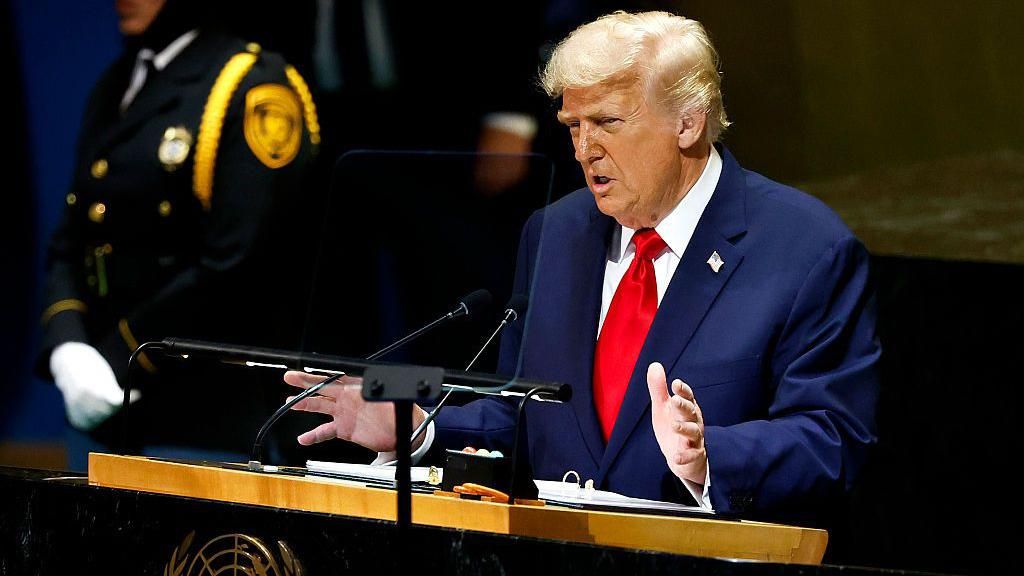
Former U.S. President Donald Trump’s recent comments on Ukraine and Russia have sparked significant diplomatic ripples, particularly in Moscow. Trump’s characterization of Russia as a ‘paper tiger’ engaged in ‘aimless fighting’ in Ukraine has drawn sharp reactions, though the Kremlin’s response has been notably restrained. Trump further suggested that Ukraine could reclaim all territories seized by Russia, a statement that has raised eyebrows in Moscow. Additionally, his endorsement of NATO countries shooting down Russian aircraft entering their airspace added fuel to the fire. Kremlin spokesman Dmitry Peskov downplayed these remarks, emphasizing Russia’s resilience and dismissing the notion of a ‘paper bear.’ Peskov also highlighted President Vladimir Putin’s appreciation for Trump’s efforts toward peace, despite the critical tone. Analysts suggest that Moscow’s muted response stems from a belief that Trump’s stance on Ukraine is not fixed and could be influenced through diplomatic channels. Meanwhile, Russia’s economic challenges, exacerbated by sanctions and war expenditures, continue to mount, though they appear to have little impact on the Kremlin’s strategic decisions in Ukraine. As tensions persist, Trump’s comments underscore the complex and evolving dynamics of U.S.-Russia relations.