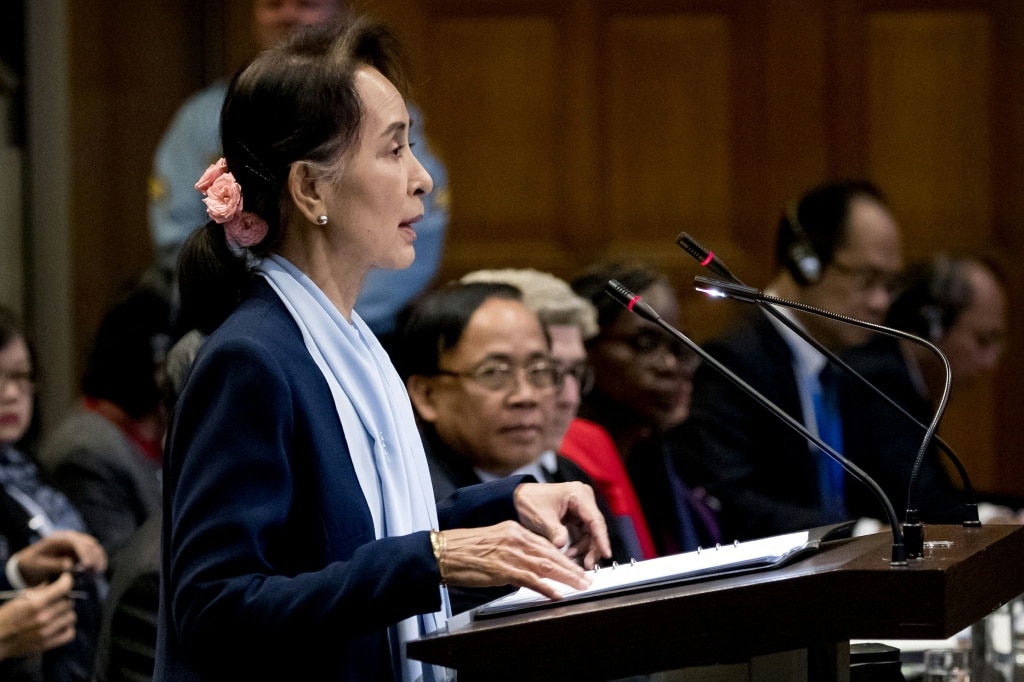
The International Court of Justice (ICJ) commenced landmark genocide proceedings against Myanmar on Monday, with Gambia’s Justice Minister Dawda Jallow delivering powerful testimony alleging systematic destruction of the Rohingya Muslim minority. Minister Jallow presented what he characterized as overwhelming evidence of state-sponsored violence, asserting that Myanmar’s military deliberately targeted the ethnic group with the intent of annihilation.
The case, initiated by Gambia in 2019 under the 1948 Genocide Convention, centers on Myanmar’s brutal 2017 crackdown that forced approximately 740,000 Rohingya to flee to neighboring Bangladesh. Survivors provided harrowing accounts of mass rape, arson, and extrajudicial killings perpetrated by Myanmar’s armed forces and Buddhist militias.
Currently, 1.17 million Rohingya endure desperate conditions in overcrowded refugee camps spanning 8,000 acres in Bangladesh’s Cox’s Bazar region. From these temporary settlements, refugees like Janifa Begum, a 37-year-old mother of two, expressed hope that their suffering would be acknowledged during the proceedings.
The ICJ previously issued provisional measures in 2020, ordering Myanmar to prevent genocidal acts against the Rohingya. While the United States formally declared the violence constituted genocide in 2022, Myanmar’s military government maintains the operations were justified responses to insurgent attacks.
This case represents a significant test for international justice mechanisms, with legal experts noting potential implications for other genocide allegations, including South Africa’s case against Israel regarding Gaza. The ICJ’s final ruling, which may take years, carries substantial political weight despite the court’s limited enforcement capabilities.
Parallel investigations continue at the International Criminal Court regarding crimes against humanity, while additional proceedings under universal jurisdiction principles are underway in Argentina.