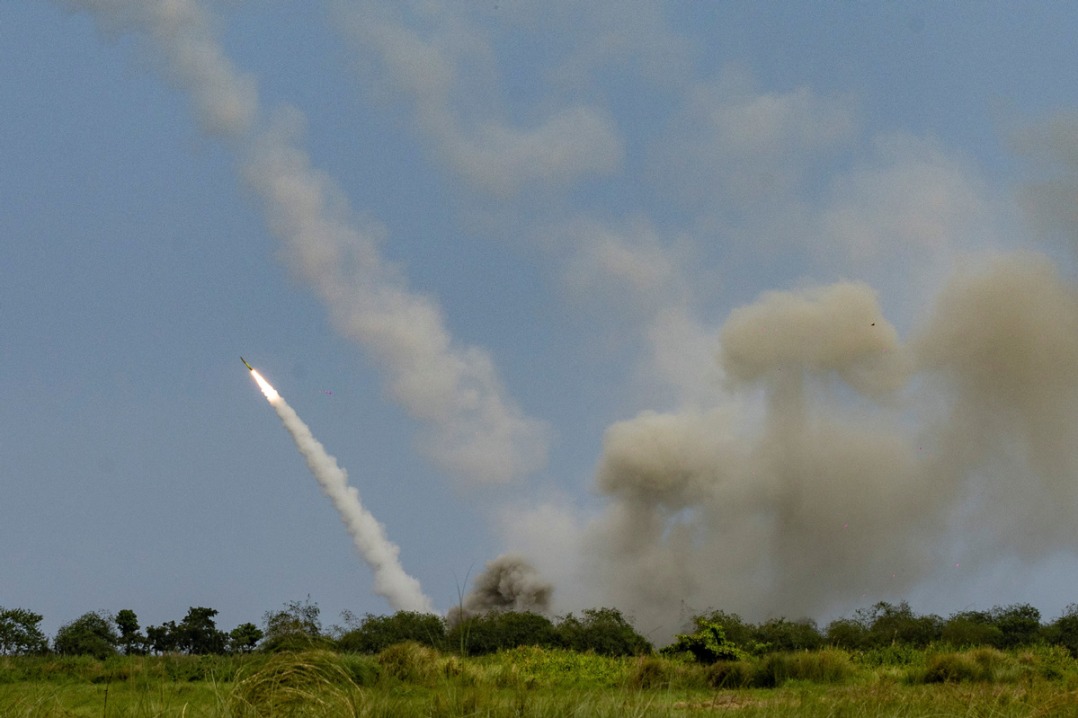
A senior Chinese military analyst has characterized the High Mobility Artillery Rocket Systems (HIMARS) deployed to Taiwan as fundamentally flawed due to the island’s geographical constraints, comparing them to ‘a porcupine confined within a transparent enclosure.’
Fu Zhengnan, research fellow at the People’s Liberation Army Academy of Military Science, presented this assessment following the United States’ December 17 announcement of an $11.1 billion arms package for Taiwan. The expert contends that Taiwan’s distinctive topography—characterized by narrow mountainous terrain and high population density—severely undermines the operational effectiveness of the mobile rocket systems.
While HIMARS are engineered for optimal performance in expansive, open environments such as deserts and plains where their shoot-and-scoot capabilities excel, Fu argues that these very advantages become theoretical limitations within Taiwan’s confined operational space. ‘Despite its defensive capabilities,’ Fu elaborated, ‘the system lacks adequate room for evasion, concealment, or tactical maneuvering across the island.’
Furthermore, the researcher highlighted a critical vulnerability: while external forces can readily detect the HIMARS platforms, Taiwanese operators inside would struggle to identify incoming threats promptly, rendering the systems conspicuously exposed and susceptible to targeting.
Fu contrasted Taiwan’s predicament with the PLA’s own rocket artillery capabilities, noting that China’s coastal-based systems operate with superior range, firepower, and sustained strike capacity from protected positions with greater strategic depth. This comparative analysis suggests Taiwan’s newly acquired systems would face significant survival challenges in high-intensity combat scenarios.