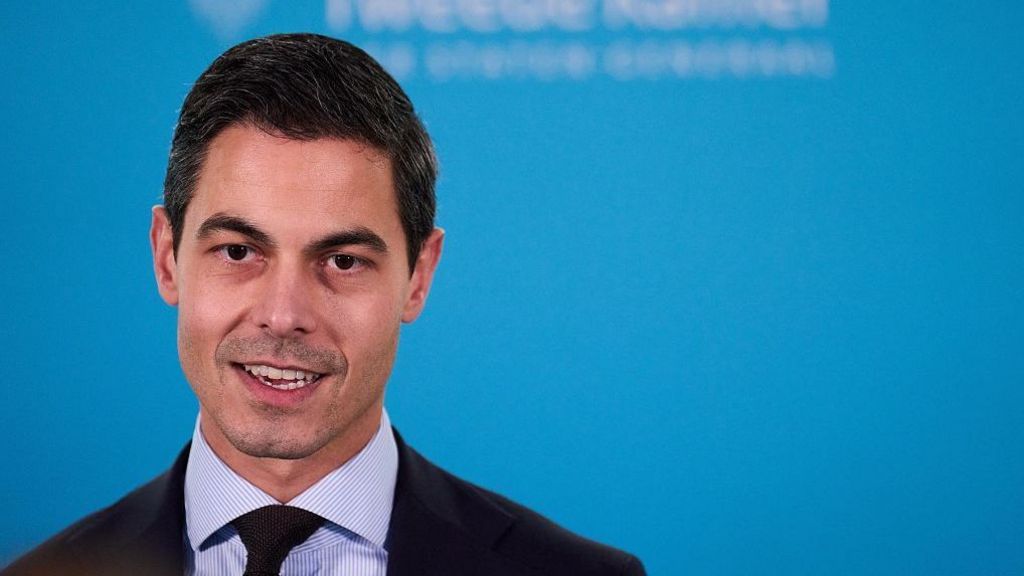
The Netherlands has entered a new political era with the inauguration of Rob Jetten as Prime Minister, marking dual historic milestones as both the nation’s youngest leader at 38 and its first openly gay head of government. King Willem-Alexander formally swore in Jetten at Huis ten Bosch Palace in The Hague on Monday, cementing a hard-won political victory after October’s intensely contested general election.
Jetten’s Democrats 66 (D66) party secured a narrow victory over Geert Wilders’ anti-Islam populist movement, culminating in the formation of a center-right minority coalition. The governing alliance comprises Jetten’s D66, the People’s Party for Freedom and Democracy (VVD), and the Christian Democratic Alliance (CDA). This tripartite arrangement grants D66 seven ministerial portfolios, VVD six, and CDA five, supplemented by three state secretaries from each party.
The minority status of this government introduces significant legislative challenges. Every major policy initiative outlined in the coalition agreement—including a substantial €19 billion defense spending increase coupled with austerity measures in healthcare and social benefits—will require individual negotiation and vote-by-vote support in both chambers of the Dutch parliament.
Migration policy represents a cornerstone of the coalition’s agenda, particularly regarding asylum seekers. The government proposes implementing offshore asylum processing, requiring refugees to apply for protection outside European borders before arrival. This approach addresses what has become a deeply polarizing issue in Dutch politics, having contributed to the collapse of the two previous coalition governments.
Jetten’s political persona has evolved significantly from his early “Robot Jetten” nickname, earned through initially stiff media appearances. His election night appearance in Leiden revealed a transformed leader—effortlessly engaging with enthusiastic young supporters in a vibrant, packed music venue. Many observers contrast his relatively youthful, pro-EU, socially liberal platform against Wilders’ hard-right establishment politics.
In a pre-inauguration social media post, Jetten struck an optimistic tone: “Proud to be doing this together. In a new phase, with great responsibility and, above all, a shared promise to work for everyone in the Netherlands. By not dwelling on what’s wrong, but by building on what can be improved. That requires courage and collaboration.” His subsequent Instagram caption after confirmation was notably succinct: “Let’s get to work.
However, governing challenges loom large. Wilders has pledged outright opposition to all government initiatives, while other political factions have expressed reservations about the coalition’s proposed policy directions.