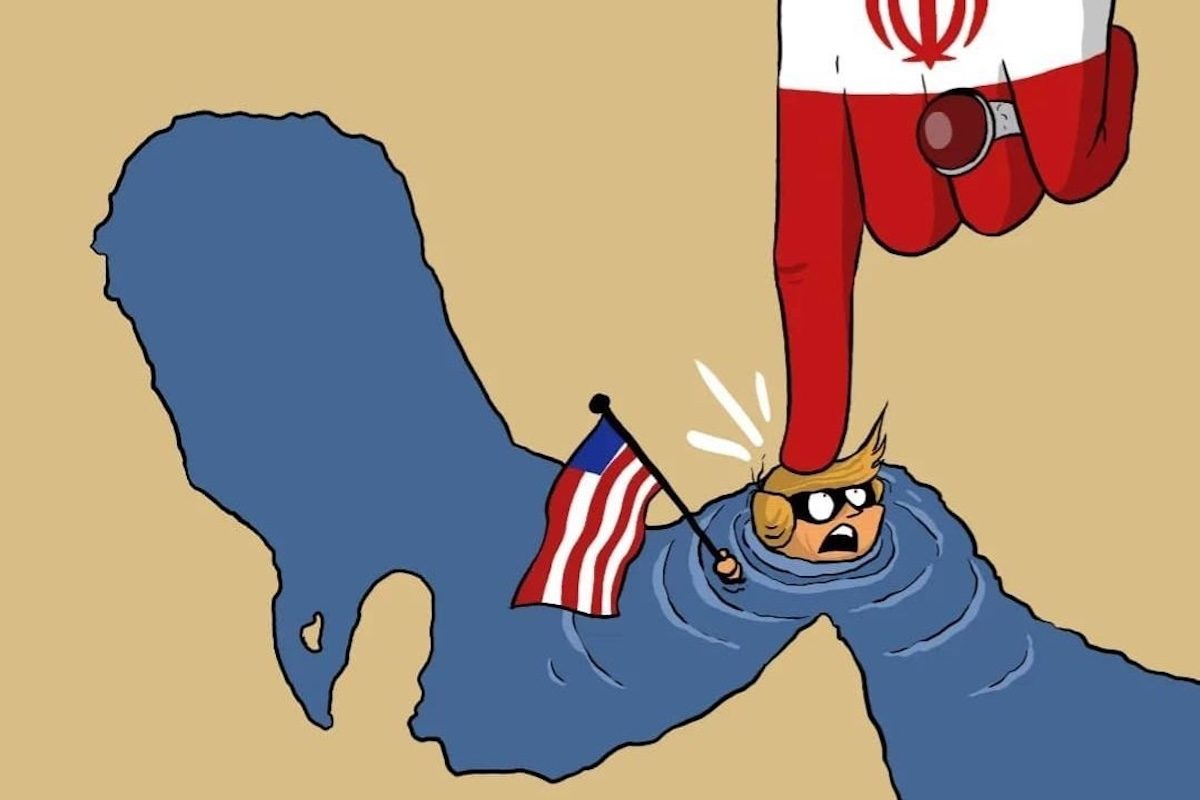
Against the backdrop of a deeply fractured 2020s global order, U.S. foreign policy under the re-elected Donald Trump has created unexpected shifts in power that are rippling across every continent. What some analysts have framed as an accidental win for Beijing and Moscow has, in reality, exposed systemic weaknesses across all three of the world’s major nuclear superpowers – and forced U.S. allies in Europe and Asia to confront urgent questions about their own long-term security and resilience.
The core argument put forward by analyst Bill Emmott, based on his on-the-ground reporting from Japan, opens with a provocative framing: if China and Russia shared a joint strategic slogan today, it would be “MAWA – Make America Weak Again.” From their perspective, a second Trump term has delivered exactly what they hoped for: a U.S. leader whose erratic foreign policy weakens American global standing rather than advancing his stated goal of Making America Great Again. Trump’s ongoing military campaign in Iran has only amplified this effect.
Contrary to fears that a quick U.S. takeover of Iran’s oil sector would leave Beijing and Moscow cornered, the reality of Trump’s policy has been unmitigated failure for U.S. interests. The stalemate in Iran has already pushed crude oil prices up by more than 50% since the conflict began, delivering tangible economic and strategic gains to both major powers. For China, a weakened Trump means a far weaker negotiating position in bilateral trade talks. When the U.S. president attends the rescheduled Beijing summit in mid-May, he will arrive not as a powerful negotiator, but as a supplicant, still reeling from the 2024 confrontation where Beijing’s threat of a critical mineral export embargo forced Trump to retreat from his planned 145% tariffs on Chinese goods. Beyond trade, China has also gained diplomatic ground: more nations, both wealthy and developing, now view Beijing as a far more predictable and reliable global partner than the volatile United States.
For Russia, the benefits are even more direct. The surge in global oil prices has rescued Moscow’s public finances, extending its ability to sustain its war effort in Ukraine. Further gains could come from growing transatlantic rifts over Iran: if European capitals clash with Trump over policy, U.S. weapons shipments to Ukraine via Europe could shrink, and a frustrated Trump could even cut off all American intelligence and communications support for Kyiv. For Vladimir Putin, who has long aimed to dismantle NATO, any deepening divide between the U.S. and its European allies is a major strategic win – even if Trump cannot follow through on his repeated threats to withdraw the U.S. from the alliance, a step that would almost certainly be blocked by a Republican-led Congress.
But it is a mistake to frame this shift as a simple zero-sum game where the decline of the U.S. automatically elevates China and Russia. The far more sober reality, Emmott argues, is that American failure in Iran has laid bare that all three nuclear superpowers face profound structural weaknesses that make them far more equal in vulnerability than previously assumed. Russia, despite its vast nuclear arsenal and natural resource wealth, has already endured four years of grinding military failure in Ukraine, gaining only minimal territory at the cost of more than one million dead and wounded troops. China, meanwhile, is trapped by its own long-term economic challenges: slowing annual growth, a shrinking and aging population, and soaring public and private debt – trends that an energy price shock will only worsen, leaving it unable to fully exploit American weakness. As for the United States, its weakness stems from the re-election of a leader who is openly corrupt, has launched an unplanned Middle Eastern military adventure with no clear exit strategy, and is systematically eroding the value of America’s greatest global asset: its web of security alliances across Europe and Asia.
This new era of widespread great power weakness poses direct and urgent risks to U.S. allies in Europe, Japan and South Korea. If the current short-term energy shock from the Iran conflict becomes a long-term crisis, all these nations will face deep economic damage. Worse, the resulting fiscal pressure will leave them with even less capacity to increase their own military spending – a step that has become increasingly critical to deter coercion from China and Russia, even as dependence on U.S. security guarantees grows riskier.
To understand how allies are processing this new reality, Emmott spent a week in Japan consulting with government and business leaders on the impact of the Iran war, drawing three key lessons that apply equally to Europe. The first is cautiously reassuring: even though the U.S. has redeployed military forces from Asia to the Middle East, weakening deterrence against China, Japanese leaders broadly agree that Beijing will not risk an invasion or blockade of Taiwan. China’s own internal weaknesses, including an ongoing anti-corruption purge of senior People’s Liberation Army generals and the examples of Russian failure in Ukraine and American failure in Iran, have reinforced Beijing’s caution about taking major military risks.
The second finding, however, is far more worrying: for the first time since the atomic bombings of Hiroshima and Nagasaki 81 years ago, open public debate has begun in Japan over whether the country should develop its own independent nuclear arsenal. This shift reflects multiple overlapping anxieties: widespread fear that the Iran war will spark a global wave of nuclear proliferation as nations seek to defend themselves; growing uncertainty about the reliability of the American nuclear umbrella that has protected Japan (and much of Europe) for decades; and questions over whether the Trump administration’s demand that allies take more responsibility for their own defense extends to nuclear capabilities. For decades, U.S. administrations have blocked allied efforts to develop nuclear weapons, particularly in South Korea, but that long-standing taboo is now breaking down. The very fact that this debate is happening signals a broader acceptance that the world has grown far more dangerous, and old rules and taboos can no longer be trusted. Currently, the Japanese nuclear discussion remains smaller than the open debate already underway in France and Germany.
The third key finding mirrors the challenges facing Europe: Japanese government and business leaders are largely paralyzed by uncertainty over how long and how severe the current energy price shock will be. While they have avoided stoking public panic, they acknowledge that decades-long national energy plans – which still prioritize fossil fuels – will need to be completely rewritten. The main alternatives under consideration are expanded nuclear energy, geothermal power, and greater investment in wind and solar. Currently, wind and solar combined account for only around 13% of Japan’s electricity generation (most of that from solar), far below the 40-50% share common across most European countries, held back by resistance from established domestic business interests.
Despite these profound challenges, Emmott notes that both Japanese and European leaders recognize that while their vulnerability is acute, a path to greater resilience exists. Rapid technological progress and the spread of diverse global supply chains for energy and critical commodities mean that vulnerability can be reduced over time – but only if action is taken now. Delaying planning until tomorrow or the 2030s is not an option: the time for allies to build their own resilience against global shocks, including those originating from the current White House, is immediate.