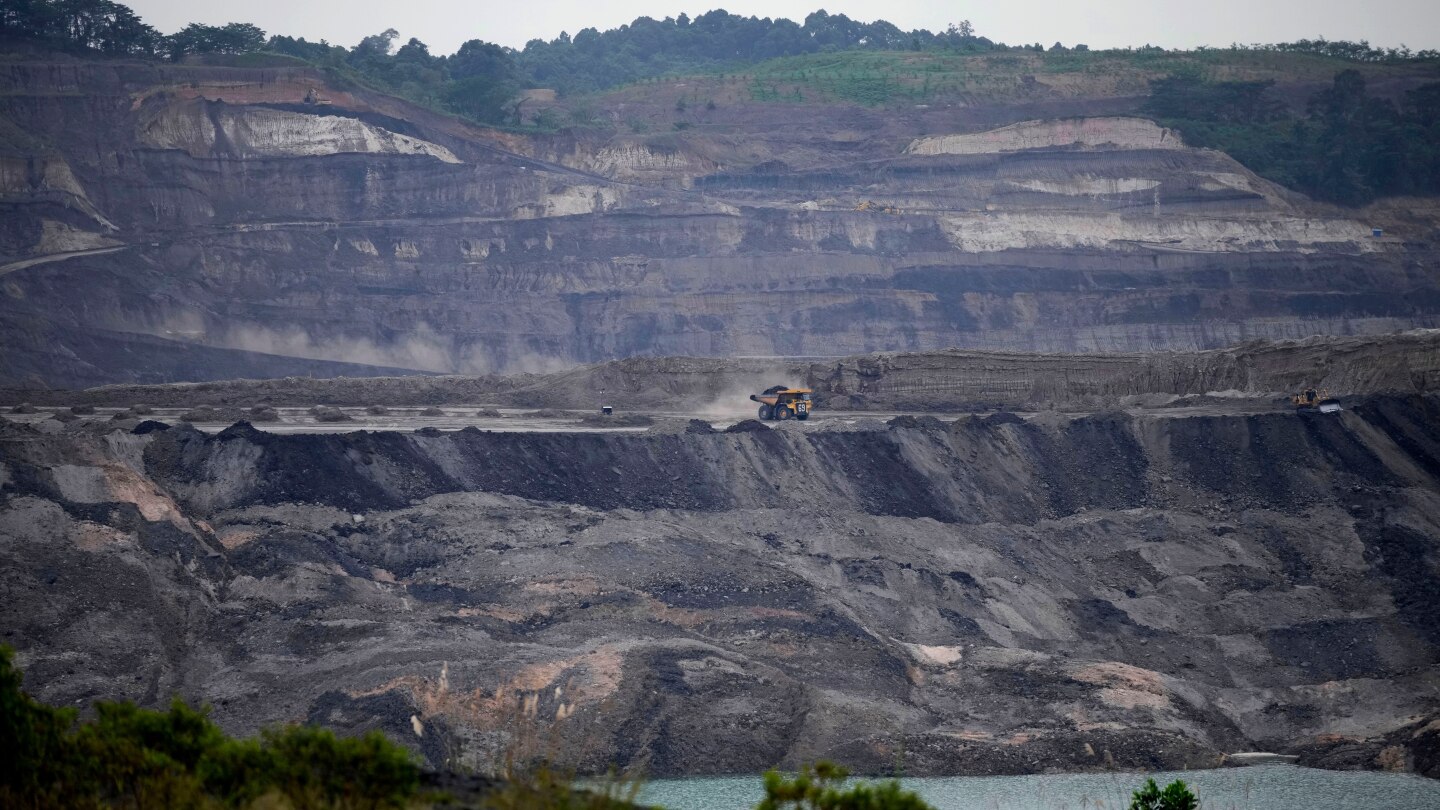
Southeast Asia has emerged as the world’s fastest-growing coal consumption region, creating significant obstacles to global carbon reduction initiatives. According to the International Energy Agency’s latest findings, regional coal demand continues to escalate at over 4% annually through 2030, primarily driven by Indonesia and Vietnam’s expanding electricity requirements across their combined population exceeding 600 million.
This upward trajectory casts substantial doubt on the viability of the $15.5 billion Just Energy Transition Partnerships (JETP) established in 2022 to facilitate renewable energy transitions. The political landscape has further complicated these efforts, with potential U.S. policy reversals under the Trump administration adding another layer of uncertainty to climate change mitigation strategies.
Coal currently generates over one-third of Southeast Asia’s electricity, positioning the region as the world’s third-largest coal consumer after China and India. While global coal demand shows signs of plateauing, Southeast Asia moves counter to this trend due to compelling economic and energy security considerations.
Katherine Hasan, an analyst at the Centre for Research on Energy and Clean Air, encapsulates the regional dilemma: “We’re standing on two opposite grounds—wanting to build clean energy, but not letting go entirely of coal.”
Indonesia, the world’s largest coal exporter and Southeast Asia’s biggest carbon emitter, has notably reversed its climate commitments. The nation abandoned its pledge to phase out coal by 2040, with Special Climate Envoy Hashim Djojohadikusumo explicitly stating: “There will be no phase-out of fossil fuels. We’re sticking with a phase-down.” This policy shift was demonstrated when Indonesia’s attempt to retire a West Java coal plant collapsed last month.
Vietnam presents a contrasting yet equally complex scenario. The nation has achieved remarkable solar capacity expansion—growing from 4 megawatts in 2015 to 16 gigawatts currently—with ambitious targets reaching 295 gigawatts by 2050. Despite these renewable energy advances, Vietnam recorded unprecedented coal imports exceeding 65 million metric tons in 2025, reflecting concerns about power reliability after 2023’s drought-induced shortages caused $1.4 billion in economic losses.
Energy infrastructure limitations present additional challenges. Vietnam’s power grid requires approximately $18 billion in upgrades by 2030 to accommodate renewable expansion, while current funding covers only a fraction of this need. The region’s public sentiment increasingly favors delaying coal abandonment until 2030 or 2040, prioritizing immediate energy security over climate considerations.
As Putra Adhiguna of the Energy Shift Institute observes, “JETP was basically a brute force attempt to do a transition. Governments were trying to bulldoze through… But fundamentally there are things that take a bit of time and political commitment to happen.” With Indonesia canceling coal plant retirements and potential U.S. withdrawal from JETP, the initiative’s momentum appears increasingly uncertain, leaving Southeast Asia’s climate future hanging in the balance.