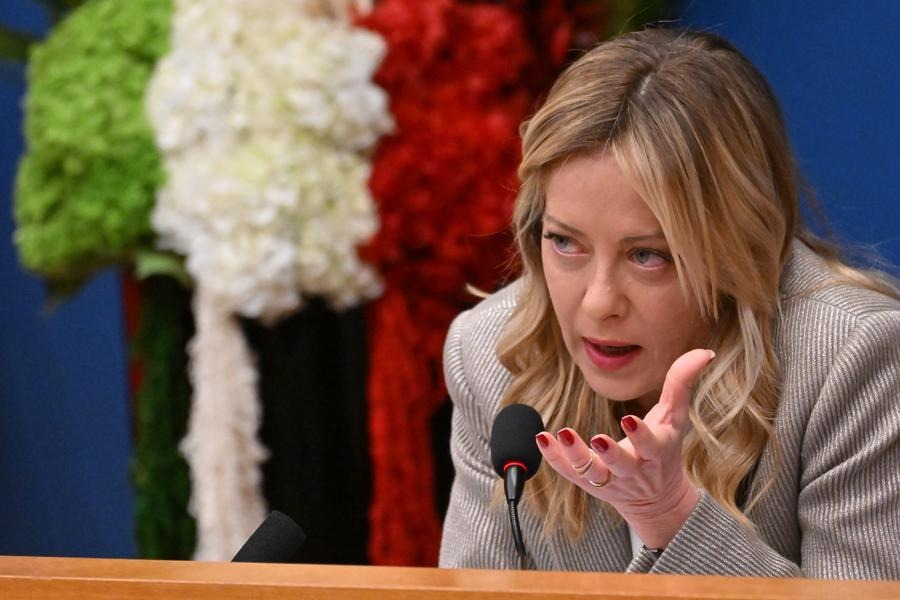
A growing diplomatic split over the ongoing U.S.-Israeli military campaign against Iran has widened dramatically this week, after Italian Prime Minister Giorgia Meloni announced Rome would suspend its long-standing bilateral military agreement with Israel. The decision marks a significant shift from a leader once viewed as one of Israel and former U.S. President Donald Trump’s closest allies in Europe, and underscores a broader trend of European leaders distancing themselves from the escalating Middle East conflict.
Meloni confirmed the move during a press briefing on Tuesday, noting that her cabinet had made the call to halt the automatic five-year renewal of the 2003 defense cooperation pact “in consideration of the current situation” across the region. The agreement, which has been renewed regularly since it first took effect, enabled joint military equipment sharing and collaborative defense research between the two nations. In recent months, however, human rights legal advocates had pressured the Italian government to abandon the pact over legal and ethical concerns tied to Israel’s military actions in Gaza and its expanding offensive strikes against targets in Iran and Lebanon.
Multiple recent incidents have already strained bilateral relations between Rome and Tel Aviv beyond the Iran war disagreement. Earlier this month, the Israel Defense Forces fired warning shots toward an Italian peacekeeping convoy operating near Beirut, Lebanon, an incident Meloni labeled “completely unacceptable.” The provocation prompted Italian Foreign Minister Antonio Tajani to summon Israel’s top diplomatic representative to Rome for a formal reprimand.
Tensions rose further last month when Israeli authorities blocked a delegation of Italian Catholic religious leaders from holding a traditional Palm Sunday ceremony at the Church of the Holy Sepulchre in Jerusalem. Meloni condemned the interference, calling it “an offense to religious freedom.”
The rift has also extended to U.S.-Italy relations, as Meloni has openly pushed back against Trump’s handling of the conflict. Most recently, she criticized Trump for his public attacks on Pope Leo XIV, who has delivered multiple public statements denouncing the war on Iran. Meloni has also repeatedly clarified that Italian military forces will not take part in any offensive strikes against Iran, nor will they assist in efforts to re-open the Strait of Hormuz amid regional blockades.
Trump responded to Meloni’s position with sharp criticism during an interview published Tuesday with leading Italian daily *Corriere della Sera*. The former president said he was “shocked at her” actions, claiming, “I thought she had courage, but I was wrong. She’s unacceptable because she doesn’t mind that Iran has a nuclear weapon and would blow up Italy in two minutes if they had the chance.” Trump added that Meloni “doesn’t help us with NATO” and “doesn’t want to help get rid of a nuclear-weaponed Iran,” concluding, “Very sad … She’s much different than I thought.”
Trump’s frustration extends far beyond Italy, as the former president has grown increasingly infuriated by the widespread refusal of European leaders to join U.S. and Israeli military operations against Iran. He has even publicly derided the NATO alliance as a “paper tiger,” despite the organization’s core founding mandate as a strictly defensive defensive pact, not an offensive military coalition.
Meloni’s decision to suspend the military pact with Israel is the latest high-profile step in a growing movement of European governments pushing back against escalatory action in the Middle East, as European publics and policymakers alike grow more anxious over the risk of the conflict spiraling into a wider regional war that could have global economic and security repercussions.