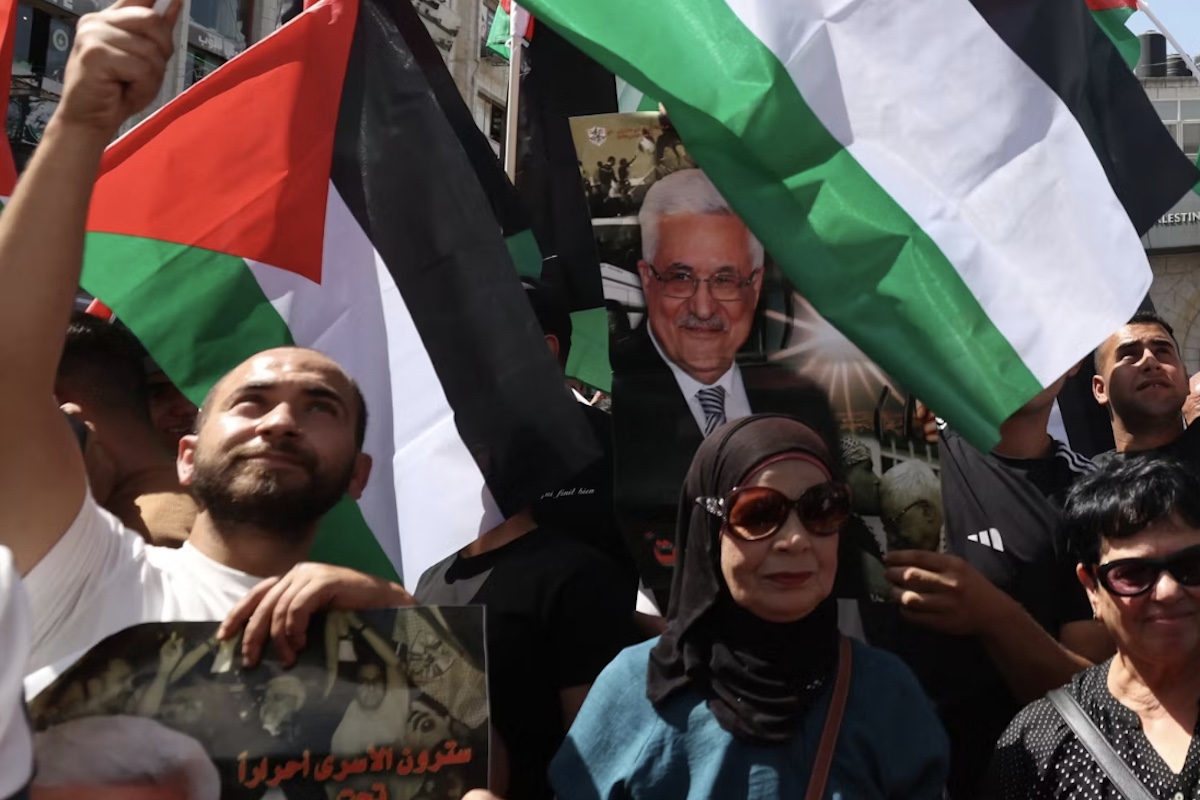
The recent wave of international recognition of Palestine as a sovereign state marks a significant diplomatic milestone. However, the territorial boundaries of this nascent state remain a contentious issue, with disputes spanning from the West Bank to Gaza. To understand the complexities of this situation, it is essential to delve into the historical evolution of Palestine’s borders, which have been shaped by decades of conflict and political upheaval. The 1947 UN partition plan envisioned two semi-contiguous territories for Jewish and Arab states, with Jerusalem as an international city. However, this vision was shattered by the 1948 war, leading to the establishment of Israel and the confinement of Palestinians to the West Bank and Gaza Strip, separated by the ‘green line’ and placed under Jordanian and Egyptian control. The 1967 Six-Day War further altered the landscape, with Israel occupying the West Bank, Gaza Strip, and East Jerusalem, effectively tripling its territory. Israeli settlements, illegal under international law, have since fragmented the West Bank, creating a patchwork of Palestinian governance areas under the Oslo Accords. The construction of a separation barrier during the second intifada (2000-05) further divided the region, leaving the West Bank resembling a fragmented archipelago rather than a cohesive state. Recent studies using satellite imagery reveal the extent of settlement expansion, with the average settlement growing by two-thirds in size over the past decade, now occupying 151 sq km of built-up area. This expansion, coupled with extensive Israeli military presence and infrastructure, has severely restricted Palestinian movement and economic activity. The E1 development project, if constructed, threatens to bisect the West Bank, further complicating the prospects of a viable Palestinian state. The presence of settlements has also fueled political violence, with research indicating that proximity to settlements nearly doubles the likelihood of engagement in high-risk and violent actions. Despite these challenges, the recognition of Palestine by various nations is reshaping international engagement with Palestinian representatives and applying pressure on Israeli leaders. However, without addressing the issue of settlement expansion and creating genuine conditions for statehood, recognition risks becoming an empty gesture. The future of Palestinian statehood and Israeli security hinges on the commitment to build a viable state that upholds the interests of all parties involved.