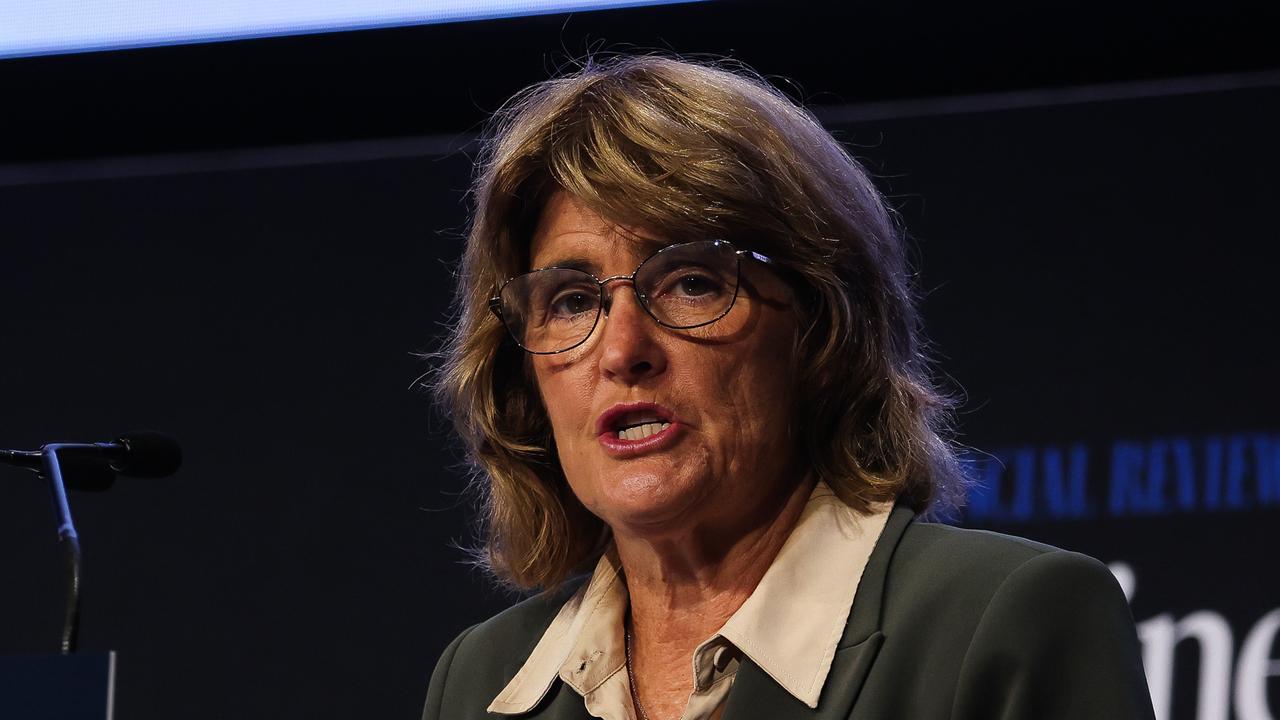
Reserve Bank of Australia Governor Michele Bullock has articulated a staunch defense of the central bank’s recent interest rate increase while emphasizing the premature nature of assessing the Iran conflict’s potential economic ramifications. Speaking at the AFR Business Summit in Sydney, Bullock addressed the delicate balance confronting monetary policymakers amidst escalating geopolitical tensions.
Bullock underscored the complex dynamics at play, noting that while supply-side disruptions from the Middle East conflict could exacerbate inflationary pressures, prolonged energy market volatility might simultaneously dampen global economic activity. “A supply shock could, for instance, amplify inflation pressures, and we remain highly vigilant regarding potential inflation expectations,” Bullock stated. “Conversely, sustained energy market disruptions could adversely affect global economic growth, potentially creating downward pressure on inflation. The ultimate outcome remains uncertain.”
The geopolitical backdrop intensified over the weekend as coordinated US-Israeli operations targeted Iranian leadership, including Supreme Leader Ayatollah Ali Khamenei and numerous senior officials. This military escalation triggered immediate oil price volatility, with crude surging 15.13% to $US77.44 per barrel initially, followed by further increases to $US82.37 in subsequent trading.
Regarding domestic monetary policy, Bullock explicitly dismissed assumptions that interest rates would remain unchanged following the March 16-17 meeting. She justified February’s 25 basis point hike to 3.85% – which reversed three 2025 rate cuts – as the “least worst option” for long-term household stability. Bullock warned that delaying action risked entrenching inflation above the RBA’s 2-3% target band, potentially necessitating more aggressive future tightening with severe labor market consequences.
Current economic metrics reveal headline inflation at 3.8% annually to January, while the trimmed mean measure excluding volatile items stood at 3.4%. With unemployment at a tight 4.1%, Bullock emphasized the board would evaluate moves beyond quarterly cycles, stating: “I discourage expectations that we necessarily only move every quarter.”
The Governor highlighted inflation’s corrosive impact on household welfare, noting it forces difficult choices regarding education expenditures and healthcare delays. She identified structural challenges including suppressed productivity growth and a revised assessment of the economy’s supply potential relative to underlying demand, concluding that inflationary pressures would persist until these imbalances resolve.