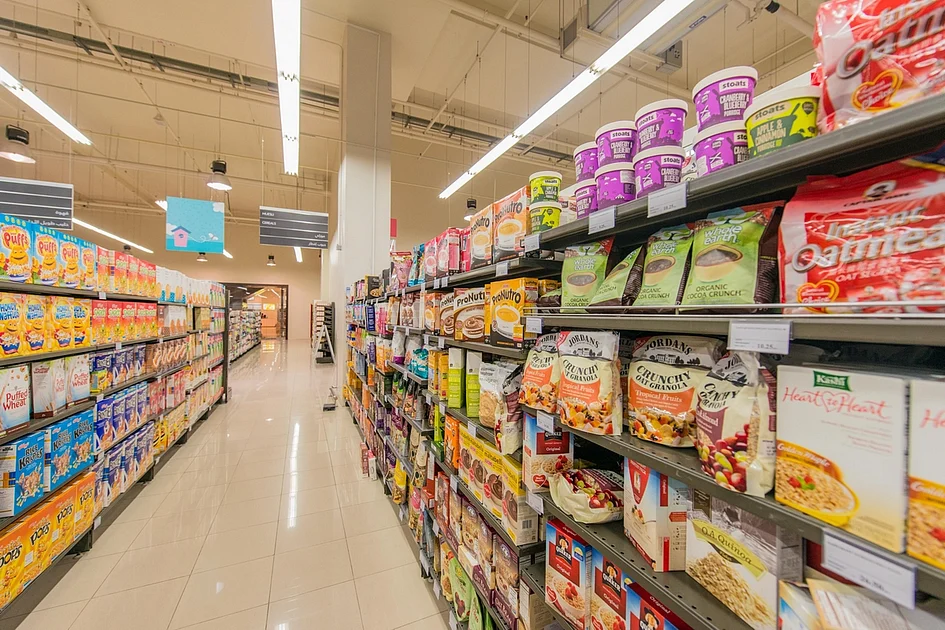
In an unprecedented move to support household budgets during the holy month, UAE retailers have launched extensive discount campaigns reaching up to 70% on essential goods while freezing prices on hundreds of basic items throughout Ramadan 2026.
The comprehensive strategy, developed through meticulous advance planning spanning up to five months, represents a coordinated effort between major retail chains and government initiatives. Union Coop has unveiled a groundbreaking campaign featuring discounts of up to 60% across more than 3,000 food and non-food products, while simultaneously freezing prices on over 160 essential items throughout the holy month.
This retail preparation aligns with the UAE Ministry of Economy’s assurance that prices of nine fundamental food commodities would remain stable during Ramadan, creating a protective economic environment for consumers. The initiative forms part of the broader ‘Year of the Family’ national campaign, explicitly designed to alleviate living costs during this spiritually significant period.
Retail executives emphasize that early strategic planning enables them to secure favorable supplier contracts, lock in wholesale prices, and prevent the seasonal price fluctuations that typically characterize peak demand periods. Carlos Fatas Bermudez, General Manager of Alaswaq Alwatania, stated: ‘We prepare Ramadan five months in advance. We want to avoid price increases that can happen during certain periods. We don’t increase any price during Ramadan.’
Consumer behavior analysis reveals distinct purchasing patterns in the lead-up to Ramadan. Shoppers typically stockpile long-shelf-life products such as rice, sugar, and canned goods approximately three months before the holy month. However, in the final 72 hours before fasting commences, demand dramatically shifts toward fresh produce, dairy, and bakery items.
Bulk purchasing has emerged as a defining characteristic of Ramadan shopping, with families strategically acquiring larger quantities to maximize savings through bundled promotions. Retailers have responded by preparing enhanced quantities with significantly higher discounts compared to regular purchasing options.
Supply chain diversification has become a critical component of Ramadan preparedness. Retailers are actively expanding their supplier networks to avoid potential disruptions. ‘You cannot rely on only one origin or one supplier. We need to diversify,’ Bermudez emphasized, highlighting how early agreements help stabilize pricing and ensure consistent availability.
Inventory management has been intensified, with retailers maintaining additional buffer stock for fast-moving Ramadan essentials to prevent shortages. Jithin Janardhanan, department head at Al Hoot hypermarket, explained: ‘We increase quantities, especially for key items, based on previous sales histories and the data we have.’
The products experiencing highest demand include traditional Ramadan staples such as dates, vermicelli, custard powder, frozen samosas, and spring rolls, alongside laban, yogurt drinks, and traditional Ramadan juices. Beyond food items, household goods also experience increased turnover, while clothing sales typically surge closer to Eid celebrations.
This sophisticated retail approach, combining data analytics, diversified supply chains, and early negotiations, ensures both price stability and product availability throughout Ramadan. Meanwhile, consumers are increasingly blending traditional generosity with strategic financial planning, making the holy month a period characterized by both spiritual reflection and economic mindfulness.