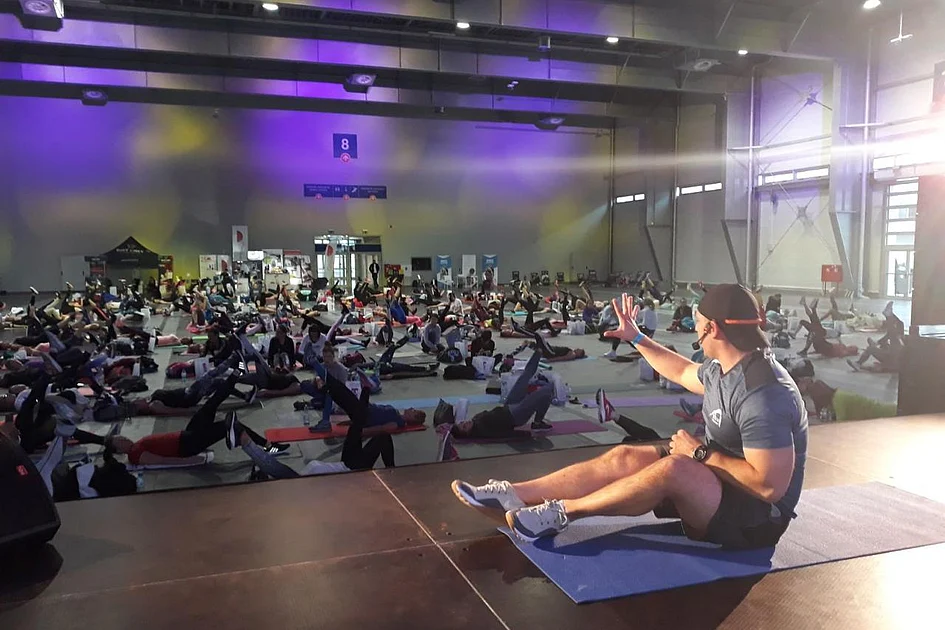
Across Abu Dhabi’s fitness landscape, a distinctive pattern emerges during Ramadan as tracks and gyms experience their peak activity during the twilight hours preceding iftar. This two-hour window before sunset has earned the designation ‘golden hour’ among the UAE’s athletic community, becoming the preferred training period for fasting individuals seeking to balance physical conditioning with religious observance.
Fitness professionals identify compelling physiological advantages to pre-iftar workouts. Marcin Kiermasz, endurance athlete and General Manager of Hybrid Studio Abu Dhabi, explains the metabolic benefits: ‘During fasting, insulin levels remain low and glycogen stores become depleted, prompting the body to utilize fat reserves more efficiently. This creates optimal conditions for endurance training and weight management.’
Running communities have systematically adapted their schedules to accommodate this trend. Rohit Kumar, Captain of adidas Runners Abu Dhabi, notes that their community implemented structured Ramadan scheduling in 2022, with this year featuring more deliberate programming. ‘Our two-hour window provides flexibility—fasting members can complete sessions from 5-6 PM and return home for iftar, while others may join later sessions,’ Kumar explains.
The terminology ‘golden hour’ originates from the strategic combination of controlled physical exertion followed by immediate nutritional replenishment. This timing minimizes muscle catabolism while providing psychological relief during the final stretch of the daily fast. Group running sessions now regularly attract 40-50 participants during these pre-iftar hours, significantly outperforming post-iftar training attendance.
Training methodologies vary between pre-and-post iftar sessions. Pre-iftar programming typically emphasizes aerobic conditioning, technique refinement, and foundational fitness development, while post-iftar sessions focus on strength training and performance enhancement. Running coach Fares Al Sawi advises: ‘I prescribe only easy runs of 30-45 minutes before iftar—this approach maximizes fat utilization while accommodating fasting constraints.’
While some athletes experiment with dawn workouts following suhoor, coaches generally caution against intensive morning training due to potential energy depletion throughout the day. The consensus among fitness professionals emphasizes that the golden hour’s popularity stems not from ease of execution but from strategic efficiency—offering fasting athletes the most physiologically sound approach to maintaining fitness during Ramadan.